





























Many marketers aren’t quite sure how to treat their B2B brand social media profiles. On the one hand, this is a very public representation of your brand. On the other hand, is anyone actually going to see it?
The truth is that in 2026, your brand social media profiles are often one of the first touchpoints in the buyer’s journey. While a prospect is considering scheduling a discovery call or downloading your whitepaper, they’re vetting you. They might click to your LinkedIn page or your Facebook profile to see if you’re a legitimate authority or just another vendor making noise.
If your profile feels like the digital version of a billboard or a generic sales pitch, you’ve lost the deal before it even started.
Key Takeaways
- LinkedIn Profile is the New Homepage: For many B2B buyers, your social profile is a primary source of truth for your brand’s current relevance.
- Trust > Reach: High-performing profiles focus on signaling credibility to a specific ICP rather than chasing viral vanity metrics.
- Alignment is non-negotiable: Your social presence must be an extension of your website’s authority.
- Engagement is a Conversion: A profile visit is a high-intent signal that should be tracked as part of your Invisible Pipeline.

Why B2B Brand Social Profiles Matter More Than Ever
In B2B and SaaS especially, the sales cycle isn’t a straight line, it’s a Marketing Loop. Throughout that 6-to-12-month journey, stakeholders are constantly popping in and out of your social ecosystem.
A strong social profile acts as a permanent trust signal. It proves that your company is active, your leadership is thinking deeply about industry hurdles, and your customers are actually seeing results. It helps bridge the gap between a cold outreach email and a warm lead.
5 Common B2B Brand Social Media Profile Mistakes to Avoid
Unfortunately, we see these five errors all too often on LinkedIn, and besides for being big turn offs, they don’t help your page visitor understand any better how you can solve their pain point:
- The Buzzword Trap: Using words like “synergy,” “innovation,” or “digital transformation” without explaining what you actually do.
- Inconsistent Visuals: The entire point of a brand is to be instantly recognizable, no matter where a prospect finds you. Make sure your social media profiles are aligned with your website so there is a smooth transition from one to the other.
- The Broadcast Mindset: A press release is usually self-serving (e.g., “We are proud to announce…”). A social post should be audience-serving: use the foundation of the press release to announce your news but make sure to highlight why this is important for your audience (and not just a pat on your back).
- Ghost Town Syndrome: It is no longer enough to have a polished brand page if the profiles of your thought leaders are empty. Your prospects are checking out your experts to see who they’ll actually be working with. If your team has no professional presence to build trust with, prospects will go to a competitor who looks like an authority.
- Chasing the Wrong Crowd: Optimizing for likes from people who will never buy your product. 100 engagements from the wrong audience has no business value and definitely no ROI. 1 engagement from the right persona can make all the difference.
5 Social Media Best Practices to Strengthen Your Brand Profiles
To move beyond just existing on social media, you need to turn those mistakes into strategic advantages. Here is how to fix the “Big Five”:
1. Swap Buzzwords for Product Clarity
Stop trying to sound corporate and start being clear. Your profile and content should focus on Product Clarity: How your tool actually solves the technical hurdles your buyers face. Repeat the language your customers use in discovery calls so they recognize themselves in your content.
2. Maintain Consistent Visuals
Your social media profiles should be an extension of your website. While every post shouldn’t be a rigid branded graphic, your color palette and tone of voice should be recognizable and consistent. When a user clicks from LinkedIn to a landing page, it should feel like a smooth transition.
3. Move from Broadcast to Social-First Content
Instead of link dumping your PR, break down the insights. Users want to consume content in bite-sized chunks and platforms want to keep users on-site. Share the value directly in a carousel or long-form post.
Bonus tip: Use the 50/30/20 Framework: 50% educational value, 30% social proof/human stories, and only 20% direct product offers.
4. Close the Credibility Gap with Brand Ambassadors and Advocates
Align your brand page with your thought leaders. Ensure your leadership team is posting meaningful insights and personal/professional stories. If they have no presence, prospects will move to an authority they can actually learn from and trust.
5. Prioritize ICP Engagement over Vanity Metrics
Be SOCIAL on social media! Schedule 10 minutes a day to interact with industry leaders and prospects. One insightful comment on a target account’s post is worth more than 100 likes from people who will never buy. This brings high-intent traffic to your profile and into your pipeline.

5 Common Personal Profile Mistakes That Hurt Trust & How to Fix It
While your brand page provides the corporate proof, in a P2P (People-to-People) world, your leadership’s personal profiles provide the human proof. Prospects vet the person behind the product long before they sign a contract. Make sure your profile signals that you’re active, accessible, and open to the conversations that turn connections into partnerships.
5 Common Personal Profile Mistakes That Hurt Trust
- The Resume Only Headline: Only stating your job title (e.g., “CEO at X Company”). This tells people what you do for a paycheck, but not how you solve their specific pain point or why you’re the right person/company for their solution.
- The Third-Person Biography: Writing your “About” section like a Wikipedia entry. Phrases like “John is a seasoned professional with 20 years of experience…” feel cold, distant, and disconnected from the modern buyer.
- Outdated Visuals: Using a low-res, cropped wedding photo or leaving the default grey LinkedIn banner. This signals to a prospect that you aren’t active or invested in meaningful connections.
- The Lurker’s Feed: Having a “Recent Activity” section that hasn’t seen a post or a comment in six months. A dead feed suggests a leader who isn’t involved in the conversations.
- The Missing “Featured” Gallery: Leaving this prime real estate empty. This is your personal “Best Of” gallery. Ignoring it is a wasted opportunity to direct a visitor to your most valuable insights or lead magnets.
5 Personal Profile Best Practices to Build Executive Authority
To fix these personal profile mistakes you need to treat your personal profile as a dynamic landing page. Here is how to turn a passive profile into an active growth tool:
1. Use the Identity + Problem + Solution Formula: Your headline should be a value hook. Move from “VP Sales” to something that resonates with your ICP.
Example: CEO at “Cybersecurity Company | Helping CISOs automate threat detection and eliminate alert fatigue.”
2. Write Your “About” Section in the First Person: Speak directly to your audience. Share your “Why”: Why did you start this company? What is the biggest hurdle you are trying to help your customers clear? Focus on the transformation you provide for your clients.
3. Invest in Visual Positioning: Your headshot and banner are your first impressions. Use a high-quality, professional headshot with a clean background. For the banner, use a branded banner provided by your company, a visual that represents your niche or a photo of you in action (speaking at a trade show or leading a team).
Bonus: If you have LinkedIn Premium, you can add up to 5 cover banners in a slider format.
4. Be Socially Active: You don’t need to be a full-time content creator, but you do need to be visible. Set a goal of posting 1-2 original insights a week and leave five thoughtful, value-add comments on the posts of industry peers or target prospects.
5. Curate Your “Featured” Section: Control the narrative by pinning your most important assets: a high-performing thought leadership post, a link to a recent podcast appearance, and a clear CTA (like a link to book a discovery call or download a whitepaper).
The Anatomy of a High-Performing Social Media Profile
So what does this actually look like in real life? Your profile is a dynamic landing page and every element has a purpose:
- The Banner (Visual Positioning): Don’t just put your logo there. Use this space to highlight the result you provide. If your solution helps law enforcement agencies unveil contextual insights, enabling them to identify threats, give a hint to how it works like Corsight AI does on their LinkedIn profile.

- The Bio/Tagline (The Value Hook): Skip the buzz words. Tell the viewer what you actually do and how you solve their problem, like RodRadar does here.

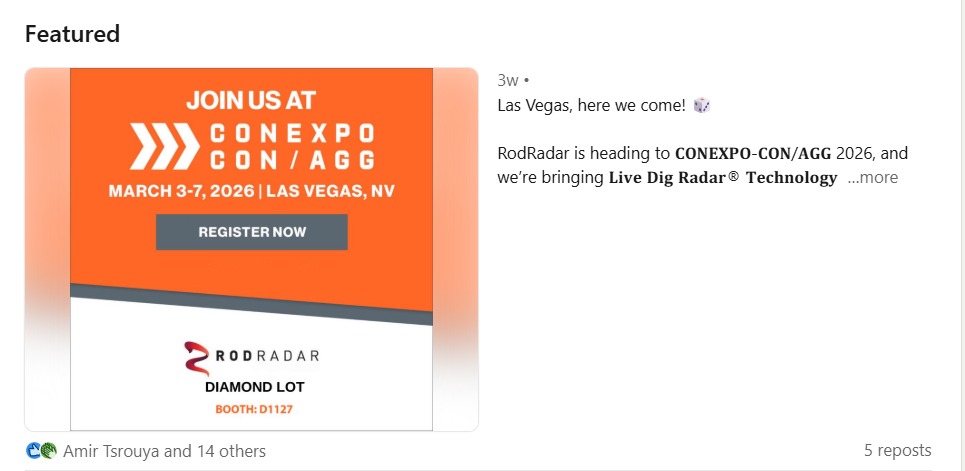
- The Featured/Highlights Section: This is a great feature to make sure your most important content doesn’t get lost after posting. Pin a case study, a high-value lead magnet, or a post about an upcoming event (an especially good use of this real estate!)
- The CTA Button: On LinkedIn, use the custom button for “Visit Website” or “Book a Demo.” Make sure this link has a UTM so you can track the attribution later.

Social Media Branding Strategies to Strengthen Presence
To move from just another profile where you post the same content, remember that your platform positioning should vary:
- LinkedIn: Your professional headquarters. Focus on deep-dives and executive authority.
- Instagram: Your culture and recruiting window. Focus on the humans behind the scenes. Have fun and don’t be afraid to try video trends.
- Facebook: Your community & retargeting hub. Use your Facebook profile to showcase your local presence, CSR initiatives, and to stay top-of-mind with prospects who have already visited your site.
- X (Twitter): Your real-time newsroom. Focus on quick takes, networking, and industry trends.
- YouTube: (What? YouTube’s not a social media platform! Au contraire, my friends 🙂 YouTube is the world’s second-largest search engine, so while users may not be using the platform for the social elements (yet), they are coming to learn from you. Every single video you posted on any other social media platform should be uploaded and optimized for your YouTube channel as well.
The Social Media Profile Best Practices Checklist
Keep your banner updated to reflect current visual and text messaging, campaigns and/or upcoming events.
Use high-quality, professional headshots for all employees.
Include your current job title and the problem you solve in your headline.
Ensure your “About” section answers: What do you do? Who do you do it for? Why does it matter?
Keep your most important posts pinned on your profile in the “Featured” section.
FAQs
What makes a B2B brand’s social media profile stand out to decision-makers?
Decision-makers look for proof of authority. A profile stands out when it moves past generic claims and provides immediate value through shared insights, clear case studies, and a distinct point of view. They want to see that you understand their specific technical hurdles and have a track record of solving them.
How often should a B2B company update its brand social media profiles and visuals?
Audit your profiles quarterly. While your core bio shouldn’t change weekly, your banner and “Featured” sections should be updated to reflect your current GTM (Go-To-Market) strategy, upcoming events, or new product launches. Keeping visuals fresh signals that the brand is active, modern, and growing.
Which social media platforms should B2B brands prioritize for their profiles?
LinkedIn is the non-negotiable headquarters for B2B. However, depending on your niche, X ( Twitter) is vital for the tech/dev community, and YouTube is increasingly the second search engine for technical how-to content. Focus on where your ICP spends their time.
How can B2B brands measure the impact of their social media profiles on pipeline and revenue?
We recommend using HubSpot to monitor Original Source and Interaction Source data. When a lead mentions your social content in a “How did you hear about us?” form field, that is the ultimate proof of ROI.
Learn more about B2B social media attribution in HubSpot here.
What’s the best way to align employee profiles with the main B2B brand social media presence?
Provide your team with branding guidelines – including high-res banners and a few approved bio templates – but allow them to keep their own voice. Their profiles should look like they belong to the company but act as independent sources for trust.