






















































Key Takeaways
- B2B social listening is about tracking buying signals and industry conversations, not just brand mentions.
- The best conversations rarely happen on the platforms brands post to most.
- Volume of mentions matters less than who is talking and what stage of the buying journey they’re in.
- A sustainable and consistent social listening plan is what produces insight over time.
- The biggest mistake is collecting data without a clear owner or a next step attached to it.
Most B2B marketing teams already track brand mentions. But fewer marketing teams track the conversations that actually predict a sale,like a buyer complaining about a category problem, a competitor’s customer venting in a niche community, a procurement question surfacing on LinkedIn three months before an RFP goes out. Following those conversations closely is what a meaningful social listening strategy does. When done well, B2B social listening turns scattered online posts and comments into an early warning system for product gaps, competitive threats, and content ideas your audience is already asking for.
This article breaks down how social listening for B2B brands differs from the consumer playbook, where the conversations that matter actually happen, and how a lean team can build a social listening plan that survives beyond the first enthusiastic week.
Why B2B Social Listening Works Differently Than B2C
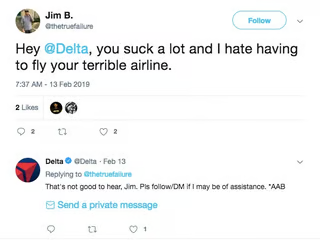
Consumer social listening is largely a volume game. A single viral complaint about a snack brand or a delayed flight can move thousands of people, and the goal is often speed: catch the spike, respond, contain the damage.
We’ve all seen social media posts like this…
B2B doesn’t work that way since the audience is smaller, the sales cycle is longer, and the people talking about your category are rarely the ones with purchasing authority.
A strategy that monitors B2B conversations has to account for a few structural differences.
- Volume is low by design. A niche vertical like OT security or supply chain software might generate only a handful of genuinely relevant posts a week.
- The buying committee is wide. The person complaining about a workflow problem on LinkedIn might be an end user, while the person who actually signs the contract never posts publicly at all.
- Timing is slower. A single comment thread about switching vendors can represent a decision that’s been building for months, which means a good listening program is watching for slow-building patterns, not just spikes.
The practical implication is that a social listening strategy built for B2B needs to prioritize relevance and context over raw mention counts.
Ten highly specific, on-topic conversations from people who match your buyer profile are worth more than a thousand generic mentions of an industry term.
Where B2B Buyers Actually Have Conversations
Brand mentions on X or Instagram get most of the attention because they’re easy to track, but B2B buyers spend most of their honest, unfiltered conversation time somewhere else.
LinkedIn is the obvious starting point, and it’s genuinely useful, but the real value often isn’t in comments on a brand’s own posts. It’s in the comment threads under industry analysts, competitors’ executives, and independent voices in the space, where practitioners argue, ask questions, and share what’s actually not working for them.
Niche communities matter more in B2B than almost any other content category. Slack and Discord groups built around a specific role or technology, private Facebook groups for niche professions, and forums tied to a particular software category or industry association are often where the most candid conversations happen, precisely because they feel lower stakes than posting publicly under your own name.
Review sites and Q&A platforms like G2, Peerspot and Capterra communities aren’t traditionally filed under “social,” but they function the same way: unprompted, comparative, and often brutally honest about what a product does or doesn’t solve.
Finally, don’t ignore your own comment sections and DMs. The questions people ask in response to a post, and the objections they raise privately, are some of the highest-signal data a listening program can capture, because you already know who’s asking.
What to Listen For Beyond Your Own Brand Name
Tracking your own brand and product names is the first place you start, but you can’t stop there. A social listening strategy that only watches for direct mentions misses the vast majority of relevant conversation, because most buyers never type a vendor’s name until they’ve already narrowed a shortlist.
Track the problem, not just the product. Buyers describe pain before they describe solutions: “our forecasting is always wrong,” “we can’t get sales and marketing to agree on a lead definition.” These phrases surface long before anyone searches for a category name.
Track comparison and discovery language too. Phrases like “best [category] software,” “[competitor] alternatives,” or “X vs. Y” threads are some of the clearest buying-intent signals available, because the person asking has already moved past naming their problem and is actively narrowing a shortlist.
Track competitor names and their common nicknames or abbreviations, including complaints and praise. A steady stream of specific complaints about a competitor’s onboarding or support is a direct opening for content and outreach.
Track category and job-title language. The terms your buyers use to describe their own role and challenges, sometimes different from the terms your marketing team uses internally, tell you how to actually phrase your messaging.
Track your own executives and thought leaders, not just the company handle. Personal posts from founders and senior operators typically outperform company pages in reach and engagement, and the replies to those posts are a rich, underused listening source.
Track adjacent and emerging terminology. New acronyms, new regulatory language, new tool categories. Being early to a shift in how your buyers talk about their world is one of the most durable competitive advantages content can produce.
How to Separate a Signal From Background Noise
The hardest part of any social media listening strategy isn’t collecting data. Most tools, free or paid, will surface far more mentions than any team can act on. The hard part is deciding which ones deserve a response, a content brief, or an escalation to sales or product.
Start with source credibility. A comment from someone whose profile and posting history matches your actual buyer persona (title, industry, company size) is worth far more than an anonymous account or an obvious bot.
Look for repetition, not just intensity. One person venting about a problem is an anecdote. Five unconnected people describing the same problem in different words, across different platforms, in the same quarter, is a pattern worth building content or product feedback around.
Separate emotional intensity from business relevance. A heated argument about a minor UI complaint can look urgent because it’s loud, while a quiet, specific question about integration requirements from a director-level buyer might represent real pipeline. Don’t let volume or tone substitute for judgment about who’s actually talking.
Ask what action the conversation implies. If a signal doesn’t point toward a specific next step, it’s probably not worth logging, no matter how interesting it seems in the moment. Noise is anything you can’t act on. In practice that usually means one of four things: a content topic when the same question keeps surfacing, a sales alert when a named account shows buying intent, a product ticket when the complaint is about functionality rather than positioning, or a competitive note when a rival’s weakness or move comes up unprompted. If a conversation doesn’t fit one of those buckets, flag it and move on rather than logging it for its own sake.
Building a Listening Routine a Small Team Can Sustain
Most social listening efforts fail because the routine wasn’t realistic for the team running it. A lean marketing team just needs a repeatable weekly habit.
Start with a short, specific tracking list rather than a broad one. Five to ten terms (your brand, two or three competitors, two or three core problem phrases, one or two category terms) is enough to start producing useful signal without becoming unmanageable.
Set a fixed, small block of time rather than trying to monitor continuously. A 30 to 45 minute weekly review, done consistently, will surface more useful patterns over a quarter than sporadic deep dives that get skipped when things get busy.
Log findings somewhere simple and shared. A single spreadsheet or shared doc with columns for date, source, what was said, who said it, and suggested action is enough. The tool matters far less than the discipline of writing things down where a colleague in sales or product can also see them.
Assign clear ownership for what happens next. Decide in advance who gets looped in when a conversation touches product feedback, competitive intelligence, or a sales opportunity.
Review the log monthly at the theme level, not just the individual mention level. Looking back across four weeks of notes tends to reveal patterns that are invisible day to day, and it’s usually where the best content ideas and messaging adjustments come from.
Common Mistakes That Makes B2B Social Listening Useless
Treating it as a reporting exercise instead of an input. Plenty of teams generate a monthly mentions report that nobody reads. Listening only has value when it feeds a decision, whether that’s a new piece of content, a messaging tweak, or a heads-up to sales.
Watching only branded terms. As discussed, this is the single biggest reason B2B teams underestimate how much relevant conversation exists about their category. If you’re only searching your own name, you’re seeing a small fraction of what’s actually being said.
Never revisiting the tracking list. Buyer language shifts, competitors rebrand, new terminology emerges. A tracking list built once and never updated slowly drifts out of relevance.
No clear owner. When listening is “everyone’s job,” it tends to become no one’s job. Even a lean team benefits from naming one person responsible for the weekly review, even if the follow-up actions are distributed.
Confusing sentiment scores with insight. Automated sentiment tagging is a helpful filter, not a conclusion. A conversation tagged “negative” might be the single most valuable piece of product feedback you get all quarter; a conversation tagged “positive” might just be small talk. Read the actual conversation before deciding what it means.
Ignoring the quiet signals. The loudest conversations aren’t always the most useful ones. A single, specific, well-informed question from someone who matches your buyer profile can be worth more than a hundred generic mentions of an industry buzzword.
FAQs
What is the difference between social listening and social monitoring?
Social monitoring tracks direct mentions of your brand, product, or handle so you can respond quickly, closer to customer service. Social listening looks at the broader conversation, including posts that never mention your brand at all, to identify trends, sentiment shifts, and unmet needs. Monitoring answers “what are people saying about us.” Listening answers “what does this tell us about the market.”
Can a B2B company do social listening without a paid tool?
Yes, especially at a small scale. Native platform search, saved searches on social media, Google Alerts for key phrases, and manual review of competitor comment sections can produce real insight for a lean team. Paid tools add speed and historical data at higher mention volumes, but the discipline of a consistent manual routine matters more than the sophistication of the tool.
How long does it take to get useful results from social listening?
Expect a few weeks before patterns start to emerge, since B2B conversation volume is lower and slower than consumer categories. Most teams see genuinely actionable insight, recurring themes worth acting on rather than one-off mentions, somewhere between one and three months of consistent tracking, which is why a sustainable weekly routine matters more than an intense one-time audit.
Which keywords should a B2B brand track first?
Start with your brand name, your two or three closest competitors, and two or three phrases describing the core problem you solve, written the way a buyer would say it rather than the way your marketing describes it. Add category terms and relevant job titles once the first list is running smoothly. A short, well-chosen list sustained over time outperforms a long list nobody has bandwidth to review.