





















































Key Takeaway
- Investors, buyers, and senior candidates all look up a founder’s LinkedIn before they commit, so the CEO’s profile shapes trust before the first meeting.
- For early-stage B2B companies, the founder’s voice is often the most credible asset the company has, especially when competing against better-known names.
- The CEO profile should carry perspective and experience; the company page should carry proof, product, and announcements.
- A well-run content process keeps the CEO’s time commitment to about an hour a week.
- Measure success by the conversations and opportunities it creates, not by likes.
Why Is LinkedIn Important for CEOs and Founders?
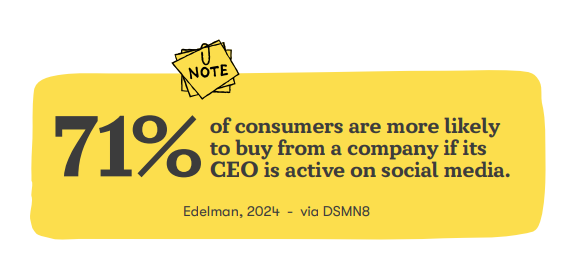
Your audience is looking up your leaders on LinkedIn. Whether it’s an investor preparing for a pitch meeting, a buyer about to sign a contract, or a senior candidate about to accept an offer, they read the CEO’s posts and form a view on whether this is a leadership team they trust. For many, those posts are their first real impression of the company, and a good one is what brings them to the website to learn more.
Start with the investor. Picture a partner at a US venture fund with a Series A meeting on Thursday. The deck is strong, but so are the other forty in her inbox. Before the call, she looks up the founder. She finds a post on why the company turned down its first big enterprise deal, a breakdown of what three customer churns taught the team, and a clear opinion on where the category is heading. Before the meeting starts, she already knows this founder can tell a story, make hard calls, and attract attention in the market. Those are exactly the skills she is betting on.
Now picture the other version. The founder’s last post is a job update from two years ago. The partner has nothing to go on but the deck, and nothing that sets this founder apart from the next one on her calendar.
Investors back founders as much as products. A visible founder shows they can sell the vision to customers, recruit senior talent, and raise the next round, and the profile becomes part of the due diligence whether the founder planned for it or not.
The same thing happens with buyers and candidates, which is why a strong CEO LinkedIn presence works as a fundraising asset, a sales asset, and a hiring asset at the same time. This guide covers each of those audiences, what to post, how often, and how to support a founder without taking over their calendar.
Should Every CEO Be Active on LinkedIn?
For B2B startup founders, the answer is almost always yes. At the early stage, the founder is the brand. Buyers, investors, and early hires are betting on the person as much as the product, and a silent founder leaves that bet without evidence.
Being active doesn’t mean posting every day or chasing viral moments. It means having a consistent, credible presence that reflects how the founder thinks. And the CEO doesn’t have to be the only voice. As the company grows, a small group of visible leaders usually works better than one.
When deciding who else should be visible, consider:
Relevance to the audience. Which leaders speak to the people you most need to reach? In a technical sale, a CTO or head of product may carry more weight with buyers than the CEO. If you’re hiring engineers, your VP R&D posting about how the team tackles hard problems will do more for recruiting than any careers page.
Depth of expertise. Strong B2B thought leadership needs a real point of view. Leaders with deep experience in a specific area, and the confidence to share opinions about it, make the best candidates.
Willingness and commitment. An enthusiastic CTO will outperform a reluctant CEO every time. Visibility can be supported but not fully delegated, so the person has to want to show up.
Coverage across audiences. Two or three leaders with distinct focus areas can reach different segments: one speaks to buyers, another to technical evaluators, a third to potential hires. Distinct topics prevent overlap and keep each voice clear.
We recommend starting with one or two leaders. It proves the model, and the results they get make other leaders want the same visibility for themselves.
How Does a CEO’s LinkedIn Presence Build Company Credibility?
Picture a CISO at a US manufacturer choosing an OT security platform for twelve plants. On one side is the incumbent everyone knows. On the other is a startup with a sharper product but a name her CFO has never heard of. If she picks the startup and it goes well, she looks smart. If it goes badly, her name is on the decision that took a production line offline.
So she does what the investor did: she looks up the startup’s founders on LinkedIn. Maybe she finds a post from the CEO about why the company walked away from a big deal that wasn’t a fit. Maybe it’s the CTO walking through a vulnerability the team found in the field and how they handled it. Now she knows something no sales deck could tell her: how these people act when things get hard.
Now picture the other version. She finds a CEO whose feed is nothing but reshared company announcements and a CTO who hasn’t posted in eight months. She learns nothing about who she would be working with, and nothing that makes her more confident taking an unfamiliar name to her CFO. That company moves toward the bottom of her list.
That is where executive thought leadership earns its keep, especially for challengers.
The incumbent has brand recognition. The startup has leaders with specific opinions, specific lessons, and specific stories that show how they think.
And she does all of this before talking to anyone at either company. By the time she brings a shortlist to her CFO, the companies whose executives share real thoughts and insights are already at the top.
How Can Founders Use LinkedIn for Thought Leadership?
The biggest barrier to founder content is time. Most founders agree visibility matters but can’t commit consistently because of real calendar pressure. The solution is not more discipline. It is a better system, where marketing owns the process and the founder owns the ideas.
A practical model looks like this:
1. A monthly 30 to 45 minute interview. Marketing prepares questions tied to current industry topics, recent company milestones, and recurring customer questions. The founder talks; marketing records. One good conversation can produce a month of insightful LinkedIn posts.
- Bonus tip: Film the interview and post edited clips to LinkedIn and YouTube.
2. Marketing drafts, the founder reviews. The content team turns interview notes into posts written in the founder’s voice. The founder’s job is to review, adjust, and approve, which typically takes 10 to 15 minutes a week.
3. Capture ideas as they happen. Give the founder an easy way to send quick notes, voice memos, or screenshots when something sparks a thought (Slack, Teams, WhatsApp, etc.). A strong post often starts with a single sentence from a conversation at the coffee machine or an impromptu chat with the product team.
4. Build a voice guide. Document how the founder writes: phrases they use, topics they avoid, their stance on key industry debates, and examples of posts they loved. This makes drafts more accurate and cuts review time.
5. Outsource the search for engagement opportunities, but keep the voice. Posting is only half of a CEO LinkedIn strategy. The other half is showing up in the right conversations: commenting on a target prospect’s post, adding a real point to an industry debate, congratulating a new employee for joining the company. Left to the founder, this usually turns into ten minutes of aimless scrolling, or it doesn’t happen at all. A dedicated team member can track target accounts, key prospects, investors, and industry voices. They flag the posts worth responding to, spot the people worth connecting with, and draft suggested comments. The founder reviews, edits, and approves, often in a few minutes from their phone.
The team finds the opportunities, and the founder gets the final say.
With this setup, a founder can maintain a consistent presence in about an hour a week. The content stays authentic because the ideas and opinions are theirs, while the production work sits with the team best equipped to handle it.
How Does Executive LinkedIn Support Employer Branding?
Now picture a VP of Sales at a well-known US software company. He has a startup offer on the table: build the company’s US go-to-market from scratch. If it works, it’s the best move of his career. If it doesn’t, he’s explaining a short stint on his resume.
So he does what the CISO did: he looks up the company’s leadership. He finds a post about the quarter they missed and what changed afterward, and one celebrating an engineer promoted to team lead. Now he knows what no careers page could tell him: who he would be reporting to, and whether “we value transparency” is a real value or just a slogan.
Now picture the other version. The CEO’s last post was a funding announcement from a year ago. Everything since is reshared job listings. He has no sense of how the CEO leads, how he handles pressure, or what working for him would be like. The big company’s counteroffer starts looking a lot safer.
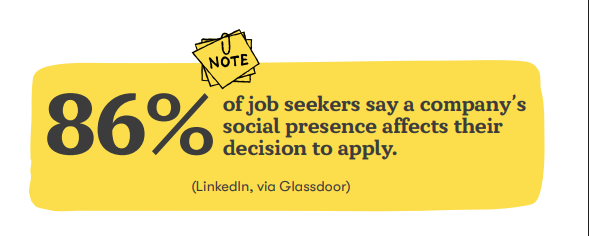
That is where employer brand social media usually misses. It’s often treated as an HR function: office photos, benefits posts, and job listings on the company page. Those have a place, but a startup can’t win senior talent on perks. The big company will always have the bigger salary and the more recognizable name. What the startup has is leaders people can see and want to work for.
There’s also a bonus inside the company. Employees share and comment on their leaders’ posts, which extends reach and reinforces the culture from the inside. The same post that shows a buyer how leadership thinks shows a candidate what it’s like to work there.
What Should CEOs and Founders Post on LinkedIn?
The CEO profile is where an executive personal brand is built, so the content should be something only this person could write. The strongest founder posts usually fall into a few categories:
- Market opinions. Where the industry is heading, what everyone is getting wrong, and why. Example: “Everyone in OT security is talking about AI detection. Our customers are still asking for basic asset visibility. Here’s why that gap matters.”
- Decisions and lessons, including mistakes. Example: “We spent six months building a feature nobody used. Here’s what we changed about how we listen to customers.”
- Customer observations. Patterns from sales calls and implementations, anonymized where needed.
- Building the company. Hiring beliefs, how the team works, milestones and what it took to reach them.
- The founder story. Why they started the company and the problem they couldn’t stop thinking about. This is often the post that gets shared the most, and it’s worth revisiting as the company grows.
- Commentary on news. A clear take on an industry development, a regulation, or a competitor move that matters to the audience.
What to avoid: reshared press releases with no added perspective, generic motivational posts, and anything that reads like it came from the company page with the founder’s name attached.
How Often Should a CEO Post on LinkedIn?
One to two posts per week is a sustainable target for most founders. Consistency matters more than volume: one strong post every week will outperform a burst of daily posting followed by a month of silence.
A simple weekly rhythm might look like:
- One substantive post, such as a market opinion, a lesson, or a customer observation.
- One lighter post every week or two, such as a team milestone, an event recap, or a quick reaction to industry news.
- Regular engagement on other people’s posts, a few times a week, using the opportunities the team surfaces.
That last part matters more than most founders expect. Thoughtful comments on the right posts often build more relationships, and more visibility, than publishing alone.
CEO Profile vs. Company Page: Which Matters More?
Both matter, but they do different jobs. One of the most common mistakes in B2B social media is treating the CEO profile as a second company page. Resharing press releases and product launches from a personal account rarely builds an audience, because it offers nothing the company page doesn’t already offer.
The CEO profile is for personal perspective. It builds trust, reach, and relationships. People follow people, so this is usually where the strongest engagement happens.
The company page is for proof and information. It should carry:
- Product updates, launches, and feature explanations
- Case studies and customer results
- Events, webinars, and reports
- Official announcements, awards, and partnerships
- Team spotlights and culture content
The two should work together. When the company publishes a new research report, the company page shares the findings. The founder shares the one finding that interested them most, and what they take from it.
The company page provides the evidence; the CEO provides the point of view.
A useful test: if a post could be published by any company in your category with only the logo swapped, it belongs on the company page. If it could only have been written by this specific person, it belongs on their profile.
How Do You Know If It’s Working?
Vanity metrics are easy to track and easy to misread. A post with high likes from peers may matter less than one that sparked three direct messages from target accounts. Track across three layers:
Audience quality. Is the founder’s audience growing among the right people? Review follower and engagement data by job title, industry, and company.
Engagement depth. Look beyond likes to comments, saves, shares, and profile visits. Thoughtful comments from prospects or industry peers signal that the content is shaping opinions.
Business outcomes. Signals to watch include:
- Inbound messages and connection requests from target accounts
- Sales conversations where prospects reference the founder’s content
- Investors who mention the founder’s posts in meetings
- Candidates who mention executive posts during interviews
- Invitations to speak, join podcasts, or contribute to industry publications
Adding a simple “How did you hear about us?” field, and training sales and recruiting teams to log mentions of founder content, fills much of the attribution gap that analytics tools miss. Review results quarterly rather than weekly. Executive thought leadership compounds over time, and short-term swings say little about long-term impact.
FAQs
Is it acceptable for a marketing team to ghostwrite a CEO’s posts?
Yes, as long as the ideas, opinions, and experiences belong to the CEO and they approve everything published under their name. Ghostwriting is standard practice for books, speeches, and op-eds, and social content is no different. That includes comments: a team can find the right conversations and draft responses, but the CEO signs off. The line is crossed when posts express views the CEO does not actually hold.
What if the CEO isn’t comfortable writing or posting?
Most founders aren’t natural writers, and they don’t need to be. The interview model works because the founder only has to talk about what they already know. Starting with lower-pressure formats helps too: short commentary on industry news, a reflection on a customer conversation, or a video clip from an interview. Confidence usually grows once the first few posts start real conversations.
Should CEOs post anywhere besides LinkedIn?
LinkedIn is the primary channel for most B2B audiences, but it shouldn’t be the only one. Founders can repurpose their strongest ideas into newsletters, podcast appearances, industry publications, and conference talks. Depending on the sector, X, YouTube, or niche communities may also reach key buyers. Owning an email list adds resilience, since it reduces dependence on any one platform’s algorithm.
What happens to the audience if an executive leaves the company?
The audience stays with the executive, because it is tied to their personal profile. Companies reduce this risk by building several visible leaders rather than relying on one, and by consistently driving executive audiences toward company-owned channels like the company page, newsletter, and events. A thoughtful transition post from the departing leader, introducing their successor, can also pass along some of the trust they built.