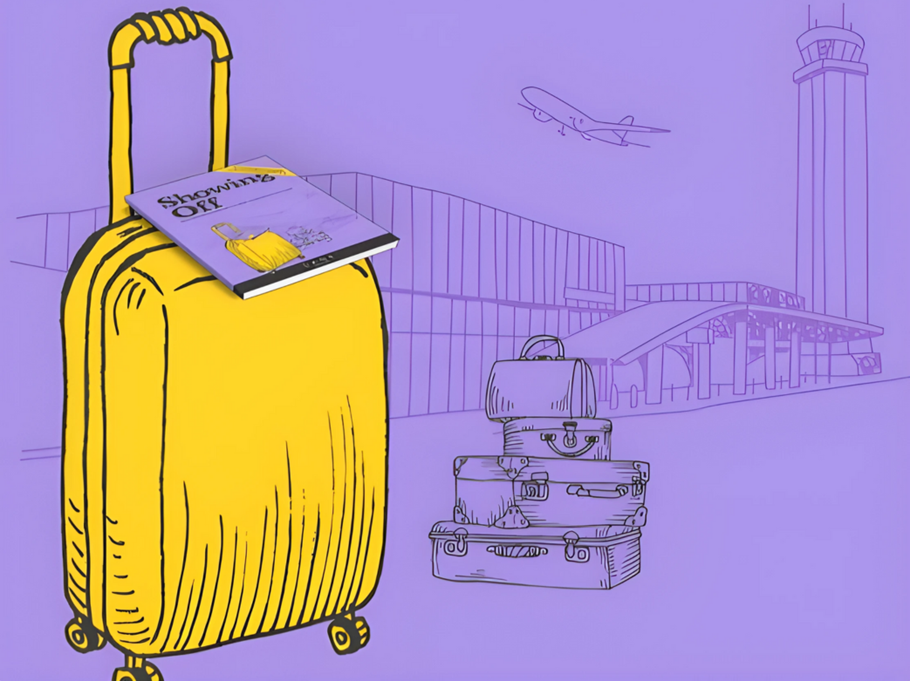
Showing Off: Marketing Handbook for B2B Tradeshow Success

Why Partner with SAGE Marketing?
100+ B2B tech companies and startups — we literally grow unicorns.
No office, no walls — we work inside your world, embedded in your team.
Full-stack marketing approach: strategy, storytelling, content, HubSpot and execution under one roof.
Let’s Build Something Remarkable!
Whether you’re launching, scaling, or rebranding —
we’ll help you connect,
engage, and grow.
Contact us
client logo client logo client logo client logo client logo client logo
Start-Up Tips Marketing Events e-book Tradeshow

Tradeshows have been around forever, yet remain powerful tools for startups and established businesses alike. Let’s be honest, planning an event feels like navigating a maze blindfolded, especially for first timers.

Feeling overwhelmed by your upcoming tradeshow? This eBook is exactly what you need.

At SAGE Marketing we conquered countless B2B Events across diverse industries cracking the code for success every time.

Now we are sharing a bottle-tested secrets with you. From planning to measuring results like a pro, consider this e-Book your go-to-guide to transforming your next event to a smashing success.

Start reading .

From Drift to Drive: Rebuilding the CEO–CMO Connection

Sarit<br> Lamerovich
written by Sarit
Lamerovich
Founder/CEO

Sarit founded SAGE to allow technology companies to take innovation to the next business level and fulfill the entrepreneur’s dream to change the world by building market recognition, increasinge customer awareness and improvinge the foundation for strong and sustainable revenue growth.

Michal Samuels
reviewed by Michal Samuels CMO as a Service

A seasoned CMO-as-a-Service at SAGE Marketing, worked with global start ups to define marketing direction, improve market positioning, and support business growth.

15 min read
Share
Why Partner with SAGE Marketing?
100+ B2B tech companies and startups — we literally grow unicorns.
No office, no walls — we work inside your world, embedded in your team.
Full-stack marketing approach: strategy, storytelling, content, HubSpot and execution under one roof.
Let’s Build Something Remarkable!
Whether you’re launching, scaling, or rebranding —
we’ll help you connect,
engage, and grow.
Contact us
client logo client logo client logo client logo client logo client logo
Blog Start-Up Tips Branding Marketing

Companies With Strong Alignment Are 2x More Likely to Achieve Over 5% Growth

Let’s talk about the business breakup nobody’s discussing, the widening rift between CEOs and CMOs.

McKinsey’s latest research, highlighted in Adweek, found that CEO-CMO alignment dropped by 20% between 2023 and 2025. Miscommunication over roles and muddy metrics are eroding trust in the C-suite.

And the cracks are showing: 

Only 22% of CEOs say marketing drives growth in their organization. Worse yet, CMOs have the shortest tenure in the C-suite (just 3.5 years). Why? Because somewhere along the way, CEOs stopped seeing marketing as a growth engine and started treating it like a cost center.

But here’s the kicker: Companies with strong CEO-CMO alignment grow 2x faster. So why are these two drifting apart? And more importantly, how do we fix it?

Spoiler alert: CMO-as-a-Service might be the secret weapon.

SO … What’s Really Going On

McKinsey’s research reveals some brutal truths:

Role Confusion:

In 2023, 90% of CEOs said marketing’s purpose was clear. By 2025, that number plummeted to 70%. The fallout? CMOs feel sidelined. Only 50% are involved in strategic planning, and in the Fortune 500, 37% of companies no longer even have a CMO at the table.

Metrics That Don’t Match:

While 70% of CEOs measure marketing success via revenue and margin, only 35% of CMOs do the same. 

Lost in Translation:

When CMOs talk “web traffic” or “brand awareness,” CEOs are waiting for the bottom-line results they actually care about. No wonder they’re not speaking the same language.

The Growth vs. Brand Tug-of-War:

60% of CEOs demand customer acquisition NOW, while CMOs are stuck justifying long-term brand spend. The result? Reactive, short-term campaigns that fizzle out fast and a pipeline that never gains real momentum.

The ROI Black Box:

Only 35% of CEOs believe marketing can prove its ROI. So guess what gets cut first when budgets tighten? (Hint: It’s not the sales team’s expense accounts.)

This isn’t just a communication problem, it’s a full-blown growth crisis.

The Stakes Are Real: Growth, Trust & Cold Hard Cash

McKinsey’s data paints a make-or-break picture: Strategic CMOs = Growth Rocket Fuel


When CEOs treat their CMO as a true growth driver (not just a campaign executor), companies are 2X more likely to smash 5%+ annual growth. But when alignment fails? Marketing gets downgraded to a cost center and we all know what happens to cost centers come budget season.

The Budget Bloodbath

  • 80% of CEOs admit marketing is underfunded
  • 77% of CMOs agree (for once, they’re on the same page—just not the page anyone wants)
  • The proof? Global ad spend tanked from 9.1% to 7.7% of revenue in 2024

The result? Misalignment doesn’t just cause tension, it costs money. Every percent cut from the marketing budget means fewer leads, slower sales, and more room for competitors to win.

How to shift the Drift to Drive?

A. Speak the CEO’s Language ($$$, Not Buzzwords)

CEOs care about revenue, margins, and scalability, not “engagement rates.” McKinsey found that CMOs who tie campaigns directly to revenue get 3x more CEO buy-in.

Ditch the Vanity Metrics

B. No more “likes and shares” reports. Instead, track:


– Marketing-sourced pipeline
– Customer lifetime value (LTV) lift
– Cost per acquisition (Customer Acquisition Costs ) efficiency

C. Bring a CFO Into the Mix

McKinsey’s data shows that CEO-CMO-CFO alignment boosts marketing’s credibility. When finance backs your numbers, the CEO listens.

The CMO-as-a-Service Advantage: Bridging the Gap with Surgical Precision

Here’s the reality: Not every company needs (or can afford) a full-time CMO. But that doesn’t mean you should go without strategic marketing leadership.

Enter CMO-as-a-Service—your on-demand growth architect.

At SAGE Marketing, we don’t just plug campaigns and tactics , we rewire the entire CEO-CMO connection. When we step in as your CMO-as-a-Service, we look at  the system from the ground up. Whether building marketing infrastructure from scratch or supercharging an overwhelmed team, we start where it matters most: the leadership table. We force clarity on business objectives, stress-test your market positioning, and reclaim marketing’s seat at the strategy discussion—the one most CMOs lost years ago.

Here’s how we deliver what internal teams can’t:

  • CEO-Aligned from Day One
    We speak the language of revenue and margins first, brand buzzwords last. No more translating marketing metrics into business impact; we lead with it. And we use HubSpot CRM to measure the results and make sure all activities both from the marketing side as well as the sales side are aligned and connected.
  • Value Proposition Stress Test
    Before spending a dollar, we pressure-test your messaging against what actually moves deals. No “brand awareness” black holes, just conversion-focused positioning.
  • Zero-Politics Execution
    Unburdened by internal hierarchies, we cut through bureaucracy to implement what works, fast.
  • Outcome-Obsessed Engagement
    Our project-based model ties every dollar to measurable results. No retainers for vague “strategy”, just hard ROI.
  • Trust Repair Kit
    We rebuild credibility between CEOs and marketing by delivering visible wins in the short time frames.

The result? Companies working with SAGE Marketing see:
– Increase in  pipeline quality
– Decrease in customer acquisition costs
– And most importantly CEO satisfaction with marketing

This isn’t about adding another marketer, it’s about installing a growth accelerator that finally aligns your leadership team. The best part? You only pay for the transformation, not the title.

Final Word

The message is simple: Ignore the data, and the disconnect widens, breaking trust, defunding efforts, and strangling growth. Fix it. Bring clarity, metrics, and partnership into your CMO role. And if you don’t have a CMO onboard, SAGE’s CMO-as-a-Service is the shortcut to strong C-suite alignment and real results.

The 7 Questions Every CMO Should Be Asking

If you’re a CMO, or acting as one you can’t afford to just talk campaigns. You need to ask the questions that earn you a seat at the strategic table and build trust where it’s breaking. Start here:

1. What are the CEO’s top 3 business goals this quarter and how is marketing contributing to each?

Don’t assume alignment. Get clarity, then build your marketing roadmap backward from real business KPIs.

2. Which metrics actually matter to the CFO?

Revenue growth? Gross margin? Customer Acquisition Costs -to-Life Time Value ratio? Match your reporting to what finance values or risk getting ignored.

3. What’s our definition of success and how will we measure it?

Awareness? Pipeline? Closed-won deals? Define it together. The biggest disconnects come from different scorecards.

4. Where is marketing viewed as a cost vs. a driver of growth?

Dig into perceptions across the org. If it’s seen as “nice to have,” you’ve got a positioning problem.

5. Are we building long-term brand equity or just chasing short-term leads?

Balance both. CEOs often want quick wins, but your job is also to invest in tomorrow’s revenue.

6. How can we test, learn, and pivot faster?

Show you’re not just creative,  you’re iterative and data-driven. That earns confidence.

7. Would we hire us again?

If your current marketing function applied for the job today, would leadership say yes? If not fix it, fast.

Final Thought

The CEO-CMO divide isn’t just a “marketing problem” it’s a business survival problem. The companies that win will be the ones who fix this drift before their competitors do.

And if you don’t have the right CMO in place yet? No panic. That’s exactly why we exist.

Sarit
Lamerovich
Founder/CEO
About
the author
Sarit founded SAGE to allow technology companies to take innovation to the next business level and fulfill the entrepreneur’s dream to change the world by building market recognition, increasinge customer awareness and improvinge the foundation for strong and sustainable revenue growth.
Learn more

Why More Enterprises Are Moving Away  from Salesforce to HubSpot – And Why You Should Be Paying Attention

Niv Lamerovich
written by Niv Lamerovich Head of Sales and Business Development

At SAGE Marketing, Niv plays a key role in growing the HubSpot CRM practice by building trusted client relationships and ensuring every engagement is grounded in real business impact.

Roman Boruhov
reviewed by Roman Boruhov Head of HubSpot and Automation

Roman is valued by peers and clients alike for his professionalism, responsiveness, and ability to demystify complex systems - turning data and workflows into actionable insights that fuel business outcomes.
7 min read
Share
Why Partner with SAGE Marketing?
Deep expertise in CRM, RevOps & AI workflows.
End-to-end HubSpot support in one place.
Proven results across 100+ B2B tech brands.
Customized service plans based on your needs.
Let’s Build Something Remarkable!
From smart architecture and automation to dashboards, SAGE’s HubSpot team plugs in and elevates the entire funnel.
Contact us
client logo client logo client logo client logo client logo client logo
Start-Up Tips Hubspot Sales

Salesforce used to be the undisputed leader in enterprise CRM. But times are changing.

Today, companies like Atlassian (for marketing automation) and DoorDash (for sales and support) rely on HubSpot to power critical revenue teams.

With 258,000+ customers across 135+ countries and enterprise adoption growing over 40% year over year, HubSpot has evolved far beyond its mid-market and marketing automation roots. It’s now a serious contender — and in many cases, the preferred choice  for global enterprises, public companies, and Fortune 500 teams.

So why are so many organizations moving away from Salesforce and choosing HubSpot instead?

And more importantly should your company be doing the same?

Let’s break it down.


1. Usability and Adoption Are No Longer Optional

Enterprise CRM projects often fail not because of a lack of features, but because of poor adoption. Salesforce’s complexity can slow teams down, frustrate users, and create silos between departments.

HubSpot was built differently. Its clean interface, intuitive navigation, and consistent experience across Sales, Marketing, Service, and Ops mean faster adoption and greater impact, without the need for full-time admins or consultants just to keep the system running.

“HubSpot customers report 3x faster adoption rates vs. Salesforce” (Gartner, 2023).

🟢 Enterprise takeaway: If your team is constantly struggling to use the CRM, you’re losing time, data quality, and revenue.


2. Total Cost of Ownership Is Under Pressure

Salesforce often comes with unexpected costs from user licenses and integration fees to third-party consultants and internal admin hours.

HubSpot, on the other hand, offers transparent pricing and a modular platform that can scale as you grow. It reduces the need for constant development and saves both time and money on maintenance.

🟢 Enterprise takeaway: CFOs and CIOs are increasingly scrutinizing spend and platforms like HubSpot are winning when it comes to long-term ROI.


3. All-in-One Platform for Revenue Teams

Salesforce was built around sales. Over time, marketing automation, service, and analytics were added — but often feel disconnected.

HubSpot takes a unified approach: it was built from the ground up to serve marketing, sales, service, and RevOps on one connected system, with shared data and a single source of truth.

🟢 Enterprise takeaway: If you’re pushing for true RevOps alignment, HubSpot offers a cleaner and more efficient way to unify your go-to-market teams.


4. Faster Time to Value

Enterprise CRM migrations can take months, even years, to fully roll out and adopt.

HubSpot’s implementation is significantly faster. Its intuitive UI, native tools, and robust onboarding ecosystem make it possible to go live, train your teams, and start seeing value in a matter of weeks, not quarters.

🟢 Enterprise takeaway: In today’s market, speed matters. A CRM that delivers value faster can give you a real competitive edge.


5. Enterprise-Grade Features, Without the Enterprise Complexity

There’s a common myth that HubSpot can’t handle enterprise-level needs. That’s no longer true.

With features like:

  • Custom objects
  • Granular permissions
  • Advanced reporting & forecasting
  • Sandboxes
  • Multi-touch attribution
  • AI-powered automation
  • Salesforce-like integrations and APIs

…HubSpot now checks nearly every box enterprise teams need — while still maintaining ease of use.

🟢 Enterprise takeaway: You no longer have to choose between power and simplicity. HubSpot delivers both.


6. The Ecosystem Is Growing Fast

With HubSpot’s rapid innovation and rising enterprise adoption, the ecosystem around it — from integrations to certified partners has matured significantly. Global companies like Atlassian, DoorDash, and Loom are already using HubSpot for parts or all of their operations.

🟢 Enterprise takeaway: You’re not early to the party, you’re joining the next wave of modern enterprises reshaping how go-to-market teams work.


Is Now the Right Time to Consider the Shift?

If you’re in the middle of a Salesforce renewal, re-evaluating your RevOps stack, or simply frustrated by high complexity and low adoption now may be the perfect time to consider a move to HubSpot.

The transition doesn’t have to be disruptive. With the right strategy and implementation partner, a Salesforce to HubSpot migration can be a seamless upgrade, not a risk.


Final Thoughts

The momentum toward HubSpot isn’t just a trend, it’s a reflection of how modern enterprises want to work: faster, more collaboratively, and more intelligently.

If you’re curious whether your organization could benefit from making the switch, we’re here to help you explore it without pressure.

👉 Schedule a free consultation to evaluate your CRM landscape and see if HubSpot is the right fit.

❓ Frequently Asked Questions (FAQ)

1. Is HubSpot really suitable for enterprise-level organizations?
Yes. HubSpot has made major strides in recent years to meet enterprise needs, including advanced permissions, custom objects, sandboxes, multi-touch attribution, and powerful reporting. Companies like Atlassian, DoorDash, and Loom are already using HubSpot at scale.

2. How long does a typical migration from Salesforce to HubSpot take?
While Salesforce migrations can take several months or more, many enterprise teams go live with HubSpot in a matter of weeks, especially with the right partner to guide the process.

3. What are the key cost differences between HubSpot and Salesforce?
Salesforce often incurs hidden costs like integration work, development time, and admin resources. HubSpot’s pricing is more transparent and its modular design reduces overhead by eliminating the need for constant customization and maintenance.

4. Will I lose important data or functionality in the migration?
Not if the migration is done properly. A certified partner can help map and migrate your Salesforce data including contacts, deals, activities, and custom fields — while ensuring critical workflows and automations are rebuilt in HubSpot.

5. Can HubSpot integrate with my existing tech stack?
Absolutely. HubSpot offers native integrations with hundreds of tools and a robust API for custom connections. If it connects with Salesforce, it likely connects with HubSpot, too.

6. What’s the cost of not switching? Use our free CRM Health Audit to spot revenue leaks in your current setup.?
If you’re dealing with low adoption, high costs, fragmented tools, or a CRM that’s slowing down your go-to-market teams it’s a good time to re-evaluate. Especially before a Salesforce renewal or major system overhaul.

7. What You Lose by Delaying the Switch?

  • Rising admin costs/year
  • Missed revenue from poor adoption
  • Competitive disadvantage (e.g., slower AI adoption)

Schedule a free consultation to evaluate your CRM landscape.

Niv Lamerovich Head of Sales and Business Development
About
the author
At SAGE Marketing, Niv plays a key role in growing the HubSpot CRM practice by building trusted client relationships and ensuring every engagement is grounded in real business impact.
Learn more