












































What CEOs Should Expect from Their CMOs in 2026

Sarit<br> Lamerovich
written by Sarit
Lamerovich
Founder/CEO

Sarit founded SAGE to allow technology companies to take innovation to the next business level and fulfill the entrepreneur’s dream to change the world by building market recognition, increasinge customer awareness and improvinge the foundation for strong and sustainable revenue growth.

Shlomit<br> Hertz
reviewed by Shlomit
Hertz
CMO-as-a-Service

Today, as CMO-as-a-Service at SAGE Marketing, Shlomit partners with technology companies to build powerful brands, accelerate demand generation, and connect innovation with results. Her approach is creative, data-driven, and always focused on what truly matters — turning strategy into measurable success.

10 min read
Share
Why Partner with SAGE Marketing?
100+ B2B tech companies and startups — we literally grow unicorns.
No office, no walls — we work inside your world, embedded in your team.
Full-stack marketing approach: strategy, storytelling, content, HubSpot and execution under one roof.
Let’s Build Something Remarkable!
Whether you’re launching, scaling, or rebranding —
we’ll help you connect,
engage, and grow.
Contact us
client logo client logo client logo client logo client logo client logo
Start-Up Tips Cmo as a service CEO CMO B2B Marketing

Last week I participated in a Gartner webinar that explored the trends, priorities, and actions shaping the CMO role in 2026. I joined with the natural curiosity of someone who has been working for years at the intersection of marketing, growth, and global expansion, expecting to hear about the usual mix of data, technologies, and performance frameworks. All of these were present, but what stayed with me long after the session ended was not a specific model or statistic. It was the growing realization that the role of the CMO is no longer in transition. It is being fundamentally redefined.

In my work with B2B Tech at different stages, from early traction to global scale, I have repeatedly seen the same moment of tension. It usually happens when a CEO turns to the marketing leader and asks a question that has nothing to do with campaigns: Where do we actually win? Why do customers choose us? How do we become the obvious choice in our category?

These are not marketing questions in the traditional sense. They are questions about direction, focus, and long-term growth. Yet increasingly, they are being placed on the CMO’s desk.

What the Gartner session did was to give structure and language to a shift that is already happening inside companies. It organized this transformation around three connected movements: the impact of AI on marketing, the evolution of marketing into customer engagement leadership, and the emergence of the future-forward CMO.

Taken together, they describe not a change in tactics but a change in the center of gravity of the entire growth model.

1. Marketing in the AI Era

For many years marketing success was closely tied to the ability to produce. The teams that could launch more campaigns, generate more content, test more variations, and optimize faster were the teams that created an advantage. Scale came from volume and from the growing sophistication of tools that allowed us to manage that volume.

Artificial intelligence changes this equation in a way that is both obvious and deeply misunderstood. On the surface it accelerates everything. Content can be generated instantly, data can be analyzed in seconds, and customer journeys can be automated in ways that previously required entire teams. But beneath that acceleration lies a more disruptive effect: when everyone has access to the same capabilities, execution becomes a commodity.

This shift is not theoretical. One of the most striking visuals in the session showed just how exposed our most “proven” digital channels are to AI disruption.

It showed that the digital channels we have invested in most heavily over the past decade search, social, digital display, SEO, and email, are also the ones most at risk in an AI-mediated discovery model. For years, these channels were considered the safest engines of predictable growth. We optimized them, measured them, and built entire performance organizations around them. But when discovery shifts from browsing to asking, from clicking to receiving an answer, the rules change. The buyer may never reach a results page. The journey may begin inside an AI interface. And in that environment, visibility is no longer a function of budget allocation alone. It is a function of authority, relevance, and brand preference.

The advantage shifts from doing to deciding.

This is the point at which many organizations experience discomfort. They invest in AI platforms and expect transformation, but the transformation they actually encounter is a mirror. It reflects back the level of strategic clarity they already had. Companies that were clear about their positioning become faster and more effective. Companies that were not clear become louder but not more relevant.

In conversations with CEOs this is becoming increasingly visible. The question is no longer how to generate more leads or how to reduce cost per acquisition. The question is how to remain meaningful in a market where buyers are exposed to an endless stream of similar messages, similar promises, and similar experiences.

This is where brand returns to the center of the business conversation, but in a very different form from the way it was discussed in the past. Brand is no longer a top-of-funnel awareness play. It is the mechanism that allows a company to create trust at scale. It is the speed at which a buyer understands who you are and why you matter. In a world mediated by AI interfaces and algorithmic discovery, that speed becomes a direct driver of revenue.

The companies that will lead in the AI era are not those that produce the most content. They are those that are the clearest in their meaning. Clarity becomes a growth engine, and defining that clarity becomes one of the CMO’s most critical responsibilities.

2. Marketers as Customer Engagement Leaders

If AI shifts the focus from execution to decision-making, the second transformation shifts the scope of responsibility from marketing as a function to marketing as the architect of customer engagement.

One of the most consistent patterns I see when working with scaling companies is fragmentation. Marketing generates demand, sales manages opportunities, customer success handles adoption, and product builds features — each operating with its own language, its own metrics, and its own priorities. From an internal perspective this structure may seem logical. From the customer’s perspective it feels like interacting with several different companies.

Growth slows not because there is a lack of activity but because there is a lack of continuity.

The future CMO is the person who is expected to design that continuity.

This does not mean owning every interaction. It means defining the narrative and the value logic that connects all interactions. It requires a deep understanding of how customers move from first awareness to long-term loyalty, what they experience at each stage, what they need to believe in order to progress, and how the organization must operate in order to support that progression.

This is why the role moves closer to revenue and to the core of the business. Customer engagement leadership is not about communication alone. It is about shaping the way the company creates value over time.

In practical terms this means that the CMO must be as fluent in sales cycles and pricing models as in messaging frameworks. It means understanding how product adoption influences expansion, how customer experience influences brand perception, and how data flows between systems influence decision-making. It is a systems role rather than a campaign role.

When this shift happens successfully, marketing stops being a support function and becomes the integrative force that aligns the organization around a shared understanding of the customer. It becomes the discipline that ensures that the promise made in the first interaction is fulfilled throughout the entire relationship.

3. Becoming a Future-Forward CMO

All of these changes converge in the emergence of a new kind of marketing leader: the future-forward CMO.

This is not simply a CMO with more responsibilities. It is a different profile altogether. The future-forward CMO operates at the intersection of market insight, business strategy, brand definition, and revenue architecture. They are not measured primarily by the volume of activity they generate but by the quality of the choices they enable the organization to make.

In a world of infinite channels and constant technological change, growth comes from focus. Focus requires the courage to choose where to play and where not to play, which audiences to prioritize and which to ignore, what the company will be known for and what it will deliberately leave outside its narrative.

These are not tactical decisions. They are acts of leadership.

This is also why the relationship between the CEO and the CMO is changing. In the most effective organizations, the CMO is not the person who reports on marketing performance. They are the person who co-creates the growth strategy. They bring an external perspective on the market, a deep understanding of customer behavior, and the ability to translate both into a positioning that the entire organization can execute against.

Over the past decade I have seen that the companies that successfully move from early traction to true market leadership always make this shift. They stop asking marketing to promote what already exists and start asking it to define what the company should become in the eyes of the market.

This is when growth accelerates in a way that no campaign alone can achieve. Deal velocity increases because buyers arrive with a clear understanding of the value. Pricing power improves because the company is no longer compared on features alone. Talent is attracted because the narrative is compelling. Investors gain confidence because the market position is coherent.

All of these outcomes originate from clarity, and clarity is the core product of the future-forward CMO.

A New Expectation

For CEOs looking toward 2026, this transformation requires a change in expectation. The question is no longer whether the company has a marketing function. The question is whether the company has the kind of marketing leadership that can design its growth logic in a world where execution is increasingly automated and differentiation comes from perspective.

When we chose the name SAGE, we chose it because it represents knowledge, experience, and the responsibility to use both in order to enable growth for others. In an AI-driven environment this idea becomes even more relevant. Technology can scale activity, but it cannot replace the ability to see patterns, to connect insights, and to make the right strategic choices at the right moment.

The role of the CMO is therefore not shrinking. It is becoming one of the most central leadership roles in the organization. It is the role that defines how the company is understood by the market and how that understanding is translated into long-term value.

For companies that recognize this shift early, the CMO will not be a functional leader. They will be a growth architect.

And for CEOs, the most important question going into 2026 will not be how much to invest in marketing, but whether they have the marketing leadership required to compete in the era that is already unfolding.

Sarit
Lamerovich
Founder/CEO
About
the author
Sarit founded SAGE to allow technology companies to take innovation to the next business level and fulfill the entrepreneur’s dream to change the world by building market recognition, increasinge customer awareness and improvinge the foundation for strong and sustainable revenue growth.
Learn more

Must-Attend AI Conferences in 2026

Shlomit<br> Hertz
written by Shlomit
Hertz
CMO-as-a-Service

Today, as CMO-as-a-Service at SAGE Marketing, Shlomit partners with technology companies to build powerful brands, accelerate demand generation, and connect innovation with results. Her approach is creative, data-driven, and always focused on what truly matters — turning strategy into measurable success.

Sarit<br> Lamerovich
reviewed by Sarit
Lamerovich
Founder/CEO

Sarit founded SAGE to allow technology companies to take innovation to the next business level and fulfill the entrepreneur’s dream to change the world by building market recognition, increasinge customer awareness and improvinge the foundation for strong and sustainable revenue growth.

10 min read
Share
Why Partner with SAGE Marketing?
100+ B2B tech companies and startups — we literally grow unicorns.
No office, no walls — we work inside your world, embedded in your team.
Full-stack marketing approach: strategy, storytelling, content, HubSpot and execution under one roof.
Let’s Build Something Remarkable!
Whether you’re launching, scaling, or rebranding —
we’ll help you connect,
engage, and grow.
Contact us
client logo client logo client logo client logo client logo client logo
B2B Marketing start-ups Conferences AI Marketing

Artificial intelligence is no longer an emerging trend, it’s the infrastructure powering modern business. From enterprise automation and AI infrastructure to responsible AI governance and machine learning innovation, 2026 is shaping up to be a defining year for the industry.

For founders, CXOs, AI leaders, data scientists, Deep Tech experts, investors, and enterprise decision-makers, attending the right AI conferences offers far more than stage presentations. These events provide direct access to industry leaders and innovators, early insights into emerging AI infrastructure and enterprise adoption trends, and high-value networking with real decision-makers. They create exposure to real-world case studies and enterprise implementation strategies – while opening doors to partnerships, fundraising conversations, and go-to-market expansion opportunities.

In a market evolving at unprecedented speed, being in the right room or hall, can accelerate strategy, sharpen positioning, and create momentum that digital channels alone cannot replicate.

Here’s a curated list of the top AI conferences to attend in 2026.

Top AI Conferences to Attend in 2026

1. Gartner Data & Analytics Summit (US)

Date: March 9–11, 2026
Location: Orlando, FL, USA

One of the most influential enterprise data and AI events globally, this summit gathers CIOs, CDOs, and analytics leaders to discuss AI governance, enterprise data strategy, and digital transformation.

Why Attend:

  • Enterprise-grade AI strategy insights
  • Analyst-led sessions from Gartner experts
  • Strong presence of Fortune 500 decision-makers

Best For: Enterprise AI leaders, CIOs, marketing and data executives.

2. AI Infrastructure Summit

Date: March 15–17, 2026
Location: Munich, Germany

Focused on the backbone of AI – compute, chips, scaling, and infrastructure. This summit is essential for technical leaders building next-generation AI systems.

Why Attend:

  • Deep dives into AI hardware and cloud infrastructure
  • Infrastructure-focused networking
  • Europe’s growing AI ecosystem

Best For: AI engineers, infrastructure leaders, CTOs.

3. NVIDIA GTC

Date: March 16–19, 2026
Location: San Jose, California, USA

NVIDIA’s flagship conference is one of the most influential AI events globally, covering generative AI, robotics, accelerated computing, and enterprise AI solutions.

Why Attend:

  • Cutting-edge AI announcements
  • Access to NVIDIA ecosystem partners
  • Technical sessions + executive tracks

Best For: AI builders, startups, enterprise innovation teams.

4. HumanX

Date: April 6–9, 2026
Location: San Jose, California, USA

HumanX bridges AI innovation with real-world business application, bringing together founders, investors, and operators.

Why Attend:

  • High-level networking
  • Focus on AI commercialization
  • Strong startup-investor presence

Best For: Founders, VCs, growth-stage AI companies.

5. MLcon Conference and Training

Date: April 20–24, 2026
Location: Amsterdam, Netherlands 

MLcon combines practical machine learning training with advanced technical sessions.

Why Attend:

  • Hands-on workshops
  • Applied ML case studies
  • Strong technical audience

Best For: Data scientists, ML engineers, technical product leaders.

6. ODSC East

Date: April 28–30, 2026
Location: Boston, Massachusetts, USA

Open Data Science Conference (ODSC) is a practitioner-first event focused on real implementation.

Why Attend:

  • Open-source AI discussions
  • Technical deep dives
  • Strong data science community

Best For: AI practitioners, researchers, technical teams.

7. Rise of AI

Date: May 5–6, 2026
Location: Berlin, Germany

A leading European AI leadership conference connecting enterprises, policymakers, and startups.

Why Attend:

  • European AI policy discussions
  • Enterprise AI adoption
  • Cross-border networking

Best For: European AI founders, policy leaders, enterprise executives.

8. European AI & Cloud Summit

Date: May 5–7, 2026
Location: Cologne, Germany

Focused on AI integration within cloud ecosystems and enterprise IT environments.

Why Attend:

  • AI + cloud infrastructure alignment
  • Enterprise case studies
  • Microsoft and enterprise ecosystem presence

Best For: Cloud leaders, enterprise architects, IT executives.

9. Gartner Data & Analytics Summit (EMEA)

Date: May 11–13, 2026
Location: London, UK

The European edition of Gartner’s flagship data summit brings together regional enterprise leaders.

Why Attend:

  • EMEA-focused AI insights
  • Analyst strategy sessions
  • Enterprise-level networking

Best For: European enterprise decision-makers.

10. AI Everything Abu Dhabi

Date: May 11–13, 2026
Location: Abu Dhabi

One of the fastest-growing AI events in the Middle East, connecting governments, startups, and global tech leaders.

Why Attend:

  • Strong government AI initiatives
  • Rapidly growing MENA ecosystem
  • Cross-continental business opportunities

Best For: Founders expanding to MENA, global AI vendors.

11. AI WEEK

Date: May 19–20, 2026
Location: Milan, Italy

Italy’s leading AI event blending enterprise, startup, and academic communities.

Why Attend:

  • Southern European AI growth market
  • Practical business applications
  • Accessible networking environment

Best For: SMB leaders, AI consultants, European startups.

12. AI 2030 Summit London

Date: June 10, 2026
Location: London, UK

A forward-looking summit focused on AI’s long-term global impact and responsible development.

Why Attend:

  • Strategic AI foresight
  • Policy + innovation dialogue
  • High-level executive networking

Best For: Policymakers, strategists, enterprise executives.

13. Gartner IT Symposium/Xpo

Date: September 14–16, 2026
Location: Australia

A major enterprise IT and AI strategy conference for the APAC region.

Why Attend:

  • CIO-focused programming
  • Enterprise AI implementation strategies
  • Strong regional executive presence

Best For: APAC enterprise leaders, CIOs, IT strategists.

14. AI Infra Summit

Date: September 15–17, 2026
Location: Santa Clara, CA USA

The U.S. edition of AI Infra Summit focuses on scaling AI systems, compute, and infrastructure economics.

Why Attend:

  • Deep technical focus
  • Infrastructure vendor ecosystem
  • Silicon Valley AI networking

Best For: CTOs, AI infrastructure engineers.

15. Responsible AI Summit

Date: September 21–23, 2026
Location: London, UK

Dedicated to governance, ethics, and compliance in AI deployment.

Why Attend:

  • Responsible AI frameworks
  • Regulatory updates
  • Risk management strategies

Best For: Compliance officers, AI governance leaders, enterprise risk teams.

16. World AI Week

Date: October 5–9, 2026
Location: Amsterdam, Netherlands

A multi-day AI gathering covering business, startups, research, and innovation.

Why Attend:

  • Broad AI ecosystem exposure
  • International audience
  • Cross-sector collaboration

Best For: Founders, investors, enterprise innovation teams.

17. AI & Big Data Expo Europe

Date: October 20–21, 2026
Venu: Amsterdam, Netherlands

A large-scale enterprise tech expo focused on AI, big data, and digital transformation.

Why Attend:

  • Enterprise technology buyers
  • Strong vendor presence
  • Cross-industry use cases

Best For: B2B AI companies, enterprise sales teams.

18. TEDAI Vienna

Date: October 28–30, 2026
Venu: Vienna, Austria

An extension of the TED brand focused exclusively on AI, blending innovation, philosophy, and future-thinking.

Why Attend:

  • Thought leadership
  • Big-picture AI conversations
  • Cross-disciplinary inspiration

Best For: Visionary leaders, strategists, founders.

Why AI-Focused Events Matter More Than Ever

AI conferences today are not just technology showcases – they are growth accelerators. They shape industry narratives, define market leaders, and influence enterprise buying decisions.

For AI startups, infrastructure providers, enterprise platforms, and consultancies alike, these events create rare access to technical buyers, CIOs, innovation leaders, regulators, and investors – all in one place. In a space moving as quickly as AI, direct conversations often move faster than months of outbound campaigns.

More importantly, AI buyers are becoming more sophisticated. They’re evaluating infrastructure scalability, governance frameworks, model transparency, and long-term viability. Being visible – and credible – in the right rooms matters.

The Strategic Approach to AI Event ROI

Success at AI conferences requires more than sponsorship logos and speaking slots. To generate measurable impact, companies need a coordinated strategy before, during, and after the event.

That means:

  • Pre-event awareness campaigns targeting attendees
  • Clear value propositions tailored to AI buyers
  • Onsite brand positioning that differentiates in crowded expo halls
  • Structured lead capture integrated with CRM systems
  • Post-event nurturing workflows aligned with complex AI sales cycles

At SAGE Marketing, we help AI and B2B tech companies turn event participation into structured pipeline growth. From strategic messaging and campaign buildout to HubSpot-powered tracking and performance attribution, we ensure every interaction contributes to measurable revenue outcomes.

How SAGE Marketing Supports AI Companies

With deep expertise across B2B Tech, AI, and data-driven industries, SAGE delivers:

  • Strategic positioning tailored to AI categories (GenAI, infrastructure, MLOps, Responsible AI)
  • Booth and collateral messaging aligned with technical and executive audiences
  • Event-driven digital campaigns (SEO, GEO, paid, social, and retargeting)
  • HubSpot implementation and multi-touch attribution tracking
  • Lead nurturing frameworks built for longer enterprise AI sales cycles

👇 Want the Complete Events Playbook?

We’ve distilled our methodology into a practical B2B Tech Trade Show Marketing Handbook – including campaign templates, pre-event promotion frameworks, trade show checklists, budgeting sheets, and real-world case studies from AI product launches.

Whether you’re unveiling a new AI solution, expanding into new markets, or positioning your brand as a category leader, this guide helps you turn conference participation into structured growth.

AI events aren’t just about attendance.
They’re about visibility, credibility, and sustained follow-through, they are one of your growth engines. 

Shlomit
Hertz
CMO-as-a-Service
About
the author
Today, as CMO-as-a-Service at SAGE Marketing, Shlomit partners with technology companies to build powerful brands, accelerate demand generation, and connect innovation with results. Her approach is creative, data-driven, and always focused on what truly matters — turning strategy into measurable success.
Learn more

11 ChatGPT Prompts for Sales People with HubSpot’s Deep Research Connector

Niv Lamerovich
written by Niv Lamerovich Head of Sales and Business Development

At SAGE Marketing, Niv plays a key role in growing the HubSpot CRM practice by building trusted client relationships and ensuring every engagement is grounded in real business impact.

Roman Boruhov
reviewed by Roman Boruhov Head of HubSpot and Automation

Roman is valued by peers and clients alike for his professionalism, responsiveness, and ability to demystify complex systems - turning data and workflows into actionable insights that fuel business outcomes.

6 min read
Share
Why Partner with SAGE Marketing?
Deep expertise in CRM, RevOps & AI workflows.
End-to-end HubSpot support in one place.
Proven results across 100+ B2B tech brands.
Customized service plans based on your needs.
Let’s Build Something Remarkable!
From smart architecture and automation to dashboards, SAGE’s HubSpot team plugs in and elevates the entire funnel.
Contact us
client logo client logo client logo client logo client logo client logo
Hubspot start-ups Sales B2B

Key Takeaways

  • AI Adoption is Exploding: 56% of sales professionals now use AI daily, and those who do are twice as likely to exceed their targets.
  • Research Bottlenecks are Dead: 95% of seller research workflows will begin with AI by 2027, moving from manual data digging to AI-curated intelligence.
  • The HubSpot Advantage: The Deep Research Connector allows for “doctorate-level” analysis of CRM data using natural language, removing the need for dedicated data analysts.
  • Performance Gains: Teams using AI for buyer intelligence see 5% higher account growth and a 30% increase in win rates by focusing on high-impact actions.

The End of the “Data Graveyard”

For years, CRM systems were where data went to die. Sales reps spent more time logging calls and hunting for “stuck” deals than actually selling. That paradigm has shifted. The problem isn’t a lack of data; it’s the inability to extract actionable insights at the speed of a phone call.

The solution has arrived in the form of the HubSpot Deep Research Connector for ChatGPT. By bridging the gap between raw CRM records and generative intelligence, sales teams can now query their pipeline as easily as they ask for a coffee recommendation. This isn’t just a new tool; it’s a force multiplier that turns every sales rep into a data scientist.

What the Data Says: The AI Sales Revolution in 2025-2026

The numbers don’t lie. The shift toward AI-integrated selling is no longer “experimental”, it’s a requirement for survival.

  • Adoption Surge: AI adoption among sales representatives nearly doubled in just twelve months, rising from 24% to 43%.
  • The “Success Gap”: Professionals who leverage AI daily are twice as likely to exceed their sales targets compared to non-users.
  • Revenue Impact: 83% of AI-equipped sales teams report revenue growth, while 71% of businesses using AI in sales specifically credit the technology for their gains.
  • Productivity Gains: AI is projected to double the time reps spend actually selling from 25% of their day to 50% by automating the “work about work”.

In the modern sales environment, your competitive advantage is no longer your product; it’s your speed to insight. The faster you can identify why a deal is stuck, the faster you can unblock it.

Why Sales Teams Should Use HubSpot’s Deep Research Connector

The primary reason for this integration is prospect intelligence. Traditional CRM reports are static. They tell you what happened last week, but they struggle to tell you why it happened or what to do next.

Key Benefits for High-Growth Teams

  1. Accelerating Deal Cycles: By identifying bottlenecks in real-time such as deals stuck in the “Contract Sent” stage for over 14 days reps can intervene before the lead goes cold.
  2. Eliminating Technical Barriers: You no longer need to know how to build a complex HubSpot report. Using ChatGPT prompts, any rep can pull a list of high-probability deals using natural language.
  3. Doctorate-Level Research: The connector performs multi-variable analysis that previously required a data analyst, such as cross-referencing deal size, activity levels, and closing probability.

The Deep Research Connector turns HubSpot into a strategic knowledge center, not just a database. It allows for “deep research together,” where human intuition is fueled by AI’s analytical power.

Top 11 ChatGPT Prompts for Sales Using HubSpot

To get the most out of your CRM, you need the right inputs. These “battle-tested” prompts are designed to be used directly with the HubSpot Deep Research Connector.

1. Prioritize Big Opportunities

  • Prompt: “Which deals over $50K are expected to close this quarter and haven’t been touched in 10+ days?”
  • Use-Case: Immediately surfacing high-value revenue that is at risk due to neglect. This ensures your biggest fish don’t slip through the cracks.

2. Identify Stuck Deals

  • Prompt: “List all deals in ‘Contract Sent’ stage with no recent activity in the past 14 days.”
  • Use-Case: Pinpointing where the paperwork has stalled so you can send a “gentle nudge” or check for internal blockers.

3. Personalize Outreach

  • Prompt: “Generate follow-up emails for deals closing this month with no call logged in the past week.”
  • Use-Case: Maintaining momentum on active deals by automating the drafting of personalized touchpoints.

4. Analyze Pipeline by Rep

  • Prompt: “Break down current pipeline by deal stage and owner.”
  • Use-Case: Giving sales managers an instant snapshot of team health and individual performance without building a dashboard.

5. Focus on Quick Wins

  • Prompt: “Which deals have high close probability and are closing in the next 14 days?”
  • Use-Case: Directing your energy toward the finish line at the end of the month to hit quota faster.

6. Stage Bottlenecks

  • Prompt: “Which deals have been stuck in the same stage for over 30 days?”
  • Use-Case: Identifying systemic issues in the sales process—perhaps your “Technical Demo” stage is too long or requires better collateral.

7. Sales Performance

  • Prompt: “Break down deal revenue by rep for the past 30 days.”
  • Use-Case: Real-time tracking of revenue contributions to foster healthy competition and recognize top performers.

8. Inactive Deals

  • Prompt: “List all pipeline deals with no logged activity in the past 2 weeks.”
  • Use-Case: Cleaning the pipeline. If there’s no activity, it’s time to either re-engage or move the deal to “Closed Lost” to keep data clean.

9. Win/Loss Breakdown

  • Prompt: “List all lost deals in the past 60 days by reason and deal value.”
  • Use-Case: Identifying why you’re losing. Is it price? Competitors? Lack of features? This is vital for how to use chatgpt for sales and marketing alignment.

10. Regional Trends

  • Prompt: “Summarize pipeline by region and deal size for this quarter.”
  • Use-Case: Understanding where your growth is coming from geographically to better allocate resources or territory assignments.

11. Closing Probability

  • Prompt: “Which deals are most likely to close this quarter based on deal stage and activity?”
  • Use-Case: Moving beyond gut feeling to data-driven forecasting. AI analyzes the density of activity to predict which “Commit” deals are actually real.

Strategic Selling: ChatGPT for sales prospecting

While the prompts above focus on pipeline management, using ChatGPT for prospecting is where the Deep Research Connector truly shines.

By asking ChatGPT to “Segment my target companies by annual revenue, industry, and technology stack,” reps can identify expansion opportunities within their existing accounts. Instead of cold calling into a void, you are using “doctorate-level” research to find the perfect entry point. This shift toward using ChatGPT allows for hyper-personalization at scale, ensuring every outreach feels relevant and informed by real CRM context.

Key Features for Sales Teams in HubSpot

The Deep Research Connector works because it sits on top of a robust CRM foundation. To maximize its utility, your team should be fully leveraging these core HubSpot features:

  • Contact Management: Centralize every interaction, from email opens to page views, so the AI has full context.
  • Pipeline Automation: Use workflows to move deals between stages automatically based on triggers, which the Deep Research tool can then analyze.
  • Calendar Sync: Ensure all meetings are logged. If a meeting isn’t on the calendar, the AI will flag the deal as “inactive”.

The Sage Perspective: Taking Action

Sage Marketing is a HubSpot Diamond Solutions Partner dedicated to helping companies and growing teams bridge the gap between technology and revenue. Whether you are looking for effective strategies for HubSpot implementation or advanced HubSpot automation workflows, the goal is the same: scale faster with less friction.

FAQs: Mastering ChatGPT and HubSpot

Do I need technical skills to use ChatGPT with HubSpot?

No. The beauty of the Deep Research Connector is its natural language interface. If you can type a question, you can run a report. No SQL, no pivot tables, and no analyst request tickets required.

How often should I run these prompts?

Daily. In a high-velocity sales environment, a deal can go from “Hot” to “Stalled” in 48 hours. Running a “Quick Wins” or “Stuck Deal” prompt every morning ensures your focus is always on the highest-impact activity.

Can ChatGPT edit or delete my HubSpot data?

No. The integration is strictly read-only. It can analyze your deals, companies, and contacts, but it cannot modify them. Your CRM data remains safe and under your control.

What if the Deep Research Connector gives incorrect answers?

AI is a collaborator, not a replacement for human judgment. Always verify the citations. The Deep Research Connector provides links back to the original HubSpot records so you can verify the data before making a strategic move.

Niv Lamerovich Head of Sales and Business Development
About
the author
At SAGE Marketing, Niv plays a key role in growing the HubSpot CRM practice by building trusted client relationships and ensuring every engagement is grounded in real business impact.
Learn more

11 Must-Attend FinTech Events in 2026

Sarit<br> Lamerovich
written by Sarit
Lamerovich
Founder/CEO

Sarit founded SAGE to allow technology companies to take innovation to the next business level and fulfill the entrepreneur’s dream to change the world by building market recognition, increasinge customer awareness and improvinge the foundation for strong and sustainable revenue growth.

Shlomit<br> Hertz
reviewed by Shlomit
Hertz
CMO-as-a-Service

Today, as CMO-as-a-Service at SAGE Marketing, Shlomit partners with technology companies to build powerful brands, accelerate demand generation, and connect innovation with results. Her approach is creative, data-driven, and always focused on what truly matters — turning strategy into measurable success.

10 min read
Share
Why Partner with SAGE Marketing?
100+ B2B tech companies and startups — we literally grow unicorns.
No office, no walls — we work inside your world, embedded in your team.
Full-stack marketing approach: strategy, storytelling, content, HubSpot and execution under one roof.
Let’s Build Something Remarkable!
Whether you’re launching, scaling, or rebranding —
we’ll help you connect,
engage, and grow.
Contact us
client logo client logo client logo client logo client logo client logo
Blog Start-Up Tips Branding Marketing Tradeshow

The FinTech industry is evolving at lightning speed, and staying ahead means being where the conversations, innovations, and partnerships are happening. Conferences and events are no longer just networking opportunities – they’re strategic growth accelerators. In 2026, a series of high-profile FinTech events across the globe will bring together industry leaders, investors, and innovators. Here are the 11 must-attend FinTech events this year, and why they matter.

Must-Attend FinTech Conferences & Events 2026 List:

FinTech Week and Expo Amsterdam

FinTech Week 2026 brings together founders, investors, regulators, and technologists to explore the future of financial services. Attendees will engage in discussions, workshops, and networking to discover emerging trends and innovative solutions in fintech. 

Dates: 11-12, March, 2026

Location: Amsterdam, Netherlands

Future Identity Finance Europe

Future Identity Festival is a digital identity conference focused on how identity technologies enable secure, seamless, and compliant digital experiences. The event covers identity verification, biometrics, fraud prevention, privacy, trust frameworks, and regulatory challenges across industries such as financial services, telco, travel, gaming, and healthcare.

Dates: 8 March, 2026

Location: London, UK

FinTech Americas Miami 2026

Fintech Americas is a leading banking and fintech conference focused on digital transformation across North America and Latin America. It brings together banks, fintechs, regulators, and technology providers to discuss innovation in payments, lending, open finance, data, AI, and customer experience, with a strong emphasis on real-world implementation and executive-level strategy.

Dates: 24-26 March, 2026

Location: Miami Beach, FL, USA

UK FinTech Week

A leading UK-based event that gathers fintech innovators, investors, and industry leaders to explore trends, showcase solutions, and discuss the future of financial technology.

Dates: April 20-24, 2026

Location: London, UK

Empire FinTech Week 2026

New York’s premier fintech gathering, connecting startups, investors, and industry leaders to discuss innovation, regulation, and growth in financial technology.

Dates: April 27-May 1, 2026

Location: New York City, NY, USA

Banking Transformation Summit

The Banking Transformation Summit 2026 is a leading event that explores the future of banking and financial services. Focusing on digital transformation, innovation, and customer centric strategies, this summit brings together industry leaders, tech experts, and key stakeholders to discuss the latest trends, challenges, and solutions shaping the future of banking. Attendees will gain valuable insights into the role of emerging technologies such as AI, blockchain, and fintech, while networking with peers and discovering new opportunities to stay ahead in the evolving financial landscape.

Dates: 19-20 May, 2026

Location: London, UK

Money 20/20 Europe 2026

Money20/20 Europe 2026 brings together leaders in fintech, banking, payments, and technology to shape the future of money. Attendees will explore innovations in digital finance, AI-driven payments, and embedded finance while networking with industry peers.

Dates: 4-6 June, 2026

Location: Amsterdam, Netherlands

FinTech DevCon 2026

A developer-focused fintech conference exploring the latest in financial technology, APIs, blockchain, and innovations shaping the digital finance landscape.

Dates: August 3-5, 2026

Location: Austin, TX USA

The Future of AI in Financial Services

Future of AI in Financial Services Conference Autumn 2026 a one day gathering dedicated to how intelligent systems are transforming financial services in practice. Topics will include agentic AI, multi agent orchestration, scalable infrastructure, regulatory frameworks such as the EU AI Act, real time fraud defence, and AI investment returns. Expect senior led keynotes, case studies that reveal what works and what doesn’t, and networking with innovators, practitioners and regulators.

Dates: 8 October, 2026

Location: London, UK

LEND360

LEND360 is an annual summit for the leaders in online lending that explores fintech industry trends and new technologies impacting consumer lenders, small business lenders, service partners, investors, bank representatives, and more.

Dates: 12-14 October, 2026

Location: Austin, TX USA

Money20/20 USA 2026

Money20/20 USA 2026 the must attend event where banking, payments, tech, retail and startup leaders converge to redefine the future of money. Expect forward looking keynotes, deep dive sessions on AI, digital assets, regulation and infrastructure, hands on workshops, and a vibrant expo floor filled with the most innovative solutions in financial services.

Dates: 18-21 October, 2026

Location: Las Vegas, NV USA

Why FinTech Events Matter More Than Ever

FinTech events are not just about showcasing technology – they are about building thought leadership, creating brand visibility, and accelerating pipeline growth. For startups and established players alike, the ability to engage directly with financial executives, banking and payments leaders, as well as investors, and decision-makers is invaluable.

The End-to-End Approach

To maximize ROI from events, companies need more than a booth or a speech – they need an end-to-end approach. This includes pre-event visibility campaigns, onsite branding, lead capture, and structured post-event engagement. At SAGE Marketing, we specialize in creating this holistic impact. From digital campaigns to HubSpot-powered attribution, see: Marketing Automation Services , we ensure every touchpoint is tracked, optimized, and aligned with your revenue goals.

How SAGE Marketing Helps

With proven expertise in B2B Tech and FinTech, SAGE delivers:

  • Strategic messaging & positioning
  • Booth & collateral design
  • Event-focused digital campaigns (SEO, GEO, social, paid)
  • HubSpot setup & attribution tracking
  • Lead nurturing and post-event conversion

👇 Want the Full Playbook?

We’ve packed all of this into our new B2B Tech Trade Show Marketing Handbook – including templates, trade shows checklist, trade show budget sheets, and case studies from real product launches.

Whether you’re launching a brand new product or looking to increase your brand awareness, this guide is your go-to-market playbook for high-impact events.

Trade shows aren’t about being seen. They’re about being remembered – and followed up with.

By leveraging our expertise, FinTech companies can turn event participation into a powerful growth engine.

Sarit
Lamerovich
Founder/CEO
About
the author
Sarit founded SAGE to allow technology companies to take innovation to the next business level and fulfill the entrepreneur’s dream to change the world by building market recognition, increasinge customer awareness and improvinge the foundation for strong and sustainable revenue growth.
Learn more

9 Best Cybersecurity Conferences & Events in 2026

Shlomit<br> Hertz
written by Shlomit
Hertz
CMO-as-a-Service

Today, as CMO-as-a-Service at SAGE Marketing, Shlomit partners with technology companies to build powerful brands, accelerate demand generation, and connect innovation with results. Her approach is creative, data-driven, and always focused on what truly matters — turning strategy into measurable success.

Sarit<br> Lamerovich
reviewed by Sarit
Lamerovich
Founder/CEO

Sarit founded SAGE to allow technology companies to take innovation to the next business level and fulfill the entrepreneur’s dream to change the world by building market recognition, increasinge customer awareness and improvinge the foundation for strong and sustainable revenue growth.

15 min read
Share
Why Partner with SAGE Marketing?
100+ B2B tech companies and startups — we literally grow unicorns.
No office, no walls — we work inside your world, embedded in your team.
Full-stack marketing approach: strategy, storytelling, content, HubSpot and execution under one roof.
Let’s Build Something Remarkable!
Whether you’re launching, scaling, or rebranding —
we’ll help you connect,
engage, and grow.
Contact us
client logo client logo client logo client logo client logo client logo
Branding Marketing Tradeshow Blog Start-Up Tips

Cybersecurity continues to be one of the most pressing concerns for organizations across every sector. As cyber threats evolve in complexity and frequency, staying ahead of potential risks is critical. For CISOs, IT security leaders, and professionals in the cybersecurity field, attending conferences and events is one of the most effective ways to gain actionable insights, explore new technologies, and connect with peers and industry leaders.

The cybersecurity startup ecosystem is growing rapidly, with an increasing number of innovative companies entering the market. Competition is fierce, and standing out among the many players can be challenging. Attending exhibitions and conferences provides startups with a vital platform to showcase their solutions, meet potential clients and investors, and gain visibility in a crowded industry.

The year 2026 offers a wealth of high-profile cybersecurity events worldwide. From hands-on technical briefings to strategic leadership summits, these conferences cater to a range of professional needs, whether you are focused on threat mitigation, compliance, or cutting-edge research in cybersecurity. Here’s a curated list of the most anticipated cybersecurity events in 2026.


Must-Attend Cyber Security Conferences & Events 2026 List:

RSA Conference 2026

Date: March 23-26, 2026

Location: San Francisco, CA USA

Overview: One of the largest and most influential cybersecurity events globally. RSA Conference 2026 brings together security professionals, researchers, and vendors to explore emerging threats, innovations, and strategies. Sessions include keynotes, technical workshops, and networking opportunities covering risk management, cloud security, and advanced threat intelligence.

Cyber Threat Intelligence Conference 2026

Dates: April 21-23, 2026

Location: Munich, Germany

Overview: A focused event for security analysts and threat intelligence professionals. The conference covers real-world case studies, attacker behavior analysis, and proactive defense strategies. Attendees gain insights into threat detection, risk mitigation, and collaborative security approaches.

Cyber Security & Cloud Expo North America 2026

Date: May 18-19, 2026

Location: San Jose, CA, USA

Overview: A two-day event bringing together over 8,000 cybersecurity professionals and hundreds of exhibitors. Attendees will explore topics such as zero day threats, AI & ML in security, cloud risk and governance, while benefiting from networking across co-located tracks in cloud, IoT, and digital transformation.

InfoSecurity Europe

Date: June 2-4, 2026

Location: London, UK

Overview: One of the largest and most established cybersecurity events in Europe, attracting professionals from across the sector. The conference provides a broad range of content, including keynote presentations, panel discussions, technical workshops, and product demonstrations. Attendees gain exposure to the latest cybersecurity trends, threat intelligence, and best practices for protecting organizational assets. The event features multiple dedicated zones and stages, facilitating both learning and networking opportunities.

Global Cyber Conference

Date: September 1-2, 2026

Location: Zurich, Switzerland

Overview: This event gathers cybersecurity professionals, leaders, and innovators from around the world. This conference brings together top experts to discuss the latest trends, threats, and solutions in the cybersecurity landscape. With cutting edge workshops, insightful panel discussions, and opportunities for networking, attendees will gain actionable strategies to protect their organizations against emerging cyber threats, and stay ahead in an increasingly complex digital world.

Gartner Security & Risk Management Summit 2026

Date: September 22-24, 2026

Location: London, UK

Overview: Combines strategic insights with practical advice for security and risk management professionals. Sessions cover governance, compliance, enterprise security architecture, and evolving cybersecurity threats impacting organizations worldwide.

CyberTech Europe 2026

Date: October 13-14, 2026

Location: Rome, Italy

Overview: A leading event in cybersecurity innovation and technology. Focuses on cyber defense, intelligence, and emerging solutions, bringing together global experts, startups, and government organizations to share knowledge and practical insights.

DTX (Cyber) 2026

Date: October 14-15, 2026

Location: London, UK

Overview: Part of the broader Digital Transformation EXPO series, DTX (Cyber) focuses on practical cybersecurity solutions for enterprises. The event features live demonstrations, interactive workshops, and expert sessions on threat detection, response, and building resilient security programs.

The Nordic Information Security Network 2026

Date: November 16-17, 2026

Location: Copenhagen, Denmark

Overview: A platform for CISOs, security managers, and IT professionals from leading organizations across the Nordic region. This event serves as a platform for CISOs to confront and discuss the evolving challenges they face in the realm of cyber security. 

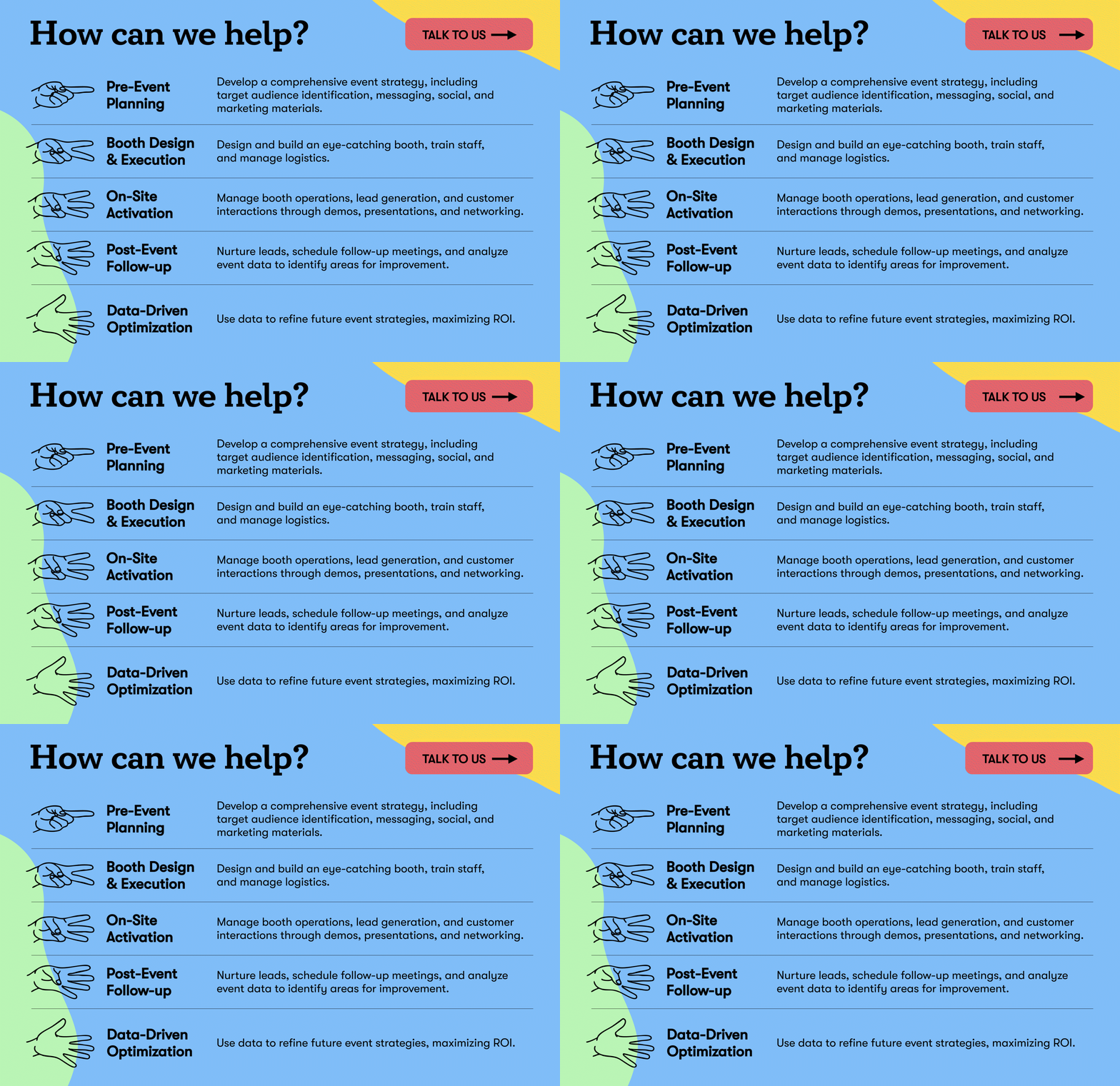
How can we help?

Talk to us
Pre-Event
Planning
Pre-Event Planning

Develop a comprehensive event strategy, including target audience identification, messaging, social, and marketing materials.

Booth Design
& Execution
Pre-Event Planning

Design and build an eye-catching booth, train staff, and manage logistics.

On-Site
Activation
Pre-Event Planning

Manage booth operations, lead generation, and customer interactions through demos, presentations and networking.

Post-Event
Follow-up
Pre-Event Planning

Nurture leads, schedule follow-up meetings, and analyze event data to identify areas for improvement.

Data-Driven
Optimization
Pre-Event Planning

Use data to refine future event strategies, maximizing ROI.

Flag icon

How SAGE Marketing Supports Cybersecurity Companies

With deep expertise in B2B tech and cybersecurity, SAGE Marketing helps companies:

  • Craft strategic messaging and positioning
  • Design engaging booths and collateral
  • Run event-focused digital campaigns (SEO, GEO-targeting, social media, paid ads)
  • Set up HubSpot and track attribution
  • Nurture leads and drive post-event conversion

For those looking for a full roadmap, we’ve compiled everything into our B2B Tech Trade Show Marketing Handbook. This guide includes templates, checklists, budget sheets, and case studies from real product launches – designed for startups and established companies alike. Whether you’re launching a cybersecurity solution, AI tool, or MedTech platform, this playbook shows you how to turn events into measurable growth.

Trade shows and conferences aren’t just about being seen – they’re about being remembered, followed up with, and turning visibility into tangible business outcomes. By leveraging expert strategies and a structured approach, cybersecurity startups and established companies alike can transform event participation into a powerful growth engine.

Shlomit
Hertz
CMO-as-a-Service
About
the author
Today, as CMO-as-a-Service at SAGE Marketing, Shlomit partners with technology companies to build powerful brands, accelerate demand generation, and connect innovation with results. Her approach is creative, data-driven, and always focused on what truly matters — turning strategy into measurable success.
Learn more

How to Build a B2B Social Media Audience That Brings ROI in 2026

Aliza Hughes
written by Aliza Hughes Head of Social Media

Aliza is a seasoned content and social media strategist with over a decade of experience humanizing B2B tech brands through organic growth and executive thought leadership.

Sarit<br> Lamerovich
reviewed by Sarit
Lamerovich
Founder/CEO

Sarit founded SAGE to allow technology companies to take innovation to the next business level and fulfill the entrepreneur’s dream to change the world by building market recognition, increasinge customer awareness and improvinge the foundation for strong and sustainable revenue growth.

10 min read
Share
Why Partner with SAGE Marketing?
100+ B2B tech companies and startups — we literally grow unicorns.
No office, no walls — we work inside your world, embedded in your team.
Full-stack marketing approach: strategy, storytelling, content, HubSpot and execution under one roof.
Let’s Build Something Remarkable!
Whether you’re launching, scaling, or rebranding —
we’ll help you connect,
engage, and grow.
Contact us
client logo client logo client logo client logo client logo client logo
LinkedIn Startups Social Media B2B Marketing

Key Takeaways

  • Human-to-Human (H2H) is the new B2B: Regardless if you’re calling it H2H or P2P (Person-to-Person), growth in 2026 is driven by personal authority and employee voices rather than corporate logos.
  • Quality over Quantity: A smaller, high-intent social media audience of decision-makers is infinitely more valuable than a massive following of non-buyers.
  • The “Marketing Loop” Integration: Social media is not a silo. True ROI is found when it fuels SEO, sales outreach, and meets your audience in the right place at the right time.
  • Strategic Engagement is Non-Negotiable: Real growth happens when you get off the stage and into the “crowd”: comments and niche communities.

Why Most B2B Social Media Growth Advice No Longer Works

For years, B2B companies treated social media like any other kind of traditional media – talking to their audience and expecting them to then take the steps to learn more. But marketing teams have thankfully moved off of the “soapbox” model and have embraced the “social” part of social media. This is the only way to keep up not just with algorithm changes but our human behavioural changes. Users no longer scroll to find brands, we scroll to find insights, solutions, and community.

In short, traditional growth tactics are failing for three primary reasons:

  1. The Death of the Megaphone: B2B buyers have developed “corporate blindness.” We instinctively ignore posts that look like they are talking at us, like press releases or ads. 
  2. Algorithm Evolution: Platforms like LinkedIn now prioritize meaningful social interaction. If your post doesn’t spark a conversation in the comments, its reach is capped. Gone are the days when #AI or #Cybersecurity could “hack” your way into a new feed.
  3. The Trust Deficit: In an era of AI-slop, authenticity is a must. A polished corporate graphic often carries less weight than a raw, insightful text post from a subject matter expert.

LinkedIn pays attention to who you are and how much engagement and sharing your content gets, then it decides how broadly to distribute your posts. That means each like, in-depth comment, or share can expand your audience – so encouraging authentic interaction is key.

What “Audience Growth” Means for B2B in 2026

Social media audience growth is not about follower growth (aka a vanity metric). 

It is a community of current and potential customers, investors, and advocates who are interested in being part of the conversations you lead and ultimately, thinking of you when they are ready to purchase your solution.

Growth should be defined by relevance and authority, redefining social media audience growth from a quantitative goal to a qualitative business asset.

Foundations of a Strong B2B Social Media Audience

Before you execute a single growth tactic, you must perform a social media audience analysis to ensure your foundation is solid. Without strategy, growth is just noise.

  • Step 1: The Optimized Profile (Your 24/7 Portfolio): Your personal and company profiles are your “always-on” mini-websites. Before inviting connections to visit and follow your profile, make sure it reflects the messaging you want to convey. Does your headline solve a problem? Is your “About” section a solution-oriented narrative or just a resume?
  • Step 2: Social Media Audience Insights: Standard social media audience targeting usually focuses on where someone works (e.g., SaaS companies with 500+ employees). True insight focuses on how they feel within that role.

The insight shift: instead of targeting IT managers (job title), you are providing the solution to the human behind that title who wants to sleep well at night without worrying that a hacker is breaching their firewall.

  • Step 3: Content Pillars: Define exactly what you want to be known for. When you stick to these pillars, you train the algorithm – and your audience – on what to expect from you.

Tip: Scale your content pillars by leveraging employee advocates. They provide the deep subject matter expertise and direct access to the niche audiences your brand page can’t reach alone.

Effective Ways to Grow a B2B Social Media Audience in 2026

To achieve sustainable social media audience growth, you must embrace the “social” part of social media and engage with your audience instead of only broadcasting to them. 

Leverage Thought Leadership & Employee Advocacy

Your employees are your greatest asset. While a company post might reach 2% of your followers, a post from a trusted team member can see 10x the engagement. Activating Brand Ambassadors and Employee Advocates allows you to reach niche pockets of your industry in an organic, authentic way.

Crucially, employees can engage with their connections in a way a brand page simply cannot (who among us has not rolled their eyes when a corporate profile comments on our personal posts?). An employee, however, is a peer. They can jump into comments, share “unfiltered” insights, and build real-time relationships. 

Research shows that employee-shared posts reach up to 10x more people than corporate posts, making employees the most effective B2B marketing tool.

The “Write Like You Speak” Principle

B2B social media is often boring because it’s basically just industry jargon. To grow, you must be easily readable. Use short sentences, white space between paragraphs, and a conversational tone. If your content doesn’t sound like something you’d say out-loud, don’t post it.

Strategic Heists & Social Listening

Don’t wait for the audience to find you, because, well, they won’t. Use social media audience targeting by visiting the comment sections of your competitors or industry leaders. Join the conversation there. Provide value without selling. When you provide the smartest insight in someone else’s thread, their audience becomes your audience.

How to Measure B2B Social Media Audience Growth

Real growth isn’t measured by a follower count that goes up by 10% every month. It’s measured by how social media feeds your entire marketing engine.

  • Profile Views & Page Visitors: When someone clicks to your profile, they are moving from passive consumption to active investigation.
  • High-Intent Conversations: Are you getting DMs asking for your “take” on a trend? Are people tagging you in posts? These are the signals of true authority growth.
  • The “Offline” Connection: Success is when your sales team hears, “I feel like I already know you from LinkedIn,” on a discovery call. 

Bottom line: Social media is the “connective tissue” of your Marketing Loop. When your audience is growing correctly, you’ll notice higher-quality signals – prospects who arrive at your demo already educated on your solution and your authority.

FAQs

How long does it take to grow a B2B social media audience?

B2B growth is a marathon, not a sprint. While you may see spikes from a viral post, true authority takes 3 to 6 months, and maybe longer, of consistent, high-quality engagement to take root. You are building trust, and trust cannot be fast-tracked. Focus on the Quality > Quantity rule – one meaningful connection with your ICP is worth more than 1,000 random followers.

Which platform is best for B2B social growth in 2026?

LinkedIn remains the gold standard for B2B due to its professional intent and the way its algorithm rewards deep, long-form insights. However, YouTube is a close second for building deep authority through video. For “Brand Maintenance,” platforms like X (Twitter), Facebook and Instagram can be useful for culture and real-time news, but LinkedIn is where the 2026 B2B pipeline is built.

Should B2B companies focus on followers or engagement?

Engagement – specifically meaningful comments and conversations – is vastly more important. Lurkers (people who view but don’t interact) are part of your audience, but the algorithm only shows your content to more people if your current followers are talking back to you. 

Can social media really drive B2B pipeline growth?

YES! But it doesn’t happen in a silo. Social media drives pipeline by acting as a high-intent signal. It warms up cold outreach, supports SEO by training AI models (AEO/GEO) on your expertise, and keeps your brand top-of-mind so that when a budget is approved, you are the first call they make.

Aliza Hughes Head of Social Media
About
the author
Aliza is a seasoned content and social media strategist with over a decade of experience humanizing B2B tech brands through organic growth and executive thought leadership.
Learn more

How Social Media Platforms Can Boost Your Trade Show Presence

Shlomit<br> Hertz
written by Shlomit
Hertz
CMO-as-a-Service

Today, as CMO-as-a-Service at SAGE Marketing, Shlomit partners with technology companies to build powerful brands, accelerate demand generation, and connect innovation with results. Her approach is creative, data-driven, and always focused on what truly matters — turning strategy into measurable success.

Aliza Hughes
reviewed by Aliza Hughes Head of Social Media

Aliza is a seasoned content and social media strategist with over a decade of experience humanizing B2B tech brands through organic growth and executive thought leadership.

10 min read
Share
Why Partner with SAGE Marketing?
100+ B2B tech companies and startups — we literally grow unicorns.
No office, no walls — we work inside your world, embedded in your team.
Full-stack marketing approach: strategy, storytelling, content, HubSpot and execution under one roof.
Let’s Build Something Remarkable!
Whether you’re launching, scaling, or rebranding —
we’ll help you connect,
engage, and grow.
Contact us
client logo client logo client logo client logo client logo client logo
Tradeshow B2B Marketing Blog Social Media

Key Takeaways

  • Social media should be treated as a core pillar of trade show strategy, not an afterthought.
  • Pre-event teasers and targeted outreach help build awareness and book meetings before the show even starts.
  • Real-time trade show social media posts amplify booth activity and attract on-floor visitors.
  • Post-event executive summaries and follow-ups extend visibility well beyond the exhibition dates.
  • When paired with paid campaigns and inbound outreach, social platforms become a powerful extension of your booth—driving higher-quality leads and stronger ROI.

Trade shows remain one of the most powerful growth channels for B2B brands. They bring decision-makers, buyers, partners, and press together under one roof. But simply showing up with a business booth is no longer enough.

Today, your real trade show presence starts weeks and even months before the event;  and continues long after it ends. Social media has become the connective tissue between physical exhibitions and digital engagement, transforming traditional trade show marketing into a multi-touch experience that drives awareness, booth traffic, and qualified leads.

When done right, trade show promotion across social platforms doesn’t just amplify visibility – it builds momentum, starts conversations, and creates opportunities before your team even arrives on the show floor.

Let’s break down how social media can elevate your next event, what platforms work best, how to measure ROI.

Why Trade Shows Need a Strong Social Media Strategy

Trade shows are crowded. Hundreds, sometimes thousands, of exhibitors compete for attention. Without a strong digital presence, even the most innovative products risk being overlooked.

A smart social strategy allows you to:

  • Build awareness before attendees arrive
  • Drive targeted traffic to your booth
  • Create multiple touchpoints with prospects
  • Support sales conversations with live content
  • Extend the lifespan of your event investment

Social media also enables something traditional trade show marketing can’t: pre-qualification. You can engage potential buyers before the show, nurture interest during the event, and continue conversations afterward.

At SAGE Marketing, we see social media as part of a larger go-to-market engine – especially when aligned with product launches and demand generation. This thinking connects closely with the evolving role of the Social Media Manager as a GTM Technologist, where platforms become revenue-driving tools rather than just content channels. You can explore that mindset shift in this blog

For B2B startups especially, trade shows paired with social amplification are often one of the fastest paths to market visibility, when marketing is treated as a strategic investment, not a cost center

Before the Show: Build Anticipation and Reach New Audiences

Your trade show presence should start at least 4–6 weeks before the event.

1. Tease Your Attendance (Early and Often)

Begin by announcing:

  • Which show you’re attending
  • Your booth number
  • What you’re launching or demoing
  • Who from your team will be there

Post 1-2 times per week leading up to the event across LinkedIn, X, and Instagram (depending on your audience).

Best practices:

  • Tag the event organizer
  • Use official hashtags
  • Mention partners or collaborators
  • Include visuals of your product or booth build

This increases organic reach and puts your brand into the event’s digital ecosystem.

Example: 

RodRadar – Ahead of bauma, the largest construction trade show in Europe, RodRadar published teaser posts highlighting live demos, technical sessions, and key technology capabilities – consistently tagging the event and using relevant hashtags to increase reach and traction. They also created a 4–3–2–1 countdown to show start, sharing short videos and photos of booth preparations. All of these posts generated inbound meeting requests before doors even opened and led to a noticeable increase in page followers.

2. Use Social as an Outreach Channel

Don’t just broadcast – engage.

  • Comment on event posts
  • Connect with speakers and attendees on LinkedIn
  • Reach out directly to prospects attending the show
  • Invite them to your booth or book meetings

This organic approach often outperforms cold outreach because it’s contextual and timely.

3. Support with PPC Campaigns

Paid trade show advertising amplifies your organic efforts.

Effective pre-show campaigns include:

  • LinkedIn ads targeting job titles attending the event
  • Geo-targeted ads near the venue
  • Sponsored posts announcing demos or giveaways

Even modest budgets can deliver results when paired with strong creative and clear CTAs like “Meet us at Booth 412.”

Living Optics Case in point: ahead of key industry events, Living Optics boosted short, animated videos showcasing the camera’s capabilities, paired with clear calls to action inviting audiences to schedule a live demo. This helped build awareness before the show, drive qualified booth traffic, and secure meetings in advance.

Even modest budgets can deliver results when paired with strong creative and clear CTAs like “Meet us at Booth 412.”

For startups navigating their first exhibitions, this guide is worth bookmarking

4. Activate Inbound Marketing Before the Show
Don’t wait for prospects to discover your booth – go find them first.

Many exhibitions publish attendee lists, and even when they don’t, you can proactively build your own target audience using tools like LinkedIn Sales Navigator and similar platforms. Identify professionals who are likely to attend, connect with them on LinkedIn, and follow up with a personal message inviting them to visit your booth or schedule a meeting in advance.

Living Optics successfully used this approach ahead of major shows – building targeted contact lists, connecting directly with relevant decision-makers, and personally inviting them for live demos. This inbound strategy helped turn cold audiences into warm booth visitors, maximizing face-to-face opportunities and improving overall ROI from the event.

During the Show: Turn Your Booth into a Content Engine

Your business booth shouldn’t just attract foot traffic – it should generate content.

High-performing tradeshow social media posts typically include:

  • Live demos
  • Customer testimonials
  • Short product videos
  • Team photos
  • Behind-the-scenes moments
  • Partner shoutouts

Aim for at least 1 post per day during the event.

What works best:

  • Vertical video (especially for LinkedIn and Instagram)
  • Human faces
  • Short captions with clear value propositions
  • Real-time updates like “Now demoing in Hall B.”

Weldobot leveraged short, authentic videos from the show floor – featuring engineers explaining real welding challenges – to cut through noise and showcase expertise. These posts drove both booth visits and post-event demo requests.

RodRadar leveraged the momentum of the show by sharing real-time posts that highlighted a crowded booth and live engagement on the floor. Most importantly, after the event, the team published executive-led summary posts featuring key insights, tagged connections made during the show, and standout highlights – extending visibility beyond the exhibition and sustaining post-show interest.

Pro tip: Create a simple content plan in advance:

  • Morning: booth readiness or daily agenda
  • Midday: live demo or customer interaction
  • Afternoon: product highlight or team moment

This keeps your messaging consistent while leaving room for spontaneity.

Choosing the Right Social Media Platforms for Your Audience

Not every platform delivers equal value for trade show marketing.

Here’s a quick guide:

LinkedIn

Best for B2B lead generation, executive visibility, and professional audiences. Ideal for product launches, thought leadership, and meeting invites.

X (Twitter)

Great for real-time updates, event hashtags, and industry conversations.

Instagram

Perfect for visual storytelling, booth design, team culture, and short videos.

YouTube / LinkedIn Video

Excellent for longer demos and technical explanations.

Most B2B exhibitors see the strongest ROI from LinkedIn paired with one supporting platform.

The key is alignment: choose channels based on where your buyers already spend time, not where it’s easiest to post.

Measuring the ROI of Social Media for Trade Shows

If you’re investing time and budget, you need clear metrics.

Track:

  • Booth traffic influenced by social
  • Meeting bookings from social links
  • Engagement on tradeshow social media posts
  • Follower growth during the event
  • Leads sourced from paid campaigns
  • Post-event demo requests

Use UTM links and QR codes at your booth to connect offline interactions with online data.

True ROI comes from pipeline contribution – not just likes.

At SAGE Marketing, we recommend building dashboards that connect social performance directly to HubSpot CRM activity, giving marketing and sales shared visibility.

Common Mistakes to Avoid on Social Media at Trade Shows

Even experienced teams fall into these traps:

  • Posting only once before the show
  • Forgetting to tag the event
  • Sharing generic content with no CTA
  • Ignoring comments or DMs
  • Over-polishing instead of being authentic
  • Failing to follow up after the event

Another common issue: booth staff are unaware of the live social strategy. When sales teams know what’s being posted, they can reinforce messages during conversations – creating a unified brand experience.

Final Thoughts

Trade shows are no longer isolated events – they’re campaigns.

When social media becomes an integrated part of your trade show marketing, your presence extends far beyond your physical footprint. From pre-show teasers and trade show advertising to live content and post-event follow-ups, platforms become your digital booth – working 24/7 to attract, engage, and convert.

Brands like RodRadar, Living Optics, and Weldobot prove that with the right strategy, social media transforms exhibitions from one-off appearances into scalable growth opportunities.

If you’re ready to elevate your next trade show presence, start thinking beyond the booth- and let social do the heavy lifting.

FAQs

Which metrics truly measure trade show social media impact?

Focus on metrics tied to business outcomes: meeting bookings, qualified leads, demo requests, and pipeline influence. Engagement metrics matter, but ROI comes from tracking how social drives booth visits and sales conversations using UTM links, QR codes, and CRM attribution.

What low-cost tactics boost social buzz for small businesses?

Organic engagement works wonders. Comment on event posts, tag partners, share behind-the-scenes content, and encourage employees to repost. Short videos from your business booth and authentic team moments often outperform polished ads – without requiring big budgets.

How should booth staff support your live social strategy?

Staff should know the daily content plan, suggest moments worth capturing, and invite visitors to follow your channels. Quick interviews, demo clips, or customer quotes recorded on phones can fuel powerful tradeshow social media posts in real time.

Which platforms work best for trade show audience engagement?

For most B2B brands, LinkedIn delivers the highest-quality leads. Instagram supports visual storytelling, while X helps with live event visibility. The best mix depends on where your buyers are active – start with LinkedIn and expand strategically.

Shlomit
Hertz
CMO-as-a-Service
About
the author
Today, as CMO-as-a-Service at SAGE Marketing, Shlomit partners with technology companies to build powerful brands, accelerate demand generation, and connect innovation with results. Her approach is creative, data-driven, and always focused on what truly matters — turning strategy into measurable success.
Learn more