Today, as CMO-as-a-Service at SAGE Marketing, Shlomit partners with technology companies to build powerful brands, accelerate demand generation, and connect innovation with results. Her approach is creative, data-driven, and always focused on what truly matters — turning strategy into measurable success.
Sarit founded SAGE to allow technology companies to take innovation to the next business level and fulfill the entrepreneur’s dream to change the world by building market recognition, increasinge customer awareness and improvinge the foundation for strong and sustainable revenue growth.
Over the past six years, the FinTech ecosystem has surged from roughly 12,000 startups to nearly 30,000 worldwide, this is according to DemandSage and easyfinance. But growth doesn’t guarantee success – a significant portion of these startups founded during this period have since closed, and while reasons vary, ineffective marketing and weak go-to-market execution are consistently among the contributing factors. In a sector defined by fierce competition and rapid innovation, the ability to clearly articulate value, build trust, and reach the right audiences is no longer optional – it’s a core survival skill.
In this increasingly crowded landscape, partnering with a B2B marketing agency that truly understands the intersection of finance and technology can be a decisive advantage. FinTech companies face distinct challenges: navigating financial regulation, earning customer confidence, managing long sales cycles, and translating highly technical products into compelling narratives. With that in mind, here are some of the leading B2B marketing agencies in Israel, the UK, and the USA that are especially well-suited to support and accelerate FinTech growth.
1. SAGE Marketing
Full-service B2B marketing agency with strong experience in tech and fintech.
Services: branding, strategy and go 2 market plans. Marketing execution including: demand generation, social media management, inbound marketing, CRM management (HubSpot Diamond Partner), content, digital marketing, ABM, tradeshows and events.
Why FinTechs choose them: Proven track record scaling tech startups with strategy + execution.
2. FinMV
A FinTech-focused marketing and PR agency.
Services: PR, SEO, social media, digital campaigns tailored to financial tech.
Why FinTechs choose them: Deep domain expertise in both the financial and tech sides, plus regulatory sensitivity.
3. BrainDonors
Specializes in B2B marketing for FinTech, SaaS, and other complex B2B verticals, with FinTech clients including CatalystPay and FCS Capital Markets.
Services: B2B paid media (LinkedIn Ads, Google Ads), SEO, content marketing, AEO/GEO, HubSpot implementation, marketing automation, RevOps, and web design & development. As a B2B demand generation agency, they combine these channels into full-funnel demand programs.
Why FinTechs choose them: A 60+ person team with offices in Europe that handles execution in-house, with experience translating regulated, technical financial products into clear B2B messaging and measurable pipeline.
4. Imaginet Studio
Specializes in “Cyber & Fintech” vertical marketing.
Services: Website design, digital strategy, content, brand, B2B demand gen.
Why FinTechs choose them: Enterprise-level capabilities + understanding of complex tech use cases.
5. Brighter Click
Specializes in UGC production, influencer sourcing, and paid media management for fintech companies and lending platforms.
Services: UGC production, performance creative, paid social and search (Meta, Google, TikTok), creator compliance for financial advertising, creative analytics.
Why FinTechs choose Brighter Click: Creative production and media buying converge in one team, tying compliant fintech ad content directly to customer acquisition cost.
6. Spark Club
A tech-driven marketing and PR agency with strong focus on FinTech.
Services: PR, content, social media, digital marketing, and strategic campaigns for innovation-driven companies.
Why FinTechs choose them: Deep expertise across FinTech, blockchain, and cybersecurity, strong storytelling capabilities, and an ability to simplify complex technologies for both media and customers.
Why FinTechs choose them: They tailor their marketing to the unique challenges of fintech growth and customer trust.
Why FinTech Companies Need Specialized B2B Marketing
High trust barrier: FinTech products often deal with money, data, and risk, so messaging must be clear, trustworthy, and credible.
Complex buyer journey: Decision-makers (banks, CFOs, enterprises) are sophisticated and risk-averse.
Regulatory nuance: Marketing must respect compliance, transparency, and financial regulation.
Tech + finance storytelling: Some FinTech products are deeply technical (payments, credit scoring, insurance), requiring a bridge between finance and product.
Scalability demands: Many FinTechs scale rapidly across geographies, so they need systems (automation, inbound, ABM) that can grow with them.
How to Choose the Right Agency for Your FinTech Startup
Here are some criteria to help decide which agency is the best fit:
Vertical experience: Does the agency have specific FinTech case studies (not just tech)?
Marketing maturity: Do you need a full marketing engine (like SAGE) or performance + demand-gen only?
Global vs local: Are you targeting domestic customers (Israel) or planning to scale to the UK / US?
Tech stack expertise: Are they proficient with CRMs and automation tools relevant to your needs (HubSpot, Marketo)?
Creative + risk messaging: Can they articulate complex financial products in a trustworthy, regulatory-safe way?
Performance ROI: Do they have a track record of driving pipeline, not just “vanity metrics”?
Why SAGE Marketing Stands Out for FinTech
SAGE exemplifies what a specialized B2B FinTech marketing partner should be. Here’s how:
End-to-end marketing engine: From strategy and demand-gen to automation, ABM, and events, SAGE covers the full spectrum.
HubSpot Diamond Partner: They build robust automated marketing machines.
Proven FinTech results: Their work with companies shows real impact – growth in leads, brand recognition, and customer acquisition.
Strategic mindset: SAGE doesn’t just run campaigns – they embed themselves in their clients’ business, acting like an “external CMO.”
Global reach with local roots: Based in Tel Aviv and London, they understand both Israeli and international markets.
SAGE built Gaviti’s full marketing infrastructure, refined their messaging, implemented HubSpot automation, content creation, social media management and ran paid and organic campaigns to boost demand generation. Results:
SAGE integrated HubSpot, developed nurturing workflows, built landing pages and blog templates, and executed a custom API integration to unify and centralize data. Outcomes: strong lead generation, improved engagement, streamlined data flow, and higher conversion rates.
Kipp– AI Solution for Resolving Credit Card Declines
As a CMO-as-a-Service partner, SAGE built Kipp’s brand presence from the ground up, focusing on awareness, thought leadership, and lead generation. Impact:
Won three FinTech industry awards
10× growth in LinkedIn followers
Significant expansion of visibility among banks, merchants, and partners
SAGE supported Ezbob with a full-funnel B2B marketing strategy to strengthen its brand, demand generation, and industry presence.
Why SAGE Marketing Stands Out a Best B2B Marketing for FinTech
SAGE exemplifies what a specialized B2B FinTech marketing partner should be. Here’s how:
End-to-end marketing engine: From strategy and demand-gen to automation, ABM, and events, SAGE covers the full spectrum.
HubSpot Diamond Partner: They build robust automated marketing machines.
Proven FinTech results: Their work with companies shows real impact – growth in leads, brand recognition, and customer acquisition.
Strategic mindset: SAGE doesn’t just run campaigns – they embed themselves in their clients’ business, acting like an “external CMO.”
Global reach with local roots: Based in Tel Aviv and London, they understand both Israeli and international markets.
Final Thoughts
Choosing the right B2B marketing agency in FinTech isn’t a “nice-to-have”, it’s a strategic decision that directly influences market traction, customer trust, and long-term revenue growth. As FinTech companies scale, the complexity of their audiences, regulations, and value propositions only increases. Partnering with an agency that truly understands the financial landscape, the technology behind it, and the dynamics of B2B buying cycles can be the difference between simply competing and actually leading.
Today, as CMO-as-a-Service at SAGE Marketing, Shlomit partners with technology companies to build powerful brands, accelerate demand generation, and connect innovation with results. Her approach is creative, data-driven, and always focused on what truly matters — turning strategy into measurable success.
RodRadar CEO and Co-Founder, Moshe Dalman, shares how partnering with SAGE Marketing helped define their brand message, build a global marketing strategy, and position RodRadar as a compelling investment opportunity. From investor presentations to global visibility at events, social media and online publications, SAGE is a trusted growth partner driving innovation in the construction technology sector.
Sarit founded SAGE to allow technology companies to take innovation to the next business level and fulfill the entrepreneur’s dream to change the world by building market recognition, increasinge customer awareness and improvinge the foundation for strong and sustainable revenue growth.
Natali acts as Chief Operating Officer at SAGE Marketing, where she plays a central role in strengthening the firm’s internal operations, processes, and scalability.
B2B marketing has entered a pivotal era. The post-pandemic acceleration of digital transformation, combined with the rise of generative AI, has redefined how businesses communicate, build trust, and create value. Traditional funnels are collapsing into dynamic, data-driven ecosystems where every interaction must deliver measurable impact.
In this new landscape, companies can no longer rely on a single channel, a single message, or a single funnel. Success in 2026 will depend onhow well organizations integrate creativity, technology, and strategy to deliver experiences that drive measurable growth.
This guide explores how to build a winning B2B marketing strategy for 2026 – one that balances data and emotion, leverages AI responsibly, and adapts to a constantly shifting buyer journey.
1. The Modern B2B Buyer in 2026: What Changed and How to Win
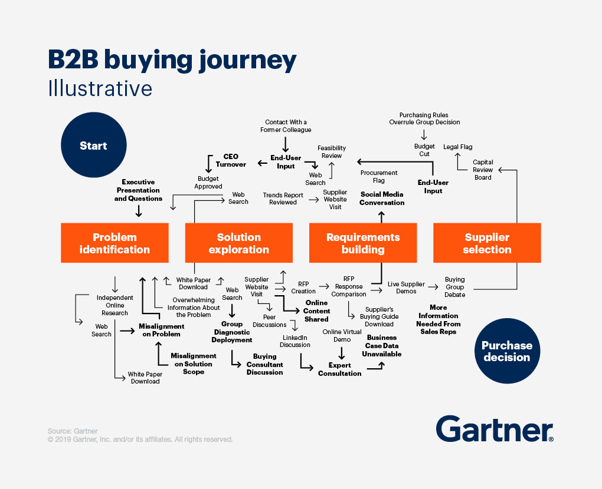
B2B purchasing has shifted decisively from sales-led motions to research-led, digital-first journeys. Senior buyers expect consumer-grade experiences, on their timetable, across multiple channels and they verify vendor claims with third-party sources before engaging sales. Leading decision makers now use ~10 channels and consider omnichannel the standard, not a novelty (McKinsey). At the same time, buying has become harder: 77% of B2B buyers describe their most recent purchase as “very complex” or “difficult” (Gartner). Winning in 2026 requires not just creating demand – it requires systematically removing risk, friction, and ambiguity throughout a non-linear, multi-stakeholder journey.
Drivers reshaping the market
Buyers can compare technology, pricing, and peer outcomes in minutes. Most will consume three or more content pieces before they’re willing to speak with sales (Content Marketing Institute). AI/ML tools have raised the bar further, buyers expect faster analysis, clearer ROI logic, and precise implementation answers.
Generational handoff. Millennials/Gen Z now influence or own many B2B decisions, bringing B2C-shaped expectations: speed, transparency, personalization, and mobile-first interactions (see LinkedIn B2B Institute). Vendors that don’t match these expectations are quietly filtered out.
Global, remote, always-on. Distributed committees require asynchronous, self-serve access to demos, pricing logic, security docs, and ROI rationales without waiting for scheduling.
Implication: If your digital touchpoints don’t reduce uncertainty and accelerate consensus, buyers simply move forward with someone who does.
The non-linear journey (and the job of your content)
Expect 6–10 stakeholders, CFOs focused on unit economics, Security on risk, Operations on integration, and Users on usability, looping back and forth between stages. They evaluate vendors in parallel and circulate assets internally. Your job: orchestrate a path that makes internal consensus easier.
Practical assets by stakeholder:
Finance: business case one-pager, total cost & time-to-value logic, TEI-style ROI.
Security/IT: data flow diagrams, encryption/SSO details, compliance and audit posture.
Users: short video walkthroughs, hands-on demos, outcome-focused case stories.
Include a brief “How to use this asset internally” section on every major PDF/page to make championing you inside the org simple and low-effort.
Content that actually moves deals
Buyers reward vendors who make them smarter, faster. They want depth (trade-offs, comparisons), clarity (pricing drivers, timelines), and proof (quantified outcomes). Multiple sources show buyers engage 3+ assets before sales, lean into decision content over fluff:
Comparative explainers (why now; build vs. buy; approach A vs. B)
Case studies with metrics (outcome, timeline, constraints, repeatability)
Search still matters – now add AIO (AI Interaction Optimization)
New research from 10Fold reveals that AI search is now the second largest source of qualified leads, surpassing organic search, email, and paid media while Generative Engine Optimization has emerged as the top measure of content success.
Based on interviews with 400 senior marketing executives across North America and Europe, the study reveals a significant surge in content production and a shift in performance priorities. Generative Engine Optimization (GEO) has now become the leading success metric for marketers – 35% rank GEO performance as their top benchmark, surpassing both brand awareness (34%) and traditional SEO (29%).
AI-native discovery platforms like ChatGPT and Perplexity are rapidly emerging as key lead-generation channels. They now account for 34% of qualified leads, placing them second only to social media (46%), and ahead of organic search, email marketing, and paid campaigns.
Regionally, California and the UK stand out as frontrunners in AI-driven marketing adoption, with 96% of companies in these regions reporting that their content is optimized for AI-based search.
Despite the growing focus on AI, traditional digital platforms remain integral to marketing strategies, 65% of respondents still distribute content through Google and conventional browsers, while 56% actively publish via AI-native engines. Most marketers continue to evaluate success through Google Analytics metrics and sales-qualified leads (SQLs), underscoring a blend of traditional and emerging performance frameworks.
SEO remains foundational (own high-intent clusters; implement schema/FAQ; interlink deep content). But in 2026, you also need AIO so large language models (LLMs) can accurately represent your brand.
Do both well:
SEO: keyword clusters by industry/use case/outcome; technical hygiene; fast pages (pages >3s shed interest and conversions, see Google performance research).
AIO: publish concise, structured answers (FAQs, glossaries, “what/why/how” pages) that LLMs can reliably extract; keep facts current to minimize hallucinations.
From B2B to H2H – Personalization as the Heart of Marketing in 2026
People Buy from People
For years, marketers have talked about B2B as if businesses make decisions. But in truth, people buy from people. Behind every purchase order, every RFP, and every demo request are human beings – driven by emotion, curiosity, and trust. That’s why 2026 isn’t about B2B. It’s about H2H: Human to Human.
No matter how advanced automation or AI becomes, marketing that moves people will always come down to connection – understanding what matters to them, anticipating their needs, and communicating with empathy. The companies that win will be those that treat every interaction not as a transaction, but as a relationship.
And that’s where personalization becomes more than just a marketing tactic – it becomes the foundation of growth.
The Shift to True Personalization
In 2026, personalization is no longer about addressing someone by name in an email or retargeting them after a website visit. It’s about contextual relevance, delivering the right message, in the right tone, at the right moment, across every touchpoint.
Buyers now expect the same intuitive, responsive experiences they get as consumers. They want content that understands their challenges, solutions that adapt to their context, and brands that feel like partners rather than vendors.
According to recent research from McKinsey & Company, companies that personalize effectively can drive 10–20% higher engagement and significant revenue uplift, even in highly saturated markets. But achieving this requires moving beyond traditional segmentation into AI-powered personalization at scale, integrating data, creativity, and empathy.
The Humanity Trend: From Sales to Experiences
Audiences are tired of jargon, overpromises, and AI-polished sameness. Whether you’re selling cybersecurity software or enterprise AI, buyers want to connect with brands that feel human – brands with personality, empathy, and humor.
The most successful marketers are realizing that it’s not B2B – it’s H2H (Human to Human). Your audience may be CISOs, engineers, or procurement directors – but first and foremost, they’re people. They crave authenticity, emotional intelligence, and storytelling that respects their intelligence while making them smile.
Case in Point: Wiz’s “CISOtopia”
Cybersecurity giant Wiz nailed this with one of the most creative, human campaigns in the industry: They built a fake toy store called CISOtopia, “the world’s first toy store for cybersecurity professionals.” https://www.cisotopia.com/
It isn’t a real store. Its a playful, interactive microsite filled with 3D-modeled “toys” like firewalls, malware detectors, and cloud shields, each with witty descriptions that only cybersecurity insiders would get.
The brilliance isn’t in the budget – it is in the empathy. Wiz understood their audience (security leaders under constant stress) and gave them something unexpectedly delightful. They mixed the expected (a tech product) with the unexpected (a toy store) to spark emotional connection.
The result? CISOtopia didn’t just go viral – it humanized the brand. It showed that Wiz “gets” their audience’s world, language, and daily challenges – turning a traditionally serious industry into one that could laugh at itself, even for a moment.
Takeaway for 2026: Make Marketing More Human
Play, don’t preach. Find creative ways to surprise your audience – humor, storytelling, or interactive experiences that resonate on a personal level.
Design for empathy. Understand your buyers’ emotions and challenges. Create content that connects emotionally before selling rationally.
Create cultural moments, not just campaigns. The next generation of B2B success stories won’t be built on funnels – they’ll be built on feelings.
Mix the expected with the unexpected. As Wiz showed with CISOtopia, the most memorable marketing happens when you dare to break format – and remind your audience that even in business, we’re all human.
Four Pillars for Personalization
To embed personalization effectively, your 2026 plan should cover these four strategic pillars:
1. Data & Audience Architecture
Enrich your data with firmographic, technographic, intent and engagement signals – then unify these into a decision matrix that supports personalised content flows
Audit your systems for “single source of truth” status: CRM systems like HubSpot, marketing automation, account engagement platforms must feed into this architecture.
2. Decisioning & Orchestration
Move beyond “batch segmentation” to next-best-action models that select the right content or offer for a given buyer at a given moment.
Ensure orchestration spans channels – not just email – but website, chatbots, voice bots, social and one-to-one. In B2B, this means account-based streams + complementary channels.
3. Dynamic Content & Creative at Scale
Generative AI now enables content creation at a scale and variation cost previously impossible. McKinsey points out that #content creators are using gen-AI to produce copy, imagery and formats for many audience segments far faster. McKinsey & Company
In B2B, this could mean dynamically generating case-study intros, sales-tool one-pagers tailored to vertical, or landing pages auto-customised for target accounts.
4. Measurement & Continuous Optimization
Personalization must be measurably superior to generic outreach. McKinsey recommends robust incrementality testing, standardized dashboards and closed-loop measurement. McKinsey & Company
For B2B, use metrics such as engagement-to-SQL, account-penetration uplift, lead-to-opportunity speed, and average deal size by segment
Build feedback loops: content performance –> model refinement –> audience updating. Without measurement, personalisation becomes guesswork.
Key Considerations & Challenges
Organization and talent: You need cross-functional teams (data/analytics, creative, martech, ops) to deliver personalization at scale, not just one-off campaigns
Technology stack maturity: Without a modern martech foundation (Like HubSpot CRM), personalization may stall
Balancing scale and relevance: While consumer-grade personalisation works for B2B, over-personalisation (micro-targeting at the expense of strategic messaging) can lead to fragmentation. Find the sweet spot.
HubSpot CRM for Personalization & ABM
Personalization isn’t decoration; it’s how you prove relevance. Build it on data buyers welcome:
CRM as source of truth (firmographics, engagement, lifecycle), consolidated and clean
Segments by industry × pain × buying stage; message variants aligned to outcomes
Dynamic web content (logos, proof points, CTAs) and programmatic ABM to surround named accounts across site, email, and LinkedIn
Email nurtures that respond to behavior (asset X → send deeper Y), not arbitrary cadences. Targeted, personalized emails consistently lift engagement/transactions (see Epsilon studies).
Conclusion
In 2026, the companies that will stand out in B2B marketing won’t simply broadcast louder, they’ll connect smarter. Personalization won’t be a tactical option, it will be the backbone of go-to-market strategy. By aligning your data architecture, decisioning logic, creative operations and measurement framework around personalized experiences, you’ll shift from “generic outreach” to meaningful conversations, and deliver real business impact. The next frontier isn’t just about doing more marketing, it’s about doing marketing that matters.
Friction: The Hidden Killer of Pipeline Velocity
Map the Ideal Customer Profile Around How Decisions Are Made , Not Just Who Makes Them
Tech providers often fall into the trap of defining their Ideal Customer Profile (ICP) by individual personas, focusing narrowly on one “decision-maker” and their personal motivations. But in reality, enterprise purchasing is a dynamic process, where decisions are shaped by context, collaboration, and influence across multiple levels of the organization. While one person might sign the contract, many others shape the decision long before that point. IT validates security, finance checks ROI, and end users test usability. Each perspective matters, and together they form the real ICP: the organizational mindset that drives action (or stalls it).
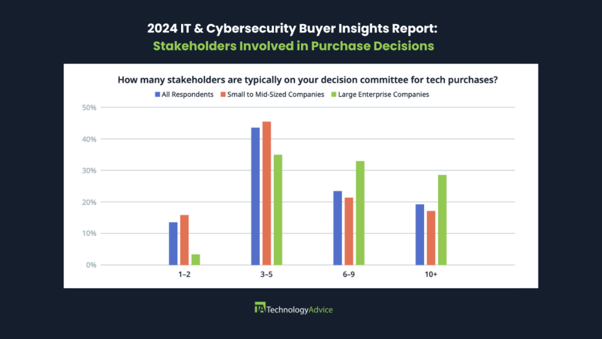
TechnologyAdvice’s Created in June 2024 IT & Tech Buyer Trends Report, which surveyed over 1,100 IT and cybersecurity professionals worldwide and analyzed engagement across its flagship media platforms, including TechnologyAdvice, IT Business Edge, and Channel Insider. The findings reflect how global technology buyers research, evaluate, and purchase new software and infrastructure solutions, offering a clear view into how B2B marketers should adapt their strategies as we move toward 2026. One of the report’s conclusion is that
Buying decisions are increasingly collaborative The average IT purchase now involves six or more stakeholders, often spanning technical, financial, and executive teams. CEOs and CFOs are becoming more engaged in cybersecurity and AI-related acquisitions. This shift means marketers must design campaigns that address both technical depth and business outcomes, bridging the gap between IT specialists and business leaders.
To truly accelerate pipeline velocity, marketers must shift perspective, from marketing to a person toward understanding how decisions actually happen. That means identifying the forces, frictions, and motivators that exist within the business system, not just the psychology of a single buyer.
When your message, materials, and value story align around that shared journey, when you help an organization think, decide, and move together, you don’t just win faster; you create customers who buy again, faster, and bigger.
Three Steps to Build an Organization-Level Customer Journey
A clear motivator (the “why”),
Confidence to act
And an easy, low-friction path to buy.
Here’s how to achieve this systematically:
1. Clarify the “Why”
At scale, addressing the “why” means understanding not just the user’s pain point, but the organizational use case. Define clear “value scenarios” that answer key questions:
What business situation is this organization facing?
What outcomes are they under pressure to deliver?
Which factors drive urgency and justify change? By framing your ICP through use cases, you create relevance and connect your solution directly to measurable business impact.
2. Give Buyers Confidence to Act
Confidence is built when buyers see that you understand their decision-making process and can visualize what success looks like after purchase. Show them what implementation, adoption, and ROI look like in practice. Demonstrate that your product fits smoothly into their operational reality , reducing perceived risk and reinforcing their conviction to move forward.
3. Make Buying Effortless
Friction is the silent killer of deal momentum. Simplify the buying process with tools that empower teams to act decisively:
Transparent pricing logic: Offer clear price bands, sample configurations, and value drivers.
Cost-benefit calculators and simulations: Help buyers quantify ROI and justify their decision internally.
Automated digital sales rooms: Centralize everything , documents, timelines, action plans, and Q&A , in one shared link per deal.
24/7 support: Create living FAQ hubs and responsive chat systems (human or AI) that reflect B2B expectations for immediacy, not just B2C speed. When information is accessible, decisions move faster.
Recognizing the Nonlinear Buyer Journey
No two customer journeys are the same , and few are linear. Even companies with similar firmographics can buy differently based on culture, process, or leadership dynamics. According to Gartner, over 75% of buyers revisit tasks multiple times during the purchasing process, looping back to revalidate decisions, compare alternatives, or realign stakeholders.
That’s why aggregating behavior across personas often produces misleading insights , and why mapping real decision paths, not hypothetical funnels, is key. The most successful providers track the “why” behind each decision step, not just the step itself.
Where Momentum Dies, and How to Revive It
Pipeline friction doesn’t always come from the competition. It comes from within the buying process , when teams get stuck waiting for answers, pricing clarity, or internal alignment. Here are the most common deal-killers and the practical tools that remove them:
Friction Point
How to Remove It
Opaque pricing
Provide transparent pricing bands, cost drivers, and sample configurations. Offer an interactive estimator so teams can self-validate ROI.
Slow responses
Enable asynchronous, real-time collaboration via automated digital sales rooms where every stakeholder can access documents, next steps, and Q&A.
Scattered artifacts
Consolidate proposals, specs, and legal docs into one shared hub per deal. Make it easy for new stakeholders to get up to speed instantly.
Repetitive security or compliance Q&A
Centralize answers in a “living” FAQ and documentation hub, updated continuously. Integrate sensible AI chatbots to respond instantly to recurring queries.
Loss of consensus
Maintain mutual action plans visible to all stakeholders, keeping everyone aligned on progress, dependencies, and value outcomes.
As Gartner notes, “buying feels complex to most teams.” Your guiding principle should be:
Make it easier to buy than to defer.
The Bottom Line
When you design the buying journey around organizational reality, not individual personas, you eliminate the friction that kills momentum. You help buying teams act faster, with more confidence and less regret , which directly translates into higher pipeline velocity and more sustainable growth.
Because in today’s market, speed doesn’t come from pushing harder, it comes from making it easier to buy.
Trust and credibility at scale
In crowded markets, trust differentiates. Buyers triangulate via peer reviews, independent content, and customer evidence.
Systematically publish outcome-specific case studies with metrics
Encourage independent reviews (G2, Capterra, TrustRadius) to provide third-party validation, social proof materially influences B2B perceptions (TrustRadius/G2 insights)
Run educational webinars/workshops with customers and ecosystem partners; atomize into clips, quotes, and transcripts for continuous distribution.
What B2B should borrow from B2C
Speed is a feature. Define SLAs for first response and next step
Journey continuity. Consistent experiences across web, mobile, email, and social; omnichannel is now table stakes (McKinsey)
Narrative clarity. Plain language travels inside buying committees better than jargon.
Future trends you should plan for
AI for insight and scale. Use AI to forecast intent (next-best content, churn risk), automate follow-ups, and generate first-draft content that humans fact-check. Tie this to your AIO plan so what AI systems “read” about you is accurate.
Sustainability as a filter. More procurement teams require transparent ESG disclosures; publish clear sustainability/governance pages and align with enterprise reporting norms.
Social as research (and proof). LinkedIn and niche communities are where lists are formed and culled. Invest in thought leadership and community participation, not just promotion.
2. The Shift from Funnels to Flywheels
The traditional marketing funnel – awareness, consideration, conversion – was built for a world of linear decision-making. Today’s buyer journey is nonlinear, social, and influenced by multiple touchpoints long before a form is ever filled.
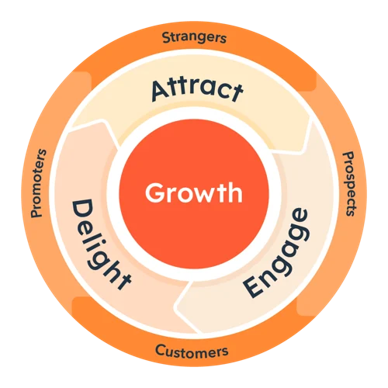
HubSpot popularized the flywheel concept, where marketing, sales, and service create a continuous cycle of attraction, engagement, and delight. In practice, the flywheel requires integrated data, consistent messaging, and a shared view of the customer.
How to implement this:
Unify marketing and sales KPIs under shared dashboards (HubSpot, Salesforce)
Automate lead handoffs with lifecycle stages and service-level agreements
Use post-sale engagement (newsletters, user groups, NPS surveys) to create a self-reinforcing loop.
Rethink the Foundations: From Funnels to Flywheels
The traditional linear funnel, Awareness, Consideration, Decision , no longer reflects how real buyers behave. In 2026, the journey is nonlinear, dynamic, and often self-directed. According to McKinsey, 70% of B2B buyers have defined their needs before ever contacting a vendor.
To adapt, marketing must evolve into a flywheel model , one that continuously attracts, engages, and delights through momentum, not milestones.
How to Implement
Map all touchpoints, digital, human, and hybrid, across the entire buyer lifecycle
Replace linear KPIs (like MQLs) with engagement velocity metrics: how fast a prospect moves from interaction to advocacy
Integrate HubSpot or Salesforce CRM with unified analytics to measure and automate engagement loops.
Case Study: Here’s a summary of how SAGE Marketing helped FINQ unify their marketing and sales cycle under a combined HubSpot-Salesforce flow and accelerate conversion time.
Client Overview
FINQ is a fintech company offering an AI-driven platform that helps consumers manage investments, insurance, and savings with personalized optimization.
Challenges
Disparate data sources and inconsistent data formatting across marketing and sales systems
Lack of unified CRM/marketing automation platform causing inefficiencies in lead processing and customer communication
An aggressive U.S. market campaign required quick onboarding, reliable analytics and scalable processes.
Solution & Approach
SAGE implemented HubSpot Marketing Hub Professional to standardize marketing automation and workflows
Customized workflows were built for lead nurturing and targeted email campaigns, including creating high-conversion landing pages and blog designs to boost engagement
A custom API integration was developed (in collaboration with FINQ’s developers) to ensure seamless data flow between HubSpot, Salesforce, and other systems, enabling a unified customer journey
Training and onboarding were delivered to ensure platform adoption and enable the team to manage campaigns independently.
Results
Marketing operations were significantly streamlined and efficiency improved
Customer engagement increased through better-targeted and personalized communications
Data management improved, enabling more accurate insights and stronger campaign targeting
Lead generation and conversion rates improved markedly.
Key Takeaways
A single, integrated platform (HubSpot + Salesforce) eliminated data silos and enabled end-to-end tracking from first touch to closed deal
Automation and structured workflows allowed consistent nurturing and faster progression through the funnel
Unified data enabled personalized and timely communication, leading to stronger engagement and higher conversion
Training and change management were critical to ensure the team could operate the new system effectively.
3. Strategy Before Tactics: Building the Right Framework
Many B2B marketers start with tactics, ads, webinars, content calendars, without a cohesive strategy. But strategy is the foundation that determines whether execution scales or stalls.
A strong 2026 strategy requires three pillars: Positioning, Differentiation, and Consistency.
Positioning
Define your unique value proposition in the context of market trends. What problem do you solve better, faster, or smarter than anyone else?
Case Study Example: Living Optics. When Living Optics set out to launch its breakthrough hyperspectral imaging technology, SAGE Marketing began not with campaigns or creative assets, but with strategy. The team focused on building the right framework , defining positioning, messaging, and a go-to-market plan that clearly articulated the company’s unique value to multiple audiences. Only after the strategic foundation was in place did the tactics follow: a new website, refined storytelling, CRM alignment, and targeted campaigns. By putting strategy before tactics, SAGE helped Living Optics enter the market with clarity, confidence, and impact. Full case study here.
Differentiation
In saturated industries, differentiation is often emotional, not functional. Buyers remember how you make them feel, confidence, control, clarity.
Consistency
Align visual and verbal identity across every touchpoint, website, social, email, sales decks. Inconsistent branding is one of the biggest credibility killers in B2B.
4. Content as a Strategic Asset (Not Just Marketing Collateral)
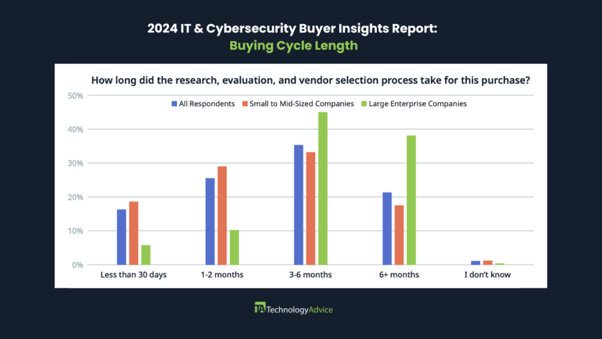
Long, information-heavy buying cycles dominate Over 58% of buyers report that their evaluation process lasts longer than three months, relying on multiple content sources such as peer reviews, analyst reports, and detailed product comparisons. This calls for multi-touch, full-funnel nurturing strategies supported by educational and trust-building assets.
Strategic Implications for 2026
Lead with relevance, Anchor your messaging around the real business problems buyers are solving: AI-driven efficiency, cyber resilience, and infrastructure scalability.
Market to the decision ecosystem, Personalize content for each function involved in the deal, CISO, CTO, CFO, and CEO, and align narratives across technical and strategic priorities.
Extend engagement across the full journey, Develop nurture streams that accompany buyers through every stage, combining thought leadership with tangible proof points.
Prioritize simplicity, Create seamless, low-friction buying experiences with transparent information and easy collaboration for distributed teams.
Recommendations for Tech Marketers:
Ensure you’re developing a cross-channel content, thought leadership, and demand generation strategy that aligns with the changing expectations of today’s B2B buyers
Invest in credible and impactful customer stories, case studies, product reviews, vendor comparisons, and educational content that offers validation from clients, analysts, industry experts, and trusted 3rd party brands
Be mindful that buying journeys may take 6+ months, particularly if you’re marketing to large enterprises, and invest in programs that help you build brand relationships throughout the research process and capture demand from late-stage buyers.
How to scale content intelligently:
Create pillar pages and topic clusters for SEO and authority
Integrate AI tools (ChatGPT, Jasper, SurferSEO) for ideation and optimization
Track content ROI using attribution models (first-touch, multi-touch).
Creativity is no longer purely intuition or artistry, it’s increasingly fueled by data and technology. But data doesn’t replace the idea; it enables it
The most celebrated campaigns didn’t just use data, they turned it into human insight, purpose, or experience. They weren’t just “data-driven” but “data-inspired.”
At Cannes 2025, the narrative shifted: the role of AI and data is important, but the human equation (emotion, empathy, meaning) remains the core of creative excellence
Marketers are under pressure to show outcomes, not just ideas. So creativity must link to business impact and measurable results, not just aesthetic or cleverness.
Implications for 2026 Marketing Strategy
Balance data and creativity: With more tools and more data available than ever, the risk is chasing metrics and losing the soul of the message. Your creative brief should ask: What human moment are we unlocking? and What data leads us there?
Humanize data: Whether you’re targeting enterprises or tech buyers, remember: behind every dashboard is a person. Use your data to uncover their story, not just their segment
Link ideas to outcomes: Creativity earns attention; data drives proof. In 2026, success means not just “this idea looked great” but “this idea moved the business.”
Use technology to scale, not replace: AI, automation and advanced analytics are powerful, but they should amplify human insight and craft, not supplant it
Stay culturally literate: Data can show trends, but it can’t fully capture context or meaning. The most resonant work will integrate cultural insight, human understanding and empathy with data-driven precision.
Case Study #1: GoDaddy – “Act Like You Know”
At Cannes Lions 2025 GoDaddy took home the Grand Prix in the Creative B2B category for this campaign.
Why it stands out:
It flips the script on typical tech-vendor messaging by using celebrity storytelling and humanized scenarios (actor David Goggins playing multiple roles)
It demonstrates how a brand typically seen as business-tool can show up with character, voice, and context that feels like a consumer brand.
Takeaway for 2026 B2B tech marketing: Use data to identify not only who you’re targeting (e.g., SMB founders, CMO leads) but how they think and live. Then tell a story that blends credibility (you’re a tech vendor) with relatability (you understand their world).
How You Can Apply These to Your 2026 Blueprint
Start with insight: Use data to uncover the moments, behaviors or frustrations your target audience living inside the enterprise feels
Blend human + data-led storytelling: Like GoDaddy’s humanization and Consul’s data-driven model, your campaigns should be part logic (proof) and part humanity (emotion)
Elevate brand and purpose: Even if you’re B2B, consider how your brand shows up in human terms. As Dove showed: relevance extends beyond immediate purchase
Measure what matters: Creativity without impact is just noise. Set up measurement tied to business outcomes, not just reach or impressions.
While automation dominates the conversation, creativity remains the ultimate differentiator. B2B buyers are still humans, they respond to emotion, surprise, and authenticity.
Creative leadership in practice:
Fuse data and storytelling: Use real-time insights to create emotionally resonant campaigns
Turn complexity into clarity: Simplify deep-tech narratives through relatable analogies
Use design as a strategic layer: A cohesive brand experience signals trust and innovation.
6. Building Communities, Not Just Audiences
If there’s one marketing trend I believe will define 2026, it’s community marketing, and not in the buzzword sense, but as a strategic, long-term approach to building belonging around your brand.
Before diving into why it matters, let’s clarify what it actually means.
A community is often defined as “a group of people living in the same place or sharing a particular characteristic.” In marketing, community marketing goes one step further, it’s about connecting people who share a common challenge, goal, or identity, and helping them learn, collaborate, and grow together.
It’s not about marketing to an audience. It’s about building the environment where your audience connects with each other. It’s about creating spaces, systems, and rituals that make people feel seen, valued, and part of something bigger.
That’s not a tactic, it’s a philosophy. And in 2026, it will be one of the strongest differentiators in B2B marketing.
Why Community Will Shape the Marketing Landscape in 2026
1. People are craving real connection After years of remote work, virtual events, and digital overload, people are looking for ways to reconnect, with peers, mentors, and even competitors. The brands that can facilitate these relationships will earn both attention and loyalty.
2. The rise of AI makes human interaction priceless As AI dominates more of our workflows, human touch becomes the ultimate differentiator. Communities offer something algorithms can’t replicate, empathy, spontaneity, and shared experience.
3. Traditional channels are oversaturated Email inboxes are flooded. Social media algorithms are unpredictable. Ads are expensive and ignored. Community, on the other hand, is still under-leveraged , especially in B2B. It’s a channel built on engagement, not interruption.
4. Community is hard to build , and that’s why it’s powerful Unlike paid campaigns or short-term tactics, community building requires patience, consistency, and generosity. It’s not about extracting value but creating it. And because it can’t be copied overnight, it becomes a long-term moat that protects your brand.
5. Community compounds in value Each new member doesn’t just add value, they multiply it. Every conversation, contribution, and shared success strengthens the network, making the community more useful and self-sustaining over time.
The Bottom Line
Community marketing works because it speaks to the deepest human needs: belonging, connection, and trust. It’s also hard , it demands humility, time, and a willingness to give before you get.
But that’s exactly why it will matter most in 2026. In a world of automation and AI, the brands that choose to invest in people , not just in platforms , will build something that scales far beyond clicks and conversions: they’ll build relationships that last.
Real-World Inspiration: B2B Brands Winning Through Community
1. HubSpot, Building the Inbound Nation HubSpot turned a software platform into a global movement through its HubSpot Community, Inbound Conference, and HubSpot Academy. What started as a user forum evolved into a living ecosystem of marketers, agencies, and customers who share playbooks, swap strategies, and celebrate each other’s success. Lesson: When you give your audience tools, knowledge, and visibility, they become your best advocates.
2. Notion, From Users to Creators Notion didn’t just market a product , it empowered its users to build their own templates, guides, and communities. The company amplified these user creations, effectively turning its audience into an organic content and distribution engine. Lesson: Let your community co-create with you. People engage deeper when they have ownership.
3. Gong, Amplifying the Revenue Community Gong built its brand authority by establishing spaces where revenue leaders could connect and learn , from Slack groups to local meetups to its “Celebrate the Win” culture series. Instead of talking about its product, Gong talks about what its audience cares about most: winning deals and leading high-performing teams. Lesson: Build a brand that talks with your audience, not at them.
4. Figma, Designing for Collaboration Figma became a household name in design by fostering real collaboration , both in product and in community. Its Config Conference, user groups, and community libraries made users feel like part of a collective creative journey. Lesson: Your community isn’t just an audience , it’s a reflection of your brand values in action.
HubSpot IL Case Study by SAGE Marketing We atSAGE founded the first HubSpot community in Israel, “Connect & Convert”, which grew from 0 to 400+ members in under a year. Through live events, webinars, and shared learning, the community became a trusted hub for marketing professionals, driving inbound leads organically.
How to replicate this:
Launch local user groups or digital communities around your core solution
Encourage customers to share use cases and feedback
Use the community as a feedback loop for innovation and brand storytelling.
7. Global Consistency, Local Relevance
As B2B companies scale internationally, balancing consistency and localization becomes critical. Global messages must adapt to cultural nuances, language, and buying habits.
Why Cultural Intelligence Is the New Competitive Advantage
After years of working with startups and scaleups from Tel Aviv to London, Hong Kong to New York, I’ve learned something that even the most advanced AI can’t replicate: marketing succeeds when it connects to people, not just markets.
Data can tell you where your audience is. But culture tells you why they’ll care. In 2026, as global marketing becomes increasingly AI-powered, success will belong to the brands that balance global consistency with local relevance , those who can scale efficiently while speaking authentically to each market’s rhythm, mindset, and expectations.
In Israel, speed isn’t a tactic, it’s a mindset. “Let’s go live” means right now, not next week. The culture thrives on momentum, experimentation, and boldness.
When we partnered with Gaviti, an accounts receivable automation platform, they wanted to make global noise instantly. We matched their energy but anchored it in structure: strategy before speed. Within weeks, we relaunched their brand, positioning, and campaigns that reached enterprise CFOs faster than expected.
That’s the Israeli formula, momentum, clarity, and measurable impact. In this market, hesitation costs more than mistakes.
London moves fast, but with precision. The British approach to business blends urgency with discipline. When someone asks, “What’s the fastest way to deliver the best result?”, they mean it literally.
Working with Living Optics, an Oxford-based hyperspectral imaging company, taught us how to pair agility with craftsmanship. We built their investor messaging, positioning, and GTM strategy under tight timelines , but with meticulous attention to every word, image, and proof point.
In the UK, polish equals credibility. Deliver both speed and quality, and you earn lasting trust.
In Hong Kong, the pace is electric , but every move is calculated. Marketing here isn’t about making noise; it’s about demonstrating mastery.
Working with LeapXpert, a global leader in compliant communication platforms, reminded us that credibility is built through clarity. Every message had to be both creative and compliant. Every campaign had to fit seamlessly into the market’s business rhythm , tied to financial cycles, regulations, and expectations.
In Hong Kong, trust is earned through excellence. Every interaction is proof of reliability.
New York doesn’t think small, it thinks scale. Every startup wants to become a category; every product, a movement.
With Venn, a Brooklyn-based community-tech company, we built a narrative around “Community as a Service.” Our mission was to merge storytelling and performance , turning brand emotion into measurable growth. Through HubSpot automation, content, and data-driven storytelling, we helped Venn expand fast and authentically.
That’s the New York mindset: storytelling that performs. Creativity meets conversion, and ambition is non-negotiable.
Europe: Consistency Is the Currency
Across continental Europe, Germany, the Netherlands, France , the rhythm changes again. Here, reputation is built patiently, not virally. Marketing is viewed as an investment in credibility, not just a lead-generation tool.
Every element, message, design, process, is carefully crafted, tested, and documented. Reliability isn’t just expected; it’s respected. And once you earn trust, European clients stay loyal for years.
In Europe, consistency isn’t bureaucracy, it’s brand equity.
Bridging Cultures: The Marketer’s Real Superpower
Leading global marketing teams means constantly shifting gears, from speed to structure, from creativity to consistency, from instinct to insight.
The most effective marketers aren’t those who dominate one culture, but those who can translate between cultures. What feels energetic in Tel Aviv may feel aggressive in Paris. What’s bold in Hong Kong might feel excessive in Amsterdam. Cultural intelligence isn’t about political correctness , it’s about precision and empathy.
Because the best global brands don’t just translate words, they translate meaning.
AI can optimize performance. But only human understanding can build connections.
Five Lessons for Global Marketers in 2026
Adapt your tempo, not your standards. Match the market’s rhythm while keeping your brand integrity
Define success locally. In some markets, ROI drives decisions; in others, relationships do
Respect cultural pride. Local nuance builds credibility faster than scale alone
Build empathetic teams. Global success depends on local understanding
Let AI support, not replace. Data drives insight , but empathy drives loyalty.
The Common Thread
No matter the market, Tel Aviv, London, Hong Kong, or New York, every client wants to feel understood. That’s the true language of marketing: understanding not just what people buy, but why they believe.
At SAGE Marketing, we don’t just translate campaigns, we translate thinking patterns. Because global consistency and local relevance aren’t opposites; they’re the foundation of meaningful connection.
As I often tell my team:
“Marketing is anthropology with better visuals. ”It’s the study of human behavior expressed through creativity. And somewhere between Tel Aviv’s urgency and London’s precision, that’s where great global marketing begins.
8. Thought Leadership and Employer Branding
In 2026, Trust Will Be Your Most Valuable Currency
As we enter 2026, one thing has become clear: brand trust is built by people, not press releases. Customers, investors, and employees no longer separate “marketing” from “culture.” They want to buy from, and work for, companies that stand for something real.
In an age of AI-generated everything, authenticity is the new differentiation. That’s where thought leadership and employer branding converge: at the intersection of credibility, transparency, and human voice.
Why This Matters Now
According to recent research by LinkedIn, thought-leadership content drives 60% higher engagement and 4× greater credibility with decision-makers. Yet less than a third of B2B executives publish consistently. The opportunity gap is massive, and growing.
In 2026, audiences will continue to reward leaders who speak with clarity, courage, and vulnerability. Whether it’s a founder sharing lessons from failure, a CMO unpacking a tough strategic pivot, or a CTO explaining how ethics shape their AI roadmap, authentic storytelling is fast becoming the most trusted form of communication.
This isn’t just about visibility. It’s about alignment: What your leadership says publicly must reflect what your employees feel internally. When those two narratives diverge, credibility collapses.
The Convergence of Employer Brand and Thought Leadership
In 2026, your people are your brand. Potential customers research your leadership team as much as your product. Potential hires read your LinkedIn posts before your job descriptions.
That’s why employer branding can no longer live only in HR, it belongs at the heart of your marketing strategy. The strongest brands are built from the inside out: when your internal culture becomes your external story.
A few defining shifts we’re seeing across the market:
Authenticity over polish: Raw, first-person insights outperform corporate updates by 3× on LinkedIn
Employee voices as amplifiers: Teams that empower employees to share their perspectives see higher trust and reach than paid media
Founder visibility as credibility: Founders who regularly engage on social media drive measurable pipeline impact, especially in B2B and tech.
How to Lead with Thought and Culture
Here are the three core actions that will separate the brands people follow from the ones they scroll past:
Empower Executives to Be Storytellers Train and encourage your leaders to share real experiences, failures, dilemmas, and learnings, not just wins. Publish on LinkedIn, Medium, or industry forums where your buyers actually think and talk. Tip: Create a monthly “Leadership Voice” program that helps executives publish consistent, authentic insights tied to your brand values and vision.
Humanize Innovation Showcase what happens behind the product. Feature your R&D teams, customer success managers, and designers. Share “day in the life” content that connects the brilliance of innovation with the humanity behind it. Remember: People trust people more than polished brands.
Align Employer Brand with Customer Promise What you believe inside must resonate outside. If your customer messaging emphasizes innovation, show how your internal culture nurtures experimentation. If you promote reliability, highlight your long-term team retention and mentorship programs. Authentic alignment between culture and customer value builds unshakable trust.
Looking Ahead
In 2026, trust will become a strategic asset, one that’s earned through transparency and amplified through thought leadership.
The companies that win won’t be those shouting the loudest, but those speaking the truest. When your people become your proof points, your story becomes undeniable.
Or, as we like to say at SAGE:
“A brand is no longer what it says about itself. It’s what its people are proud to say about it.”
Conclusion: From Data to Meaning
The future of B2B marketing is not just about smarter tools or bigger budgets, it’s about building meaningful systems that connect data, people, and purpose.
Winning in 2026 requires an equilibrium of strategy and spontaneity, structure and creativity, AI and humanity.
As SAGE Marketing journey with over 100 tech companies has shown, when strategy is human-centered and technology-powered, growth isn’t just measurable; it’s inevitable.
Sarit founded SAGE to allow technology companies to take innovation to the next business level and fulfill the entrepreneur’s dream to change the world by building market recognition, increasinge customer awareness and improvinge the foundation for strong and sustainable revenue growth.
Sarit Lamarovich, founder and CEO of SAGE Marketing, was featured in TheMarker’s Expert Zone discussing why strategic marketing planning is essential during periods of economic uncertainty. Rather than a luxury, she frames it as a business compass: startups that cut marketing during downturns disappear from view, while those that sharpen their messaging and stay visible remain top of mind.
Lamarovich outlines what a strong annual marketing plan should include: clear strategy and messaging that define a company’s differentiated value, a strong website as both a brand showcase and conversion tool, physical-world presence through conferences and influencer partnerships, content creation (blogs, video, podcasts), and a robust CRM system tying marketing, sales, and service together.
She also highlights how AI has reshaped digital strategy, noting that visibility now extends beyond Google rankings to AI-driven search engines like ChatGPT, Perplexity, and Gemini, making consistent, value-based content critical.
On budgeting, she advises early-revenue startups to allocate 10-15% of projected revenue to marketing, while more established companies should balance spending between maintaining their existing brand and expanding into new markets. New startups, she suggests, should commit a modest but consistent ~$10,000/month toward foundational marketing infrastructure.
For the complete article in Hebrew, see the original piece on TheMarker Expert Zone.