









































Best Defense Tech Exhibitions and Events in 2027

Michal <br>Tidhar
written by Michal
Tidhar
CMO as a Service

As CMO as a Service at SAGE, Michal is the external CMO for B2B tech companies: the senior marketing head they need, with a full team behind her, working like one of their own. She's who you call when you're tired of marketing that looks busy and changes nothing.

Shlomit<br> Hertz
reviewed by Shlomit
Hertz
CMO-as-a-Service

Today, as CMO-as-a-Service at SAGE Marketing, Shlomit partners with technology companies to build powerful brands, accelerate demand generation, and connect innovation with results. Her approach is creative, data-driven, and always focused on what truly matters — turning strategy into measurable success.

10 min read
Share
Why Partner with SAGE Marketing?
100+ B2B tech companies and startups — we literally grow unicorns.
No office, no walls — we work inside your world, embedded in your team.
Full-stack marketing approach: strategy, storytelling, content, HubSpot and execution under one roof.
Let’s Build Something Remarkable!
Whether you’re launching, scaling, or rebranding —
we’ll help you connect,
engage, and grow.
Contact us
client logo client logo client logo client logo client logo client logo
Startups startups lead generation Tradeshow B2B Marketing Defense

Key Takeaways

  • Choose defense tech events by the accounts you can name. If you can’t list 20 people you need to meet at a show, you are buying a trip, and the attendance figure won’t change that.
  • Outreach tied to a named event books far more meetings. In a 2026 campaign we ran for a defense geospatial client, LinkedIn requests that mentioned a specific event booked meetings at 2.6%, against 0.2% for general ABM outreach.
  • Put money into speaking slots, small dinners and engineers before floor space. Defense buyers trust people they can question.
  • Bring a demo that runs offline. Buyers increasingly ask how products perform in GPS-denied, disconnected conditions, and a show floor with failing Wi-Fi is the place to prove it.
  • Count created and influenced pipeline separately, and give each event 90 days. Expect much of the revenue from 2027 events to land in 2028.

The most expensive line in a defense event budget never shows up on an invoice. It’s the three days your one of the most skilled employees spends standing next to a booth, hoping the right program manager walks past.

I build event plans for B2B tech companies that sell into defense, and the conversation usually starts the same way. The founder/ CEO shows me the biggest defense exhibitions on the calendar and asks which ones to book. I answer with a question of my own: who, by name, do you need to sit across from this year?

Most guides to defense tech events rank shows by size. I rank them by a simpler test: how easily can you get 30 minutes with someone you want as a client or partner?
Trade shows still earn their place in a B2B plan (we’ve written about the real impact of B2B trade shows before).
Defense adds its own friction, though, and the playbook below accounts for it: very long sales cycles, export rules, security culture, and buyers who walk away from anything that sounds like a pitch.

How to Choose Which Defense Tech Events to Attend in 2027

Book an event only when you can name the accounts that will be in the room and explain why they would give you time there. Brand awareness, booth traffic and “being seen” come a distant second.

These are the filters I run every event through before a deposit leaves the account:

  • Buyer density over headcount. AUSA’s Annual Meeting draws more than 40,000 attendees, and GEOINT draws around 4,000. For a geospatial software company, the smaller room holds far more of the right people.
  • A named account list first. Pull the published exhibitor and speaker lists, check every name against your CRM, and flag accounts that already have a relationship owner. Nothing cools a prime faster than a cold pitch from your SDR when your CEO already knows their VP.
  • Readiness, scored separately. I score each event twice: once for buyer fit, once for whether we can show up today with the right message and the right product.
  • One sentence of value. My favorite test, and I use it far beyond events: before I pay for anything, I ask what the one reason is and what it will change. For an event, write down why a buyer would meet you there rather than on a video call, and what that meeting changes in your pipeline. If you can’t write the sentence, skip the event.
  • Calendar collisions. When I mapped 2027 for one client, SOF Week, ITEC and GEOINT landed within 17 days of each other in May. A small team can’t cover Tampa, London and Kissimmee in a fortnight without someone burning out, and tired sellers book weak meetings. So we chose early, and the choice protected the team.

I apply the same filter to cybersecurity conferences, and it works even better in defense. The buyer pool is smaller, and everyone knows everyone.

Best Defense Tech Exhibitions and Events in 2027

For software and data companies, the best defense events in 2027 are the focused symposiums (GEOINT, DGI, ITEC and I/ITSEC), while the giant exhibitions (IDEX, DSEI, Paris and AUSA) pay off mainly through partners and pre-booked meetings.

If you sell into more than one sector, our event hub tracks conferences and trade shows across defense, cybersecurity, AI, fintech and more, with dates you can export straight to your calendar.

Event2027 datesLocationScale and formatWho attends
IDEX and NAVDEXJan 25-29ADNEC, Abu DhabiBiennial tri-service show, start-up zoneInternational delegations, primes, Gulf procurement
DGIFeb 23-25Olympia, LondonAllied GEOINT conferenceNATO, UK MoD, NGA and allied GEOINT leaders
Sea-Air-SpaceApr 4-7National Harbor, MDNavy League expo, restricted attendanceUS Navy, Marine Corps, Coast Guard, maritime industry
Space SymposiumApr 12-15The Broadmoor, Colorado SpringsAbout 10,000 attendeesSpace Force, civil and commercial space leaders
Modern Day MarineApr 13-15Washington, DC300+ exhibitors, not open to the general publicMarine Corps leaders and acquisition teams
SOF WeekMay 3-6Tampa, FL19,000+ attendees in 2025Special operations users and program offices
ITECMay 11-13ExCeL, LondonDefence training and simulationEuropean training buyers, MoDs, simulation primes
GEOINT SymposiumMay 16-19Gaylord Palms, Kissimmee, FL4,000+ attendees, unclassifiedGEOINT production leads, NGA, IC and allied partners
Paris Air ShowJun 14-20 (trade days 14-17)Le Bourget, ParisBiennial, 2,400+ exhibitorsAir forces, aerospace primes, government delegations
DSEISep 7-10ExCeL, LondonBiennial UK flagship showUK MoD, NATO allies, international primes
AUSA Annual MeetingOct 11-13Washington, DC40,000+ attendees and 750+ exhibitsUS Army leadership, program managers, primes
I/ITSECNov 29-Dec 3Orlando, FLLargest simulation and training conferenceTraining program directors, primes, simulation engineers

A note on IDEX: ADNEC first announced January 21-25, and later listings moved to January 25-29. Check the official site before you book.

How I’d use them depends on the type of room:

  • The big tents (IDEX, DSEI, Paris, AUSA).
    For an early-stage software company, a stand of your own at these defense trade shows rarely pays back. Go as a guest on a partner’s stand, or walk the floor with a full diary of pre-booked meetings.
  • The community symposiums (DGI, GEOINT, ITEC, I/ITSEC).
    Software and data companies win here. Speak, host a dinner for 12, and submit a technical paper where the program allows it. These defense technology conferences reward expertise over square footage.
  • The service-branch military expos (Sea-Air-Space, Modern Day Marine, SOF Week).
    Go when you chase a specific program or unit. Restricted attendance means the aisles hold actual users.
  • Space Symposium. Worth the trip when space sits on your actual product roadmap.

What to Prepare Before a Defense Exhibition

Prepare the meetings, the demo and the approvals before you think about the booth. I run the same 12-week routine for every event:

  1. 12 weeks out: name the event lead, confirm who travels, set a meeting target and check the exhibitor list.
  2. 10 weeks out: agree the named account list with sales and check it against the CRM.
  3. 8 weeks out: finish the demo, the talk and a one-page leave-behind. Get legal to approve every claim and confirm export classification. In defense, you can’t say on the floor what legal hasn’t cleared.
  4. 6 weeks out: start outreach from your sellers’ own LinkedIn accounts, and name the event in every message.
  5. 3 weeks out: confirm meetings, invite dinner guests and start posting about your presence on social media.


The routine above covers what changes in defense. For the groundwork every trade show needs, from choosing booth placement to a budget template and a countdown checklist, download our B2B trade show handbook.

Four habits separate the teams that come home with pipeline from the ones that come home with tote bags:

  • Work the hallway, the breakfast and the dinner table. When I attended trade shows myself, most of my tier 1 relationships started away from the booth: between sessions, over breakfast, at a dinner nobody had scheduled. People at defense events came to learn, so bring your warmth along with your deck. Your ICP needs what you offer; they need the chance to know you first.
  • Build the demo for a dead network. Convention hall Wi-Fi fails, and many defense buyers care about air-gapped performance anyway. An offline demo proves the product and your discipline at the same time.
  • Send engineers alongside sellers. Defense buyers lean in when someone answers the third technical question without phoning headquarters. Your best salesperson at the show may be the person who wrote the pipeline code.
  • Check ethics rules before you send dinner invitations. Government attendees work under strict limits on what they can accept, and from whom. An invitation that puts a program officer in an awkward spot costs you far more than an empty chair.

How to Turn Defense Tech Event Conversations Into Pipeline

Pipeline comes from the five working days after the event, so write the follow-up plan before you fly and give it one owner, usually the sales lead, or the marketing lead when they travel.

  • Log every meeting the same day. Memory fades after 30 conversations.
  • Ask each seller for a 48-hour debrief: who they met, what stage the account sits in, and the agreed next step.
  • Send a personal follow-up within five working days that refers to the actual conversation. A buyer who met 60 vendors that week deletes “great to meet you” on sight.
  • Offer a next step that costs the buyer little and teaches you a lot. Review their own dataset, run a short feasibility session, or invite them to a private demo day near their office.
  • Measure with discipline. Count each opportunity once, report pipeline the event created separately from deals it helped, allow 90 days, and hold off on ROI until deals close.

Then review every event against its target: keep it, change the format, or drop it. I use the same discipline for fintech events. Defense simply punishes sloppy follow-up faster, because the community is small and memories are long.

The vendors defense buyers remember are the ones who respected their time and came back with exactly what they promised. At SAGE Marketing, we build event plans like this as part of our CMO-as-a-Service work with B2B tech companies. If you’re shaping your 2027 calendar and want a second opinion on where the budget should go, I’m happy to compare notes.

FAQs

How much does it cost to exhibit at a defense expo?

Expect the booth to be the smaller half of the bill. At GEOINT, a 10×20 booth cost about $12,000 at 2026 rates. In the plans I build, stand construction, freight, travel and one client dinner typically add another $20,000. DSEI or AUSA cost far more, so many startups join a partner’s stand instead.

How far in advance do defense exhibitions open registration?

Six to twelve months is normal, and speaking deadlines close earlier than exhibit sales. USGIF opened GEOINT 2027 registration in November 2026, six months out, and closed its call for sessions in October 2026. AUSA allocates exhibit space at a draft held during the previous year’s meeting.

Do defense events require security clearance to attend?

Most major defense events run at an unclassified level, and GEOINT states so explicitly. Many still restrict attendance: Sea-Air-Space and Modern Day Marine limit registration to qualified categories such as military personnel and industry. Some sessions may carry nationality or government-only restrictions, so check your team’s eligibility per event before you book travel.

Which defense tech events are best for early-stage startups?

Focused community events usually beat the giant exhibitions. SOF Week puts you near special operations users who test new technology, GEOINT and DGI gather concentrated geospatial buyers, and IDEX runs a start-up zone. Pair one or two with an invitation-only demo day of your own, where you control the guest list.

Are defense trade shows open to international companies?

Yes, and IDEX, DSEI and the Paris Air Show build their programs around foreign delegations. Two checks matter: export controls govern what you can show and to whom, so classify your product before you ship a demo, and geopolitics can shape how a show treats your country’s companies, so read the room before you commit budget.


Michal
Tidhar
CMO as a Service
About
the author
As CMO as a Service at SAGE, Michal is the external CMO for B2B tech companies: the senior marketing head they need, with a full team behind her, working like one of their own. She's who you call when you're tired of marketing that looks busy and changes nothing.
Learn more

7 UAE Venture Capitals That Help Startups Go Global: 2027 Guide

Shlomit<br> Hertz
written by Shlomit
Hertz
CMO-as-a-Service

Today, as CMO-as-a-Service at SAGE Marketing, Shlomit partners with technology companies to build powerful brands, accelerate demand generation, and connect innovation with results. Her approach is creative, data-driven, and always focused on what truly matters — turning strategy into measurable success.

Sarit<br> Lamerovich
reviewed by Sarit
Lamerovich
Founder/CEO

Sarit founded SAGE to allow technology companies to take innovation to the next business level and fulfill the entrepreneur’s dream to change the world by building market recognition, increasinge customer awareness and improvinge the foundation for strong and sustainable revenue growth.

10 min read
Share
Why Partner with SAGE Marketing?
100+ B2B tech companies and startups — we literally grow unicorns.
No office, no walls — we work inside your world, embedded in your team.
Full-stack marketing approach: strategy, storytelling, content, HubSpot and execution under one roof.
Let’s Build Something Remarkable!
Whether you’re launching, scaling, or rebranding —
we’ll help you connect,
engage, and grow.
Contact us
client logo client logo client logo client logo client logo client logo
startups lead generation Funding Checklist Startups startup marketing

Why the UAE is becoming a launchpad, not just a market

More founders now choose the UAE as their base for building a global company. The country offers strong infrastructure, fast company setup and a growing pool of investors. The best of those investors do more than write cheques: they help their startups reach customers, partners and follow-on capital in the US, Europe and Asia.

For a seed company with five people and no marketing leader, that support can matter as much as the money. Introductions to a first enterprise customer in London, a partner in Singapore or an investor in New York can change the course of a company.

This guide looks at seven UAE-based investors through that lens. For each one we cover the stage they invest in, how they support their companies, how far their network reaches, and who they suit best.

Many of these funds also attend Expand North Star, Dubai’s annual startup and investor event, which makes it one of the best places to get in front of UAE VCs.

Not ready for VC funding yet? Start with our guide to the Top 12 Startup Incubators, Accelerators & Innovation Hubs in the UAE, where early-stage founders can find mentorship, workspace and their first investor connections.

Quick comparison

FundBased inStageGlobal reachSupport highlight
Oraseya CapitalDubaiPre-seed to Series BInvests in UAE and international tech companiesSANDBOX investment programme
AntlerDubaiPre-seed (from day zero)1,900+ startups backed across 27 citiesFounder residency and global founder community
Global VenturesDubaiSeed to growthIntroductions in Europe, Asia and the USHands-on help with strategy, talent and expansion
Shorooq PartnersAbu DhabiSeed to late stageInvests in startups in the US and UAEVenture, credit and growth capital under one roof
YVL Capital PartnersDubaiPre-seed to Series AOperates across MENA, Europe and North AmericaAI-native venture studio with shared operators
Further VenturesAbu DhabiSeed to Series BPortfolio across the UK, US, Singapore, South Korea and EuropeVenture building and support in regulated industries
Plug and PlayDubai (HQ in Silicon Valley)Post-revenue startups60+ locations across five continentsAccelerator that connects startups with corporates

The 7 Funds

1. Oraseya Capital

Oraseya Capital is the venture arm of the Dubai Integrated Economic Zones Authority (DIEZ). Venture data platform MAGNiTT ranked it the UAE’s most active investor by deal count in 2024, 2025 and the first half of 2026, and DIEZ recently doubled the fund to AED 1 billion to back companies with global growth potential. It invests from pre-seed to Series B, and its mandate now includes international technology companies with strategic relevance to the UAE.

How it supports startups: Early-stage founders usually enter through SANDBOX, a five-month programme run in two phases. Startups that complete it receive a $150,000 investment offer, plus structured support on governance, commercial readiness, operational planning and investor engagement. Oraseya can then follow on in later rounds, and it is visible on the international circuit, for example as a sponsor at Web Summit in Lisbon.

Best for: Tech founders, from the UAE or abroad, who want a Dubai base and a clear path from first cheque to Series B with one investor.

2. Antler

Antler is one of the world’s most active early-stage investors, having backed more than 1,900 startups across 27 cities, including London and Singapore. In February 2026 it signed a multi-year partnership with Dubai’s Department of Economy and Tourism and the Dubai Chamber of Digital Economy, and set up its UAE headquarters inside the Dubai Founders HQ campus.

How it supports startups: Antler runs a 10-week founder residency in Dubai, with co-founder matching, coaching, and investment of up to $500,000. Portfolio companies join Antler’s global founder community and get access to more than $4 million in perks, plus a network that spans Europe, Asia and North America.

Best for: Founders at idea stage, or solo founders looking for a co-founder, who plan to build for global markets from day one.

3. Global Ventures

Founded in 2018, Global Ventures manages $400 million and has backed more than 65 companies across 12+ countries, including Kitopi, Tabby and Moniepoint. It was the first fund from the region to join the Draper Venture Network’s DVN Beta programme, linking it to a global network of investors. General Partner Noor Sweid is one of the firm’s best-known faces.

How it supports startups: The team offers hands-on help with strategy, operations, talent acquisition and market expansion, and makes introductions for portfolio companies to business opportunities in Europe, Asia and the US.

Best for: Startups that want a UAE investor with real connections in Western and Asian markets.

4. Shorooq Partners

Shorooq is an Abu Dhabi-based, multi-strategy investment firm led by Founding Partners Mahmoud Adi and Shane Shin, with 90+ portfolio companies. Its stated mission is to back bold founders and help them scale globally. Its $100 million AI fund with Presight has invested in AI startups across the US and the UAE, and its wider portfolio includes US companies such as Replit and Hebbia.

How it supports startups: Shorooq combines venture capital, private credit and growth capital, including a $200 million late-stage growth fund launched in 2026, so founders can access different types of funding as they scale. It also has a dedicated value creation function and a growing network of strategic advisors.

Best for: Founders, especially in AI and fintech, who want an investor that can fund them at several stages and connect them to the US market.

5. YVL Capital Partners

YVL launched in Dubai in February 2026 as an AI-native venture capital firm and studio. It operates across MENA, Europe and North America, and invests from pre-seed to Series A in AI-enabled infrastructure, autonomous systems and mission-critical industries. It is led by CEO and Managing Partner Matthew Buckingham.

How it supports startups: YVL combines capital with hands-on operators and a shared AI operating system. Studio companies receive $100,000 in cloud credits, and the firm runs founder programmes with partners such as Ignyte by DIFC.

Best for: Technical founders building AI-native companies who want execution support from day one and a network across three continents.

6. Further Ventures

Further Ventures is an Abu Dhabi-based venture investment and venture-building firm, anchored by a $200 million fund from ADQ, one of Abu Dhabi’s sovereign investors. It invests from seed to Series B in fintech, digital assets and AI, and often joins founders as an institutional co-founder.

How it supports startups: Further gives founders access to large organisations in the region and to a global network of venture builders, along with help on regulation and licensing, which matters in fintech. Its reach is truly international: its portfolio spans the UAE, UK, US, Singapore, South Korea, France and Switzerland, and it led the $16 million Series A of Paris-based Dfns. It also hosts the annual Further Network Summit in Abu Dhabi.

Best for: Fintech and digital-asset founders building regulated products for international markets.

7. Plug and Play

Plug and Play is a Silicon Valley-based innovation platform and investor, present in more than 60 locations across five continents. Its in-house VC has backed companies such as Dropbox. In Dubai, it runs accelerator programmes with the Department of Economy and Tourism and the Dubai Chamber of Digital Economy, based at Dubai Founders HQ.

How it supports startups: Its three-month Dubai accelerator helps post-revenue startups reach their next stage by connecting them with large corporates, mentors and investors. The first 100-day programme brought together 23 startups and five major corporations and produced 36 proof-of-concept opportunities, including deals with Talabat and Emirates. Plug and Play’s stated goal is to link Dubai’s startup ecosystem with Silicon Valley’s innovation network.

Best for: Post-revenue startups that want corporate customers in Dubai and a bridge to Silicon Valley.

Behind many of these funds: Dubai Future District Fund

Dubai Future District Fund (DFDF) invests in venture funds as well as directly in startups. Its 2025 annual report showed 30 investments: 11 venture capital funds and 19 high-growth startups. It plans a 2026 programme to back first- and second-time fund managers. Founders rarely pitch DFDF directly at seed, but its portfolio is a useful map of who is active in the market.

How to choose the right investor

  • Match the stage. A fund that invests up to late stage can still be a great first investor, but make sure the partner leading your deal focuses on early stage.
  • Ask for proof of support. Ask two or three portfolio founders what help they received in the first 12 months.
  • Check the global network. If you plan to expand to the US, Europe or Asia, ask which offices, partners and portfolio companies the fund has in those markets.
  • Know what is missing. Most funds help with hiring and fundraising. Very few have a marketing team that can build your go-to-market plan with you.

The gap most investors don’t cover: marketing before your first marketing hire

At seed, most startups do not have a CMO. Founders handle marketing themselves, or hire a junior marketer and hope for the best. Investors open doors to customers, but someone still has to define the positioning, choose the channels and build the pipeline, especially when entering a new market.

This is where SAGE comes in. We work as the fractional CMO for seed-stage startups: we set the go-to-market strategy, run the first growth experiments, and help you hire your first marketer when the time is right. We work with founders and investors in the UAE, the UK and Israel.

Raised a seed round in the UAE? Book a meeting with SAGE CEO. In 45 minutes we’ll look at your positioning, channels and pipeline, and give you three priorities for the next quarter.

FAQ

Do UAE venture capital firms invest in startups based outside the UAE?

Yes, several do. Oraseya Capital’s mandate now includes international technology companies with strategic relevance to the UAE, Shorooq has backed US companies such as Replit and Hebbia, and Further Ventures has a portfolio that spans the UK, US, Singapore, South Korea, France and Switzerland. Many funds will still expect a clear link to the UAE, such as a regional office, customers or a plan to set up a base here.

Which UAE investor suits a startup at idea or pre-seed stage?

Antler invests from day zero and runs a 10-week founder residency in Dubai with co-founder matching and up to $500,000 in investment. Oraseya’s SANDBOX programme offers a $150,000 investment to startups that complete its five months. For technical founders building AI-native companies, YVL Capital Partners invests from pre-seed and adds hands-on operators.

What support can founders expect from a UAE VC after the investment?

It depends on the fund, so ask portfolio founders before you sign. Most offer introductions to customers, partners and follow-on investors, plus help with hiring and fundraising. Some go further: Global Ventures makes introductions in Europe, Asia and the US, and Plug and Play connects startups with large corporates. Hands-on marketing support is rare, which is why many seed founders bring in a fractional CMO for their go-to-market plan.

Shlomit
Hertz
CMO-as-a-Service
About
the author
Today, as CMO-as-a-Service at SAGE Marketing, Shlomit partners with technology companies to build powerful brands, accelerate demand generation, and connect innovation with results. Her approach is creative, data-driven, and always focused on what truly matters — turning strategy into measurable success.
Learn more

Best 7 Organic LinkedIn Marketing Agencies for B2B

Aliza Hughes
written by Aliza Hughes Head of Social Media

Aliza is a seasoned content and social media strategist with over a decade of experience humanizing B2B tech brands through organic growth and executive thought leadership.

Sarit<br> Lamerovich
reviewed by Sarit
Lamerovich
Founder/CEO

Sarit founded SAGE to allow technology companies to take innovation to the next business level and fulfill the entrepreneur’s dream to change the world by building market recognition, increasinge customer awareness and improvinge the foundation for strong and sustainable revenue growth.

6 min read
Share
Why Partner with SAGE Marketing?
100+ B2B tech companies and startups — we literally grow unicorns.
No office, no walls — we work inside your world, embedded in your team.
Full-stack marketing approach: strategy, storytelling, content, HubSpot and execution under one roof.
Let’s Build Something Remarkable!
Whether you’re launching, scaling, or rebranding —
we’ll help you connect,
engage, and grow.
Contact us
client logo client logo client logo client logo client logo client logo
Social Media B2B Marketing

Key Takeaways

  • LinkedIn is the core social channel for B2B buyers, but organic success depends on people (founders, executives, experts), not just company pages.
  • Organic LinkedIn marketing builds trust and authority over time. Paid LinkedIn ads buy reach and speed. Most B2B companies should build organic first and add paid as they scale.
  • The best LinkedIn marketing agencies combine strategy, executive ghostwriting, active engagement and reporting tied to pipeline rather than vanity metrics.
  • Agencies differ sharply. Some are organic and thought-leadership led, others are built around ads, outreach or creator campaigns. Match the agency to your goal.
  • Expect three to six months before organic LinkedIn drives consistent, qualified leads.

LinkedIn is where B2B buyers do their homework. With over 50 million B2B decision-makers on the platform, it’s where founders build reputations, buyers check out vendors, and a single sharp post can open doors that cold email never will. But LinkedIn rewards people, not logos. The difference between a presence that builds pipeline and one that gets scrolled past usually comes down to who’s running it.

That’s why choosing the right LinkedIn marketing agency matters more than most companies realize. Generic posts, inconsistent publishing and corporate-speak are easy to spot in the feed, and buyers skip them in seconds. The agencies that succeed on LinkedIn know how to turn real expertise into content that decision-makers actually want to read.

Why LinkedIn B2B Marketing Needs a Specialist Agency

B2B buying is slow, collective and risk-averse. A typical deal involves several stakeholders, a long evaluation and a lot of quiet research. On LinkedIn, that research happens in the feed. Buyers follow people whose thinking they trust, and they notice which companies show up consistently with something useful to say.

This is where a general B2B social media agency often falls short. When LinkedIn is treated as one channel among five, content gets recycled across platforms, written in a brand voice nobody actually speaks in, and measured by likes. LinkedIn rewards the opposite: a clear point of view, posts from real people, genuine conversation in the comments, and formats built for the platform, such as text posts, document carousels, short video and newsletters.

A specialist LinkedIn agency knows how to extract expertise from busy founders and subject-matter experts, turn it into posts that sound like them, and keep a steady cadence without burning out your team. Just as important, they know what to measure: who is engaging, whether those people match your ideal customer profile, and whether conversations are turning into pipeline.

What to Look for When Choosing a LinkedIn Marketing Agency

With more agencies offering LinkedIn services than ever, knowing how to evaluate them is critical. Here are the criteria that separate genuinely capable partners from those learning on your budget.

LinkedIn-Native Experience

Ask how long the agency has actually worked on LinkedIn and what that work looks like. Look for examples of executive profiles and company pages they’ve grown, not just ad campaigns. An agency that leads with ad formats but struggles to discuss organic strategy is likely more comfortable elsewhere.

Executive Thought Leadership and Ghostwriting

On LinkedIn, people outperform pages. A strong agency has a clear process for interviewing executives, capturing their voice and turning their real experience into posts. Ask how they keep content authentic and how much of the leader’s time it takes each month.

Content Strategy and Creative Approach

Good LinkedIn content is specific, opinionated and useful. Ask to see past posts and judge honestly whether they sound like a real expert or a marketing team. The best agencies plan content around your buyers’ questions, not a generic calendar of themes.

Engagement and Community Management

Publishing is only half the job. LinkedIn rewards conversation, so look for agencies that help leaders reply to comments, join relevant discussions and build relationships with target accounts. Posting and walking away leaves most of the value on the table.

Reporting and Measurement

A credible LinkedIn agency defines success before the work begins. Beyond impressions and likes, look for reporting on who is engaging, how closely that audience matches your ideal customer profile, inbound conversations and influence on pipeline.

Transparency and Strategic Fit

The best agencies are honest about what LinkedIn can and can’t do for your business. They’ll flag when a leader isn’t ready to post, set realistic timelines and treat you as a partner in the strategy, not just an account to manage.

Organic LinkedIn Marketing vs Paid LinkedIn Ads

Organic LinkedIn marketing covers everything you publish and engage with without paying for distribution: company page content, executive and employee posts, commenting, community participation and profile optimization. Its value compounds. Every strong post builds audience, credibility and familiarity that make the next one perform better. The cost is mostly time and expertise, not media spend.

Paid LinkedIn ads include sponsored content, message ads, lead gen forms and Thought Leader Ads that boost posts from individual members. Paid gives you precise targeting by job title, seniority, company size and industry, and it delivers reach immediately. The trade-off is that results stop when the budget does.

When to choose which:

  • Organic first if you are building category authority, run a founder-led brand, sell into a long sales cycle or are working with a limited budget.
  • Paid first if you are launching a product, promoting an event or need pipeline in the next quarter.
  • A mix once you are established. Use organic to discover which messages resonate, then put paid budget behind proven posts. Organic gives your ads credibility, and ads give your best organic content more reach.

The Best Organic LinkedIn Marketing Agencies for B2B

1. SAGE Marketing

Core Specialty: Full-service LinkedIn marketing: organic strategy, executive thought leadership, ghostwriting, company page management and paid amplification

Best For: B2B tech companies and startups looking to build authority on LinkedIn, as well as LLM and AI visibility

SAGE Marketing brings something most LinkedIn agencies can’t offer: a full 360-degree marketing approach. As a full-service agency specializing in the B2B tech ecosystem, SAGE understands that LinkedIn isn’t a standalone tactic. It’s one layer of a broader go-to-market strategy that has to work together with content, positioning and demand generation.

That strategic orientation is what sets SAGE apart. Many agencies treat LinkedIn as a posting calendar. SAGE approaches it as a growth channel. It builds executive voices that reflect how technical buyers actually think and speak, focuses on reaching decision-makers rather than growing follower counts, and measures results against pipeline, not just likes and impressions.

For companies building credibility in global markets, SAGE also brings experience in international positioning. That helps founders and executives earn trust with English-speaking audiences that are often skeptical of new players.

What Makes Them Stand Out on LinkedIn: A strategy-first approach to executive thought leadership that ties LinkedIn activity to real business outcomes, backed by deep B2B tech knowledge that makes every post credible.

2. Brafton

Core Specialty: LinkedIn content production and executive LinkedIn management, plus paid campaigns

Best For: Companies that need high-volume, multi-format content across several executives and channels

What Makes Them Stand Out on LinkedIn: In-house design and video teams that make it easy to scale executive content across formats.

3. StraightIn

Core Specialty: LinkedIn-only lead generation, thought leadership content and advertising

Best For: Small and mid-sized B2B firms, including IT companies and financial advisors, that want content and outreach working together

What Makes Them Stand Out on LinkedIn: A flexible, LinkedIn-only model with a dedicated account manager and room to scale from content into outreach and ads.

4. Sculpt

Core Specialty: Enterprise B2B social, including organic, executive social, LinkedIn Ads and creator programs

Best For: Enterprise B2B tech, services and industrial brands that want a mature social partner

What Makes Them Stand Out on LinkedIn: Enterprise-level experience combining executive social, creator partnerships and paid media for large B2B brands.

5. ClickStrike

Core Specialty: Creator-led social campaigns for AI and tech companies

Best For: AI and tech startups planning a launch that need borrowed reach quickly

What Makes Them Stand Out on LinkedIn: A tech-only creator network that gives launches reach well beyond a company’s own followers.

6. Speedwork Social

Core Specialty: LinkedIn ads, outbound lead generation and organic thought leadership

Best For: SaaS, professional services and sales-led teams that want organic content backed by paid and outbound

What Makes Them Stand Out on LinkedIn: A focus on sales outcomes rather than lead volume, with detailed, transparent reporting.

7. Finsbury Media

Core Specialty: Fully managed organic LinkedIn and company page management

Best For: UK B2B companies that want a hands-off, company-page-led LinkedIn presence

What Makes Them Stand Out on LinkedIn: Transparent reporting on reach, engagement and enquiries, built for B2B teams that need consistency more than volume.

FAQs

How long until LinkedIn marketing shows results?

Leading indicators usually appear within four to eight weeks: more profile views, better-quality comments, connection requests from target accounts and the occasional inbound message. Consistent, qualified leads typically take three to six months. Results come faster when executives post on their own profiles, engage in the comments themselves and publish at a steady cadence of two to four times per week.

Should founders post on LinkedIn or the company page?

Both, but they do different jobs. Founder and executive profiles usually earn more reach and trust because buyers connect with people, not logos. The company page works as your credibility hub for product news, customer proof, hiring and resharing leadership content. A strong setup has the founder leading with opinions and insights while the page backs them up with evidence.

Can an agency handle LinkedIn ghostwriting and executive branding?

Yes, and the best ones make it feel authentic. Expect an onboarding interview, a voice and topics guide, regular short content calls and an approval step before anything goes live. The executive should still read and reply to comments personally, since engagement is where relationships form. Good ghostwriting shapes the leader’s real experience and opinions; it never invents them.

Do LinkedIn agencies require long-term contracts?

It varies. Many LinkedIn marketing agencies work on monthly retainers with a three- to six-month minimum, since organic results take time to build. Others offer rolling monthly terms or project-based engagements tied to a launch. Before signing, check the notice period, onboarding fees, who owns the content and account access, and what reporting you will receive each month.

Aliza Hughes Head of Social Media
About
the author
Aliza is a seasoned content and social media strategist with over a decade of experience humanizing B2B tech brands through organic growth and executive thought leadership.
Learn more

How to Build an Ideal Customer Profile for B2B Startups

Shlomit<br> Hertz
written by Shlomit
Hertz
CMO-as-a-Service

Today, as CMO-as-a-Service at SAGE Marketing, Shlomit partners with technology companies to build powerful brands, accelerate demand generation, and connect innovation with results. Her approach is creative, data-driven, and always focused on what truly matters — turning strategy into measurable success.

Sarit<br> Lamerovich
reviewed by Sarit
Lamerovich
Founder/CEO

Sarit founded SAGE to allow technology companies to take innovation to the next business level and fulfill the entrepreneur’s dream to change the world by building market recognition, increasinge customer awareness and improvinge the foundation for strong and sustainable revenue growth.

10 min read
Share
Why Partner with SAGE Marketing?
100+ B2B tech companies and startups — we literally grow unicorns.
No office, no walls — we work inside your world, embedded in your team.
Full-stack marketing approach: strategy, storytelling, content, HubSpot and execution under one roof.
Let’s Build Something Remarkable!
Whether you’re launching, scaling, or rebranding —
we’ll help you connect,
engage, and grow.
Contact us
client logo client logo client logo client logo client logo client logo
lead generation startup marketing Checklist Guide B2B Marketing

Key Takeaways

  • A useful ideal customer profile describes the companies you win, keep, and grow, not every company that could theoretically buy.
  • Your ICP works at the account level. A b2b buyer persona sits inside it and describes the people you sell to at those accounts.
  • The best inputs are already in your CRM: your top customers, closed-won and closed-lost deals, and the patterns between them.
  • Validate the ICP against past pipelines and a small live test before you build campaigns around it.
  • An ICP only pays off when it is built into HubSpot as properties, company-based lists, scoring, and workflows that sales and marketing share.

Most B2B startups can describe their product in one sentence. Far fewer can describe, with the same precision, the company most likely to buy it, stay, and expand. That gap shows up everywhere: ad spend that reaches the wrong accounts, sales calls with prospects who were never going to close, and a HubSpot database full of contacts nobody can segment.

An ideal customer profile (ICP) closes that gap. It defines the type of company where your product delivers the most value and where your team wins most often. Done well, it becomes the filter for every targeting, messaging, and pipeline decision you make.

This guide walks through how to build an ICP from the data you already have, test it before you commit budget, and put it to work across sales, marketing, and HubSpot. If you are still laying the groundwork for your overall go-to-market, start with our guide to B2B marketing for early-stage startups.

Why B2B Startups Define Their ICP Too Broadly and Too Early

Most startups define their ICP too broadly because narrowing feels risky. When pipeline is thin, excluding anyone seems like leaving revenue on the table. In practice, a broad ICP spreads a small team across too many segments, and none of them get enough attention to convert.

These are the mistakes we see most often:

  • Starting from the pitch deck, not the customer base. “Mid-market SaaS companies in North America” is a market size slide. It covers thousands of companies with very different budgets, buying processes, and problems.
  • Locking it in before there is enough signal. The first 10 customers often come from a founder’s network. They show who you know, not who buys most reliably. An ICP built only on them can point the whole company in the wrong direction.
  • Listing job titles instead of account criteria. “VP of Marketing” is a persona attribute. On its own, it tells you nothing about which companies to target or how to prioritize them.
  • Leaving out who is a bad fit. Without disqualifiers, sales keeps chasing accounts that churn, stall, or need custom work you cannot support.
  • Treating it as a one-time document. Your product, pricing, and market all change. An ICP written at seed stage and never revisited quietly drifts out of date.

What a Strong B2B ICP Includes

A strong ICP combines who the company is, what situation it is in, and how it buys. Firmographics alone are not enough, because two companies with identical headcount and industry can have completely different needs.

A complete ICP covers six areas:

  1. Firmographics: industry, employee count, revenue range, geography, and funding stage.
  2. Technographics: the tools they already run, such as their CRM, marketing automation platform, or data stack. These often signal readiness and integration fit.
  3. Trigger events: what makes them likely to buy now, such as a new funding round, a new VP hire, entering a new market, or a failed tool migration.
  4. Pain and use case: the specific problem your product solves for them and what it costs them to leave it unsolved.
  5. Buying process: who is involved, typical deal size, sales cycle length, and who signs.
  6. Disqualifiers: the traits of accounts that churn, stall, or cost too much to serve.

ICP vs. B2B buyer persona

The two work together, but they answer different questions.

Ideal customer profileB2B buyer persona
LevelThe account (company)The individual buyer
Question it answersWhich companies should we target?Who do we talk to, and what do they care about?
Main inputsFirmographics, technographics, deal dataInterviews, role goals, objections
Used forTargeting, account lists, prioritizationMessaging, content, sales conversations

Define the ICP first. Personas only make sense once you know which companies they work at.

A simple customer profile template

Use this customer profile template as a starting point and fill each line with specific values, not ranges so wide they exclude nothing.

FieldExample
IndustryB2B SaaS, vertical software
Company size50 to 250 employees
Funding stageSeries A to Series B
RegionUS and UK
Tech stackHubSpot CRM, Slack, product analytics tool
Trigger eventFirst dedicated marketing hire in the last 6 months
Core painPipeline depends on founder-led sales
Buying committeeCEO, Head of Marketing, RevOps
Typical deal$20K to $40K ACV, 45 to 60 day cycle
DisqualifiersUnder 20 employees, no CRM, agency-led marketing

How to Build Your ICP From the Data You Already Have

You do not need a research agency to build a first ICP. If you have 20 or more customers and a CRM, the raw material is already there.

  1. Identify your best customers. Rank current customers by revenue, retention, expansion, time to value, and how easy they were to close. Your ICP comes from the top 10 to 20 percent, not the full list. A customer who pays well but drains support time is not ideal.
  2. Export and enrich company data. Pull those accounts from HubSpot with industry, size, region, and lifecycle data. Fill gaps with an enrichment tool so you are comparing complete records, not guesses.
  3. Compare closed-won and closed-lost deals. Look at the last 12 months of deals by segment. Where is your win rate highest? Where are cycles shortest and deal sizes largest? Read the closed-lost reasons too. They often reveal disqualifiers faster than wins reveal fit.
  4. Look for shared patterns. Group your best accounts by firmographics, tech stack, and how they found you. This is where b2b segmentation starts: two or three clear clusters usually emerge, and one of them is almost always stronger than the rest.
  5. Talk to customers. Five to ten short interviews fill in what CRM fields cannot: what triggered the search, which alternatives they considered, and who pushed the deal through internally.
  6. Write the draft ICP. Use the template above. Include your disqualifiers and note which criteria are must-haves and which are nice-to-haves.

If your CRM data is messy, fix the fields that matter for the ICP first. Industry, employee count, and lead source are usually enough to start.

How to Validate Your ICP Before Building Campaigns Around It

A draft ICP is a hypothesis. Before you rebuild your website, reallocate ad budget, or retrain sales, test whether it holds up.

Back-test it against past pipeline. Score every deal from the last 12 months as ICP fit or non-fit. If the ICP is right, fit deals should close at a clearly higher rate, move faster, or produce larger contracts. If there is no difference, your criteria are too loose or measuring the wrong things.

Check the size of the market. Build a list of every company that matches. If you can only find 40 accounts, the ICP is too narrow to sustain growth. If you find 40,000, it is probably too broad to guide prioritization. Most early-stage startups land somewhere between a few hundred and a few thousand target accounts.

Run a small live test. Pick 50 to 100 ICP accounts and a comparable control group outside the ICP. Run the same outbound sequence or paid campaign to both for four to six weeks. Compare reply rates, meetings booked, and opportunities created.

Ask sales for a gut check. Share a sample of 20 matching accounts with your reps. If they would not prioritize most of them, find out why. Frontline feedback often catches missing criteria that data alone misses.

Decide on your success thresholds before the test starts. Otherwise it is too easy to read any result as confirmation.

How to Activate Your ICP Across Sales, Marketing, and HubSpot

An ICP that lives in a slide deck changes nothing. ICP marketing works when the profile is built into the systems your team uses every day.

Messaging

Rewrite your homepage, case studies, and core sales deck around the pains and trigger events in your ICP. Lead with the outcomes your best customers care about, and use proof from companies that look like your target accounts. Then map each b2b buyer persona inside the ICP to the content they need at each stage.

Targeting

Turn your validated ICP into named account lists. Use them for LinkedIn matched audiences, outbound sequences, and paid retargeting. Tier the list so your highest-fit accounts get the most personalized attention. Our guide to using HubSpot for B2B account-based marketing covers how to run this end to end.

HubSpot segmentation and workflows

This is where the ICP becomes operational:

  • Create an ICP tier property on the company record (for example Tier 1, Tier 2, Not a fit), set automatically from your firmographic criteria.
  • Build company-based active lists instead of contact-only lists. Segmenting by account keeps every contact at a target company in the same audience, which is how B2B buying committees work.
  • Add fit to lead scoring. Score company fit separately from engagement, so a highly engaged contact at a poor-fit account does not get routed to sales.
  • Automate routing with workflows. Send Tier 1 accounts straight to an owner, put Tier 2 into nurture, and suppress non-fit accounts from paid audiences to save budget.
  • Mark target accounts in HubSpot’s ABM tools so sales and marketing see the same priorities.

Sales alignment

Add your ICP criteria and disqualifiers to the qualification process. Reps should be able to tell within one call whether an account fits. Then review ICP performance with sales every quarter using win rates and pipeline by tier, and update the criteria as the data shifts.

FAQs

How many ICPs should a B2B startup maintain at once?

Most early-stage startups should run one primary ICP and, at most, one secondary. Each ICP needs its own messaging, account list, and proof points, and a small team rarely has the capacity to do that well for three or more. Add a second ICP only once the first produces predictable pipeline, or when a distinct segment is already closing without targeted effort.

How often should a B2B startup update its ICP?

Review it every quarter and rebuild it when something material changes: a new product line, a pricing shift, a move upmarket, or a noticeable drop in win rates. Quarterly reviews can be light, such as a look at win rate and churn by ICP tier. A full rebuild usually happens every 12 to 18 months for a growing startup.

Can a startup define an ICP without existing customers?

Yes, but treat it as a hypothesis. Base it on the problem you solve, conversations with design partners or pilot users, competitors’ public customer lists, and the founders’ domain experience. Then run 20 to 30 discovery calls with matching companies and track who engages, who has budget, and who feels the pain most urgently. Expect the first version to change once real deals close.

What firmographic data should a B2B ICP include?

At minimum: industry or vertical, employee count, annual revenue range, headquarters region, and funding stage or ownership type. Many B2B startups also add growth signals such as headcount growth or recent hiring in a specific team, plus business model (product-led or sales-led, for example). Store each one as a structured CRM property so it can drive lists, scoring, and workflows.

How does a well-defined ICP improve HubSpot segmentation?

It gives HubSpot clear rules to act on. You can build lists, reports, and workflows from defined company properties instead of loose engagement signals. Reporting gets sharper too: you can track pipeline, win rate, and acquisition cost by ICP tier and see whether marketing is bringing in the right accounts, not just more contacts. It also keeps your marketing contacts, and what you pay for them, focused on accounts worth reaching.

Shlomit
Hertz
CMO-as-a-Service
About
the author
Today, as CMO-as-a-Service at SAGE Marketing, Shlomit partners with technology companies to build powerful brands, accelerate demand generation, and connect innovation with results. Her approach is creative, data-driven, and always focused on what truly matters — turning strategy into measurable success.
Learn more

Why B2B CEOs and Founders Should Be Active on LinkedIn, and How to Do It Right

Aliza Hughes
written by Aliza Hughes Head of Social Media

Aliza is a seasoned content and social media strategist with over a decade of experience humanizing B2B tech brands through organic growth and executive thought leadership.

Sarit<br> Lamerovich
reviewed by Sarit
Lamerovich
Founder/CEO

Sarit founded SAGE to allow technology companies to take innovation to the next business level and fulfill the entrepreneur’s dream to change the world by building market recognition, increasinge customer awareness and improvinge the foundation for strong and sustainable revenue growth.

10 min read
Share
Why Partner with SAGE Marketing?
100+ B2B tech companies and startups — we literally grow unicorns.
No office, no walls — we work inside your world, embedded in your team.
Full-stack marketing approach: strategy, storytelling, content, HubSpot and execution under one roof.
Let’s Build Something Remarkable!
Whether you’re launching, scaling, or rebranding —
we’ll help you connect,
engage, and grow.
Contact us
client logo client logo client logo client logo client logo client logo
Social Media B2B Marketing

Key Takeaway

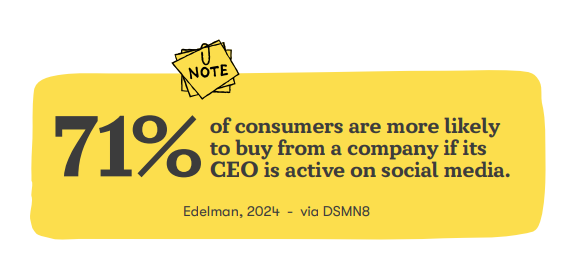
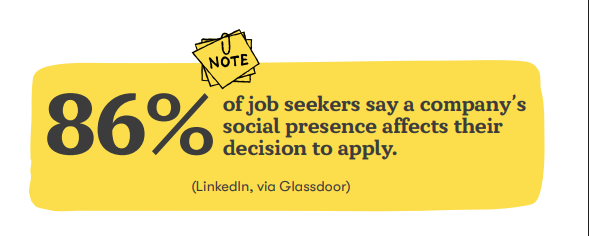
  • Investors, buyers, and senior candidates all look up a founder’s LinkedIn before they commit, so the CEO’s profile shapes trust before the first meeting.
  • For early-stage B2B companies, the founder’s voice is often the most credible asset the company has, especially when competing against better-known names.
  • The CEO profile should carry perspective and experience; the company page should carry proof, product, and announcements.
  • A well-run content process keeps the CEO’s time commitment to about an hour a week.
  • Measure success by the conversations and opportunities it creates, not by likes.

Why Is LinkedIn Important for CEOs and Founders?

Your audience is looking up your leaders on LinkedIn. Whether it’s an investor preparing for a pitch meeting, a buyer about to sign a contract, or a senior candidate about to accept an offer, they read the CEO’s posts and form a view on whether this is a leadership team they trust. For many, those posts are their first real impression of the company, and a good one is what brings them to the website to learn more.

Start with the investor. Picture a partner at a US venture fund with a Series A meeting on Thursday. The deck is strong, but so are the other forty in her inbox. Before the call, she looks up the founder. She finds a post on why the company turned down its first big enterprise deal, a breakdown of what three customer churns taught the team, and a clear opinion on where the category is heading. Before the meeting starts, she already knows this founder can tell a story, make hard calls, and attract attention in the market. Those are exactly the skills she is betting on.

Now picture the other version. The founder’s last post is a job update from two years ago. The partner has nothing to go on but the deck, and nothing that sets this founder apart from the next one on her calendar.

Investors back founders as much as products. A visible founder shows they can sell the vision to customers, recruit senior talent, and raise the next round, and the profile becomes part of the due diligence whether the founder planned for it or not.

The same thing happens with buyers and candidates, which is why a strong CEO LinkedIn presence works as a fundraising asset, a sales asset, and a hiring asset at the same time. This guide covers each of those audiences, what to post, how often, and how to support a founder without taking over their calendar.

Should Every CEO Be Active on LinkedIn?

For B2B startup founders, the answer is almost always yes. At the early stage, the founder is the brand. Buyers, investors, and early hires are betting on the person as much as the product, and a silent founder leaves that bet without evidence.

Being active doesn’t mean posting every day or chasing viral moments. It means having a consistent, credible presence that reflects how the founder thinks. And the CEO doesn’t have to be the only voice. As the company grows, a small group of visible leaders usually works better than one.

When deciding who else should be visible, consider:

Relevance to the audience. Which leaders speak to the people you most need to reach? In a technical sale, a CTO or head of product may carry more weight with buyers than the CEO. If you’re hiring engineers, your VP R&D posting about how the team tackles hard problems will do more for recruiting than any careers page.

Depth of expertise. Strong B2B thought leadership needs a real point of view. Leaders with deep experience in a specific area, and the confidence to share opinions about it, make the best candidates.

Willingness and commitment. An enthusiastic CTO will outperform a reluctant CEO every time. Visibility can be supported but not fully delegated, so the person has to want to show up.

Coverage across audiences. Two or three leaders with distinct focus areas can reach different segments: one speaks to buyers, another to technical evaluators, a third to potential hires. Distinct topics prevent overlap and keep each voice clear.

We recommend starting with one or two leaders. It proves the model, and the results they get make other leaders want the same visibility for themselves.

How Does a CEO’s LinkedIn Presence Build Company Credibility?

Picture a CISO at a US manufacturer choosing an OT security platform for twelve plants. On one side is the incumbent everyone knows. On the other is a startup with a sharper product but a name her CFO has never heard of. If she picks the startup and it goes well, she looks smart. If it goes badly, her name is on the decision that took a production line offline.

So she does what the investor did: she looks up the startup’s founders on LinkedIn. Maybe she finds a post from the CEO about why the company walked away from a big deal that wasn’t a fit. Maybe it’s the CTO walking through a vulnerability the team found in the field and how they handled it. Now she knows something no sales deck could tell her: how these people act when things get hard.

Now picture the other version. She finds a CEO whose feed is nothing but reshared company announcements and a CTO who hasn’t posted in eight months. She learns nothing about who she would be working with, and nothing that makes her more confident taking an unfamiliar name to her CFO. That company moves toward the bottom of her list.

That is where executive thought leadership earns its keep, especially for challengers.

The incumbent has brand recognition. The startup has leaders with specific opinions, specific lessons, and specific stories that show how they think.

And she does all of this before talking to anyone at either company. By the time she brings a shortlist to her CFO, the companies whose executives share real thoughts and insights are already at the top.

How Can Founders Use LinkedIn for Thought Leadership?

The biggest barrier to founder content is time. Most founders agree visibility matters but can’t commit consistently because of real calendar pressure. The solution is not more discipline. It is a better system, where marketing owns the process and the founder owns the ideas.

A practical model looks like this:

1. A monthly 30 to 45 minute interview. Marketing prepares questions tied to current industry topics, recent company milestones, and recurring customer questions. The founder talks; marketing records. One good conversation can produce a month of insightful LinkedIn posts.

  • Bonus tip: Film the interview and post edited clips to LinkedIn and YouTube.

2. Marketing drafts, the founder reviews. The content team turns interview notes into posts written in the founder’s voice. The founder’s job is to review, adjust, and approve, which typically takes 10 to 15 minutes a week.

3. Capture ideas as they happen. Give the founder an easy way to send quick notes, voice memos, or screenshots when something sparks a thought (Slack, Teams, WhatsApp, etc.). A strong post often starts with a single sentence from a conversation at the coffee machine or an impromptu chat with the product team.

4. Build a voice guide. Document how the founder writes: phrases they use, topics they avoid, their stance on key industry debates, and examples of posts they loved. This makes drafts more accurate and cuts review time.

5. Outsource the search for engagement opportunities, but keep the voice. Posting is only half of a CEO LinkedIn strategy. The other half is showing up in the right conversations: commenting on a target prospect’s post, adding a real point to an industry debate, congratulating a new employee for joining the company. Left to the founder, this usually turns into ten minutes of aimless scrolling, or it doesn’t happen at all. A dedicated team member can track target accounts, key prospects, investors, and industry voices. They flag the posts worth responding to, spot the people worth connecting with, and draft suggested comments. The founder reviews, edits, and approves, often in a few minutes from their phone.

The team finds the opportunities, and the founder gets the final say.

With this setup, a founder can maintain a consistent presence in about an hour a week. The content stays authentic because the ideas and opinions are theirs, while the production work sits with the team best equipped to handle it.

How Does Executive LinkedIn Support Employer Branding?

Now picture a VP of Sales at a well-known US software company. He has a startup offer on the table: build the company’s US go-to-market from scratch. If it works, it’s the best move of his career. If it doesn’t, he’s explaining a short stint on his resume.

So he does what the CISO did: he looks up the company’s leadership. He finds a post about the quarter they missed and what changed afterward, and one celebrating an engineer promoted to team lead. Now he knows what no careers page could tell him: who he would be reporting to, and whether “we value transparency” is a real value or just a slogan.

Now picture the other version. The CEO’s last post was a funding announcement from a year ago. Everything since is reshared job listings. He has no sense of how the CEO leads, how he handles pressure, or what working for him would be like. The big company’s counteroffer starts looking a lot safer.

That is where employer brand social media usually misses. It’s often treated as an HR function: office photos, benefits posts, and job listings on the company page. Those have a place, but a startup can’t win senior talent on perks. The big company will always have the bigger salary and the more recognizable name. What the startup has is leaders people can see and want to work for.

There’s also a bonus inside the company. Employees share and comment on their leaders’ posts, which extends reach and reinforces the culture from the inside. The same post that shows a buyer how leadership thinks shows a candidate what it’s like to work there.

What Should CEOs and Founders Post on LinkedIn?

The CEO profile is where an executive personal brand is built, so the content should be something only this person could write. The strongest founder posts usually fall into a few categories:

  • Market opinions. Where the industry is heading, what everyone is getting wrong, and why. Example: “Everyone in OT security is talking about AI detection. Our customers are still asking for basic asset visibility. Here’s why that gap matters.”
  • Decisions and lessons, including mistakes. Example: “We spent six months building a feature nobody used. Here’s what we changed about how we listen to customers.”
  • Customer observations. Patterns from sales calls and implementations, anonymized where needed.
  • Building the company. Hiring beliefs, how the team works, milestones and what it took to reach them.
  • The founder story. Why they started the company and the problem they couldn’t stop thinking about. This is often the post that gets shared the most, and it’s worth revisiting as the company grows.
  • Commentary on news. A clear take on an industry development, a regulation, or a competitor move that matters to the audience.

What to avoid: reshared press releases with no added perspective, generic motivational posts, and anything that reads like it came from the company page with the founder’s name attached.

How Often Should a CEO Post on LinkedIn?

One to two posts per week is a sustainable target for most founders. Consistency matters more than volume: one strong post every week will outperform a burst of daily posting followed by a month of silence.

A simple weekly rhythm might look like:

  • One substantive post, such as a market opinion, a lesson, or a customer observation.
  • One lighter post every week or two, such as a team milestone, an event recap, or a quick reaction to industry news.
  • Regular engagement on other people’s posts, a few times a week, using the opportunities the team surfaces.

That last part matters more than most founders expect. Thoughtful comments on the right posts often build more relationships, and more visibility, than publishing alone.

CEO Profile vs. Company Page: Which Matters More?

Both matter, but they do different jobs. One of the most common mistakes in B2B social media is treating the CEO profile as a second company page. Resharing press releases and product launches from a personal account rarely builds an audience, because it offers nothing the company page doesn’t already offer.

The CEO profile is for personal perspective. It builds trust, reach, and relationships. People follow people, so this is usually where the strongest engagement happens.

The company page is for proof and information. It should carry:

  • Product updates, launches, and feature explanations
  • Case studies and customer results
  • Events, webinars, and reports
  • Official announcements, awards, and partnerships
  • Team spotlights and culture content

The two should work together. When the company publishes a new research report, the company page shares the findings. The founder shares the one finding that interested them most, and what they take from it.

The company page provides the evidence; the CEO provides the point of view.

A useful test: if a post could be published by any company in your category with only the logo swapped, it belongs on the company page. If it could only have been written by this specific person, it belongs on their profile.

How Do You Know If It’s Working?

Vanity metrics are easy to track and easy to misread. A post with high likes from peers may matter less than one that sparked three direct messages from target accounts. Track across three layers:

Audience quality. Is the founder’s audience growing among the right people? Review follower and engagement data by job title, industry, and company.

Engagement depth. Look beyond likes to comments, saves, shares, and profile visits. Thoughtful comments from prospects or industry peers signal that the content is shaping opinions.

Business outcomes. Signals to watch include:

  • Inbound messages and connection requests from target accounts
  • Sales conversations where prospects reference the founder’s content
  • Investors who mention the founder’s posts in meetings
  • Candidates who mention executive posts during interviews
  • Invitations to speak, join podcasts, or contribute to industry publications

Adding a simple “How did you hear about us?” field, and training sales and recruiting teams to log mentions of founder content, fills much of the attribution gap that analytics tools miss. Review results quarterly rather than weekly. Executive thought leadership compounds over time, and short-term swings say little about long-term impact.

FAQs

Is it acceptable for a marketing team to ghostwrite a CEO’s posts?

Yes, as long as the ideas, opinions, and experiences belong to the CEO and they approve everything published under their name. Ghostwriting is standard practice for books, speeches, and op-eds, and social content is no different. That includes comments: a team can find the right conversations and draft responses, but the CEO signs off. The line is crossed when posts express views the CEO does not actually hold.

What if the CEO isn’t comfortable writing or posting?

Most founders aren’t natural writers, and they don’t need to be. The interview model works because the founder only has to talk about what they already know. Starting with lower-pressure formats helps too: short commentary on industry news, a reflection on a customer conversation, or a video clip from an interview. Confidence usually grows once the first few posts start real conversations.

Should CEOs post anywhere besides LinkedIn?

LinkedIn is the primary channel for most B2B audiences, but it shouldn’t be the only one. Founders can repurpose their strongest ideas into newsletters, podcast appearances, industry publications, and conference talks. Depending on the sector, X, YouTube, or niche communities may also reach key buyers. Owning an email list adds resilience, since it reduces dependence on any one platform’s algorithm.

What happens to the audience if an executive leaves the company?

The audience stays with the executive, because it is tied to their personal profile. Companies reduce this risk by building several visible leaders rather than relying on one, and by consistently driving executive audiences toward company-owned channels like the company page, newsletter, and events. A thoughtful transition post from the departing leader, introducing their successor, can also pass along some of the trust they built.

Aliza Hughes Head of Social Media
About
the author
Aliza is a seasoned content and social media strategist with over a decade of experience humanizing B2B tech brands through organic growth and executive thought leadership.
Learn more